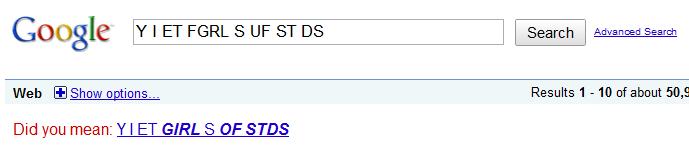
The facebook link is dead again, but here's what I can do for you, based solely on the descriptions:
Quote:
This is what I can tell from looking at the coin one side reads GLORGIVS III DEI GRATIA
Obverse Reads,
Y I ET FGRL S UF ST DS ..unknown...1701
...
I believe the 1701 coin is a British Guinea Token, because that monarch wasnt born then?
This is a brass "evasive" card counter, designed to look like a George III "spade" guinea, a British gold coin. The wrong date and jumbled-up lettering are meant to give the manufacturer of the counters an excuse, if he happened to be arrested for counterfeiting: his counters were clearly fantasies and clearly different in design to a genuine guinea, and it wasn't his fault if crooks were going around trying to spending them. Some similar items can be found in
this thread,
this thread and described in
this thread.
Quote:
Another reads the silver one
DEI GRATIA 1811 and a few other things I dont know how to type
....
The 1811 coin I think might be Spanish/Mexican?
Unfortunately, there's not enough information there. I suspect it's British, or Spanish, but other European countries used those two Latin words on their coins as well.
Quote:
The Last reads SAR CYP ET HIER CAR FELIX D G REX arround one side with a date of 1826 in the center.
The other side has no writing...
...
The 1826 coin I believe to be a 1 centinsimi coin from sardinia.
It certainly
sounds like a coin of King Charles Felix of Piedmont-Sardinia, a pre-unification Italian state (the kings of Sardinia eventually became the kings of Italy). I assume it's copper? The size in millimetres can also help us identify it; 1 centesimo coins are 18mm, 2 centesimi are 22mm and 5 centesimi are 27mm across.
Don't say "infinitely" when you mean "very"; otherwise, you'll have no word left when you want to talk about something really infinite. - C. S. Lewis










 Posted 03/28/2010 4:41 pm