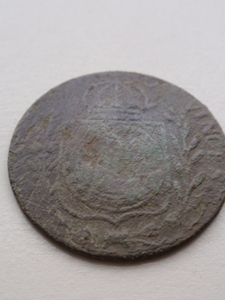
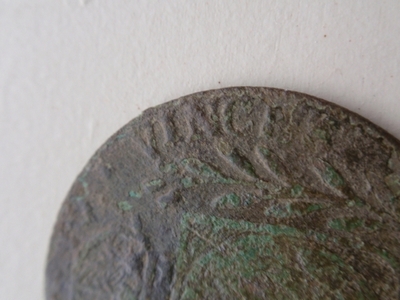
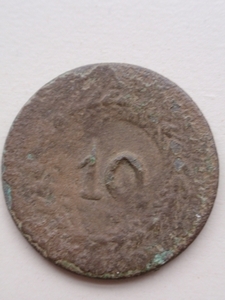
The Brazilian monetary system in the early Imperial period shortly after independence was complex, with the mints in different parts of the country issuing copper coins of the same denomination with different sizes and weights. Specifically, the coins struck in Rio de Janeiro and Bahia were twice as heavy as coins struck elsewhere. Coin smuggling, coin remelting and counterfeiting were rife. The countermarks were applied in 1835 to bring all the coins in the country down to a new standard, which was half of the old Rio standard. Thus, old 20 reis coins from Rio and old 40 reis coins from a mint such as remote Cuiaba would both be revalued and countermarked at 10 reis.
Don't say "infinitely" when you mean "very"; otherwise, you'll have no word left when you want to talk about something really infinite. - C. S. Lewis










 Posted 04/18/2010 11:19 am


