Morgan dollar dies were frequently polished during use - sometimes a clash occurred, or a crack developed, and the die would be taken out of service for the offending area to be polished away. That's why there are so many
VAM's which involve "lessened" details - detached leaves, overpolished wings, etc. It's inevitable when you start using abrasives on a die.
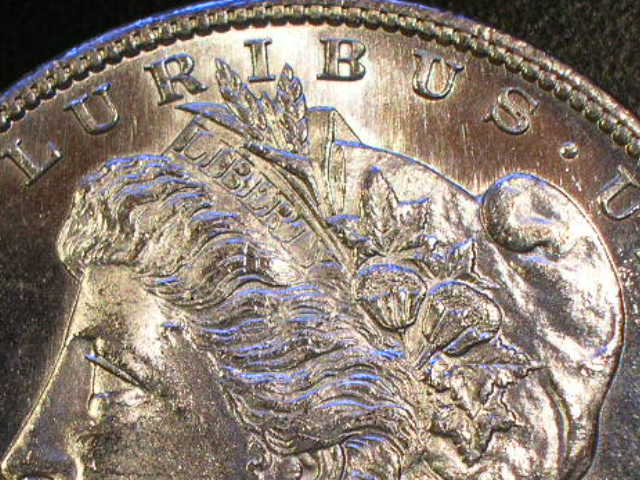
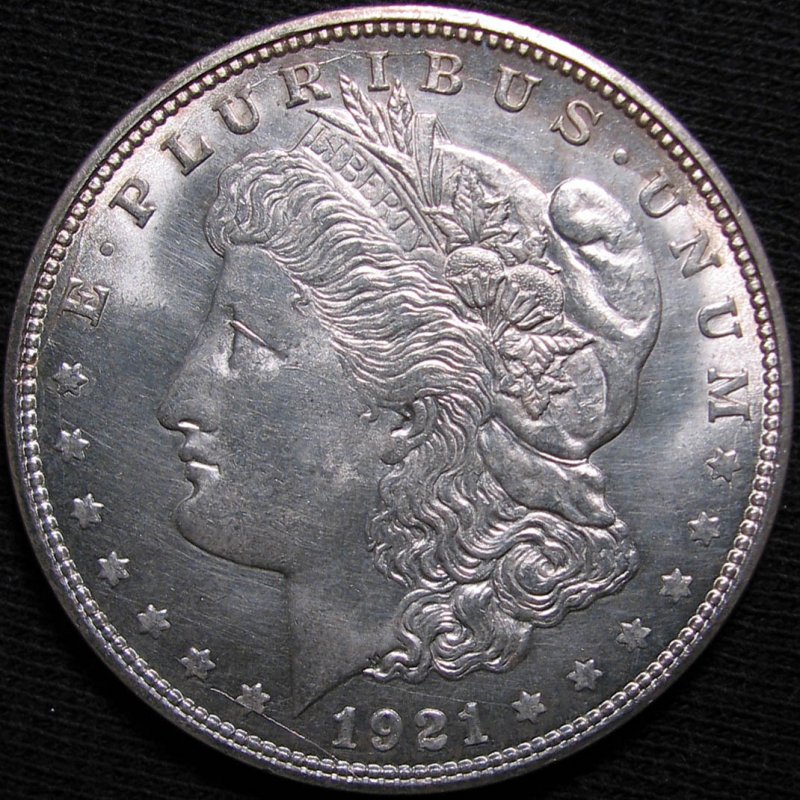
It's been my experience that, by and large, die polishing is almost always done in a North-South direction. Conversely, people who brush coins tend to do so in an East-West direction, or diagonally. Brushing is a deliberate activity - you do it with a will, so to speak - and regardless of the actual direction the hairlines point, they all tend to point in the same direction. Rarely is that up-and-down. Furthermore, almost all brushing is "complete;" the fewer the actual hairlines visible, and the more differing directions, the more one must consider a non-deliberate action having caused them.
Die polishing lines tend to be heaviest at the denticles and the edges of the devices. You'll understand that a die is negative - the devices are lower than the fields - and that dropoff causes an unconscious increase in pressure on the part of the Mint employee doing the polishing.
Brushing, on the other hand, is heaviest in the fields and tends to be light at the edge of the devices, which protect the lower field next to them. Of course, if the hairlines extend onto the devices themselves it's pretty clear what happened regardless of what direction they face.
You'll find die polishing in many cases to be easier to see than brushing. Hairlines are sometimes only visible when your eyes or the light are at right angles to the direction, and soft incandescent lighting tends to obscure them.
So. Brushing (even this bad, it's not always visible on this coin):
Die polishing:
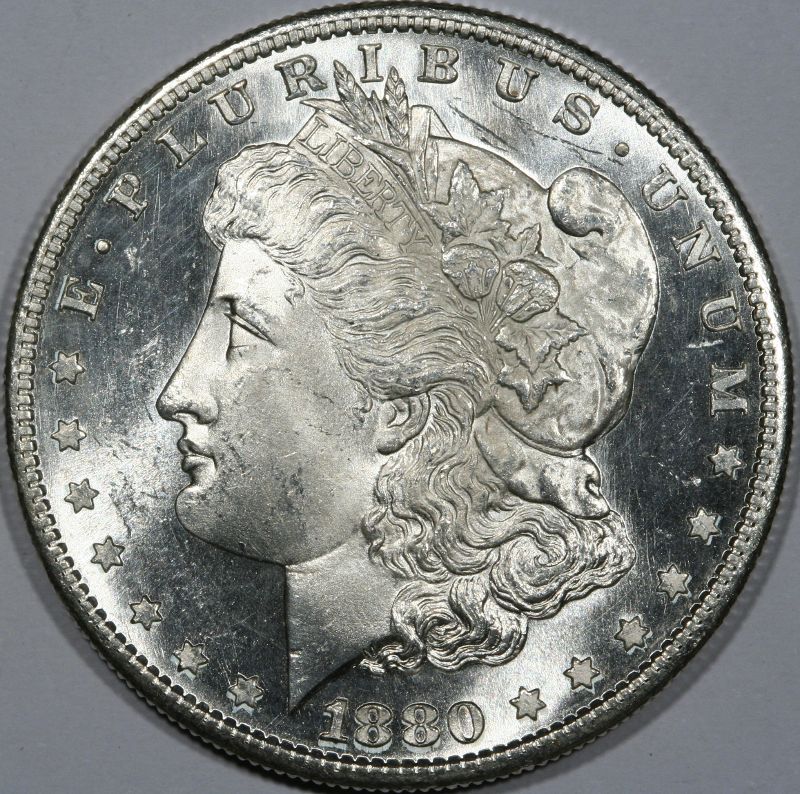
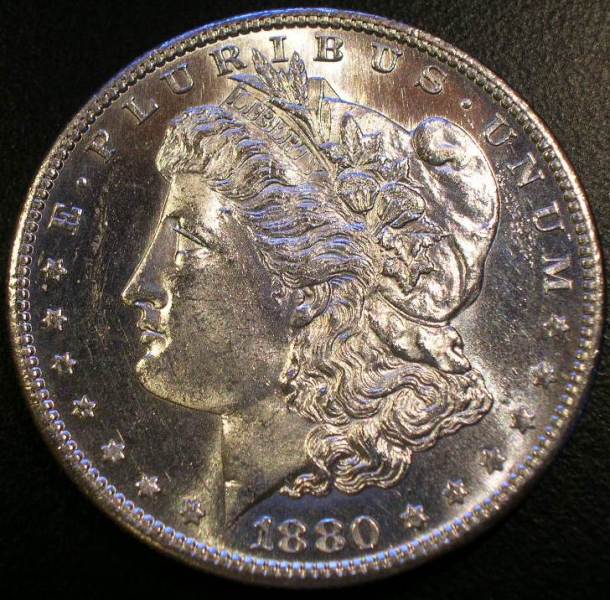
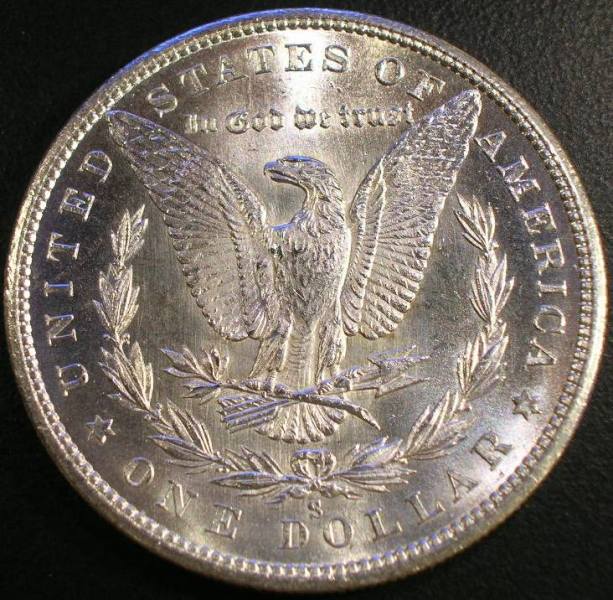
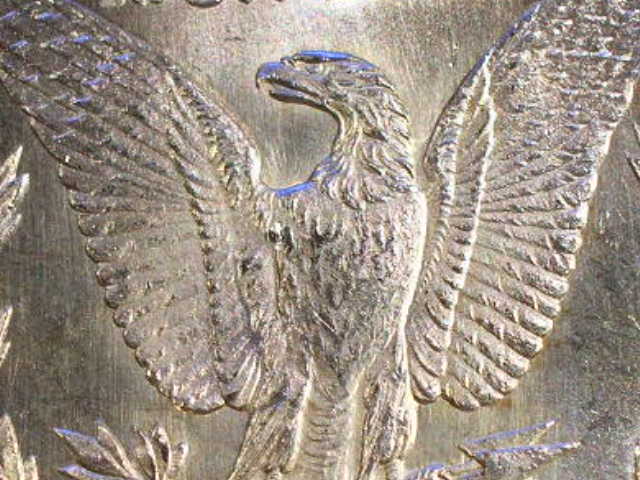
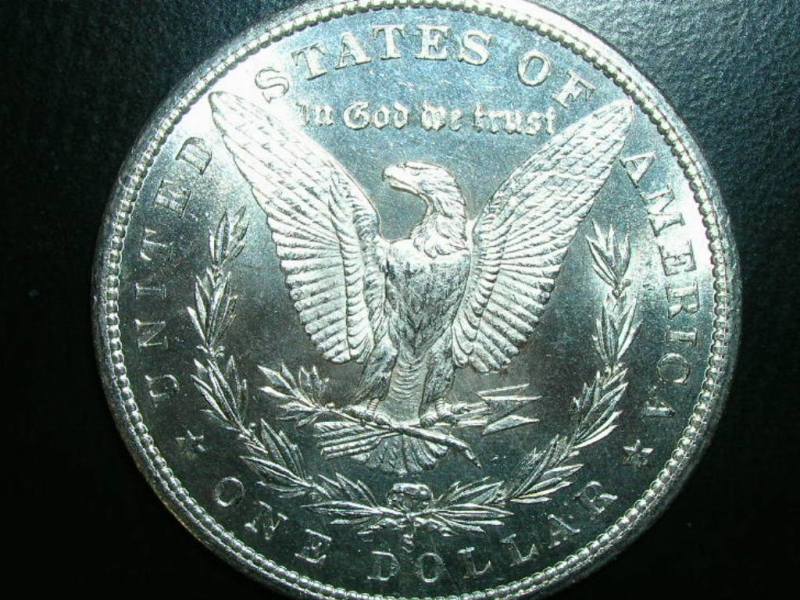
That's an 1880-S, by the way. The reverse die wasn't polished.
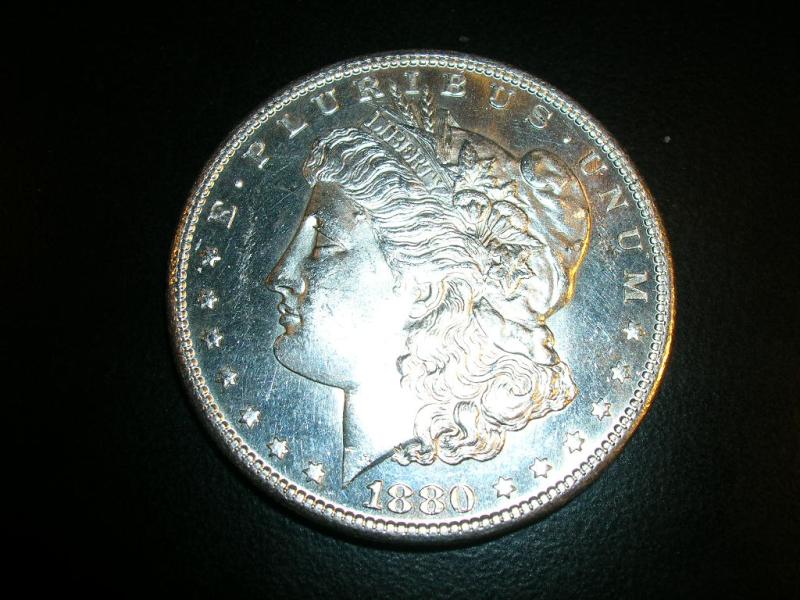
I don't see enough evidence in the pictures provided for this coin to support either possibility. I see a few lines in the obverse fields towards 8:00, and what may be additional lines south and west of the M in UNUM. Not enough, to me, to decide, which is why I'm trying to fill Brent with enough knowledge to make the decision himself.

Moreover, the lighting plays directly on the cheek, washing out the most important determinant of grade on a Morgan. There's enough chatter in the fields for me to see the coin is obverse-limited - when I grade a Morgan, I decide which face is worse and grade just that as long as the strike on the "good" face is decent - and with the cheek obscured there's not enough data for a grade. I don't think I'd go as far as 65, even with a pristine cheek. The field in front of the nose is another prime territory, and there's a lot of chatter there.









 Posted 04/28/2010 12:55 pm