



Coin Community Family of Web Sites Join Thousands of Coin, Bullion, & Money Collectors
Vancouvers #1 Coin and Paper Money Dealer Coin, Banknote and Medal Collectors's Online Mall Join Thousands of Coin, Bullion, & Money Collectors Royal Canadian Mint products, Canadian, Polish, American, and world coins and banknotes. Specializing in Modern Numismatics 300,000 items to help build your collection! Shop for APMEX Bullion on eBay!


Username:
Password:
Save Password
Forgot your Password?


This page may contain links that result in small commissions to keep this free site up and running.

Welcome Guest! Registering and/or logging in will remove the anchor (bottom) ads. It's Free!

Need Help With A 1796 Peruvian 2 Reales

To participate in the forum you must log in or register.
Author Previous TopicReplies: 4 / Views: 3,662Next Topic  
Pillar of the Community
Archraz's Avatar
United States
3499 Posts
 Posted 06/27/2010  6:06 pm Show Profile   Bookmark this topic Add Archraz to your friends list Get a Link to this Message Number of Subscribers
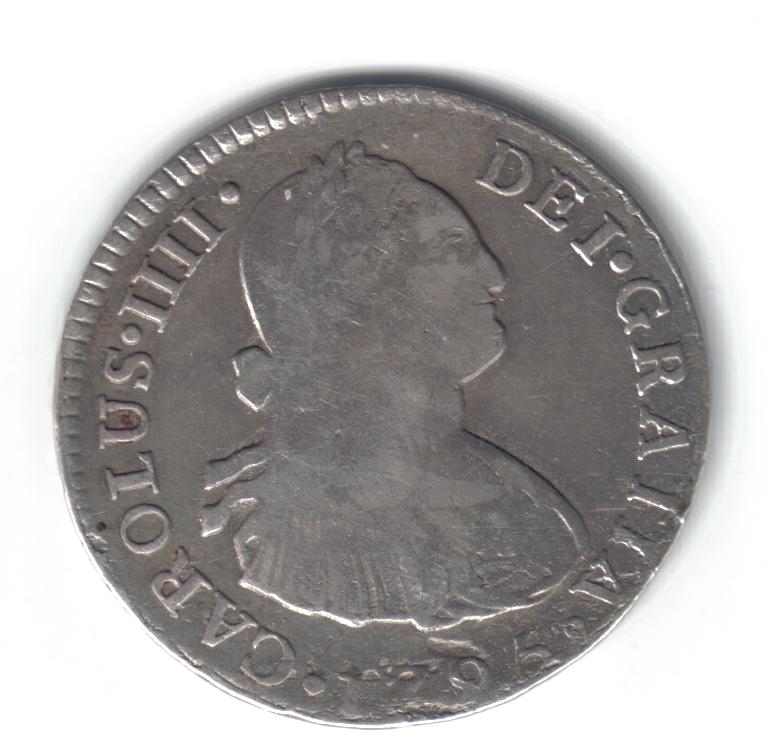
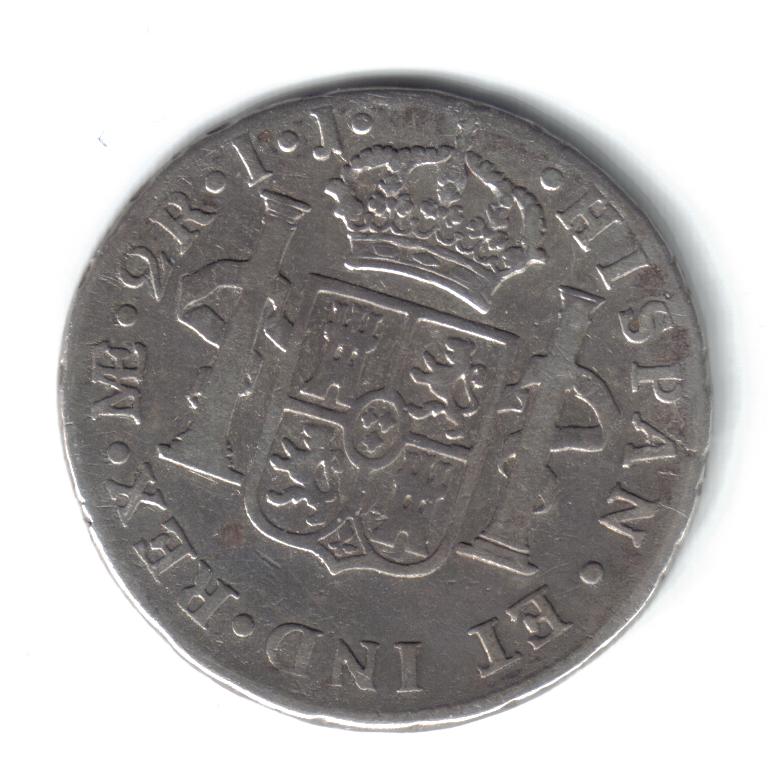
I got this one ages ago and just always assumed that it was real but was just really harshly cleaned. My Krause says that this coin should be about 6.76 grams, but mine is only 6.36 grams. This strikes me as being a bit light. So do you think that this is a counterfeit? If so, is it possible that it is a contemporary counterfeit? The reason why I ask this is because it has the correct edge and I think that I can see the overlaps (but it is a bit hard to tell since it is worn and badly cleaned. Any help would be appreciated!


Need-Help-With-A-1796-Peruvian-2-Reales

Need-Help-With-A-1796-Peruvian-2-Reales
Edited by Archraz
06/27/2010 6:10 pm
Pillar of the Community
swamperbob's Avatar
United States
5362 Posts
 Posted 06/27/2010  9:26 pm  Show Profile   Bookmark this reply Add swamperbob to your friends list Get a Link to this Reply
The weight of your coin amounts to about 94% of the legal weight. As such it would not have circulated well in the US. It is simply too light. That alone makes it suspicious.

But is it a counterfeit?

That depends on the amount of metal lost adjacent to the date and what caused that loss. Something clearly happened in that area. But I can not be sure what. This area looks like a series of delaminations may have taken place POST-STRIKE. Combined with weight lost due to wear - that could account for most of the difference.

But I do not like the looks of the "hole" at the edge outside the O in CAROLUS. In fact there seems to be a line (depression) that connects that feature with a second larger example under the date. The line appears to continue to the 1st A in GRATIA. There are other depressed features at the tops of several numerals particularly over the 9. Those feature needs to be examined closely to try to determine exactly what happened. Collectively this area makes me think cast copy.

I have seen a few original 8R coins that were filed down on the edge and then a fake edge detail was applied. On an 8 are it is possible to steal 5-7% of the weight in that fashion. But I have never seen this done to a 2R. I suppose it could have happened but the value is only 1.5 cents per coin and that seems too low to bother with. The process of re-edging the coin can CHIP the surfaces near the edge and create a pressure "delamination".

If I were you I would do a specific gravity to determine the metal used. You indicated you got the coin "ages ago". If that translates to more that 10 years ago, it is unlikely that it would be a silver forgery. They were not being made then. A copy made 10 to 20 years ago was likely to be white metal or GS. Such coins would be thickened or the diameters increased to correct the weight.

Pillar of the Community
Archraz's Avatar
United States
3499 Posts
 Posted 06/27/2010  10:57 pm  Show Profile   Bookmark this reply Add Archraz to your friends list Get a Link to this Reply
swamperbob- Thanks for the help and the info. I must admit that I exaggerated a bit with I said "ages ago." I think that I got it around 2006 and from a very reputable dealer. Regarding the odd line at the bottom of the first pic and the hole next to the "O" in Carolus, is it possible that this coin is just suffering from some major lamination errors due to an improper mixing of the metals before the blank was formed? I do know for a fact that the Lima mint was notorious for poorer quality coins (in fact, some places in and around East Asia merchants would refuse all Spanish colonial coins that had the "MAE" mint mark.

So does the seeming absence of a rim/ denticals on the reverse not bother you? In fact, the rim seems rather weak or mostly absent on most of the coin. Have you ever seen any real examples like this?

Finally, I know that it has been spelled out many times here on the forum, but how again does one test for specific gravity?
Pillar of the Community
swamperbob's Avatar
United States
5362 Posts
 Posted 06/30/2010  12:26 pm  Show Profile   Bookmark this reply Add swamperbob to your friends list Get a Link to this Reply
Archraz If the holes look like delamination that is good news. The chips could account for a part of the lost weight and the explanation is natural given planchet problems at Lima. The wear which is considerable could account for the rest. So I am not really too bothered by the weight at this point.

Lima was also noted for larger diameter coins as well as poor quality planchets. So the "missing dentils" point to a slightly smaller than normal planchet diameter. I see some dentils or their remains on both sides of the coin and the rest appear to be off flan.

The smaller than normal diameter would go along with the possibility of a filed edge, but also it could happen if the original edging was weak. The edging of the coin served TWO purposes - first the obvious anti-forgery aspect of a design, but secondly that edging caused the rim of the blank to be thickened (upset) so that the edge dentils would show on the strike. A small planchet would not come into contact in the edging mill as firmly as a large one(unless the operator reset the distance for each blank). The lack of pressure in the edging step reduces the upset of the rim and therefore the strength of the impression of the dentils. In fact, it is possible that the operator of the edging mill only noticed the weak contact part way through the process and turned the handle to make part of the rim upset. That would account for the partial dentils too.

But either way I am not too bothered about the dentils on this coin. Have I seen a similar original? The short answer is definitely, yes.

The date of purchase - ca 2006 is in the era of silver forgeries so just having the right SG is no absolute guarantee that the coin is real, but you did say you got it from a reputable source. I see nothing that screams forgery in this case.

SG on a 2R is more difficult than for an 8R (about 4 times as hard lol). But you do need a more accurate scale the smaller you go. I own a 1/100 th gram 4 beam analytical scale that is good for 8Rs but only so so on 2Rs. You really need a 1/1000 th gram scale for a 2R and I don't own one right now. These are the scales with 5 beams that are usually kept in air tight boxes to exclude drafts. I have periodic access to one but never bought one.

The SG process is easy (high school chemistry stuff). You first weigh the coin normally. That is W. Then you put the coin on a thread or fine wire and take the weight again. (For a thread weigh the coin and thread after the thread is wet.) The weight of the coin and hangar in air is Wa. Then put the coin into a glass or beaker of distilled water at room temperature. I boil the water before use to remove air. Add a drop of liquid soap to the water to break surface tension. Weigh the coin immersed totally in water. Check the coin to be sure there are no air bubbles clinging to the coin. If the coin is oily or dirty you should give it an acetone bath first. The weight of the coin and hangar in water is Ww. Unless you use a metal hangar or a basket assembly there is no need to do an adjustment reading for the hangar alone. A thread is usually of negligible effect.

Take the difference of Wa-Ww and that is the volume of the coin expressed in cubic centimeters. One cubic centimeter of water weighs 1.0 grams (by definition) so if the coin is 3.00 grams lighter in weight immersed - it has a volume of 3.00 cubic centimeters.

Then divide the original weight of the coin W by V (the volume) and you get density. It is a ratio of the density of the coin compared to a matching volume of water. Silver 0.900 fine has a density of 10.30. Simply stated it weighs 10.30 times the water or 10.30 grams per cubic centimeter. Silver of 0.800 fine is 10.14 etc. Riddell provided a table in his book for silver and copper alloys from 1.000 fine to 0.500 fine.

Pillar of the Community
Archraz's Avatar
United States
3499 Posts
 Posted 06/30/2010  11:19 pm  Show Profile   Bookmark this reply Add Archraz to your friends list Get a Link to this Reply
swamperbob- Thanks for all the info! I really do appreciate it! I have a feeling though that my coin may be real. This is primarily based upon the fact that it does seem to be made of silver and because the edging seems to be very bold and correct-looking on the areas from about the "O" in "Carolus" to about the "D" in "Dei Gratia." So this probably means that it was either filed down or was improperly edged. This in combination with the lamination issues around the date & "O" in "Carolus" probably account for the low weight.
  Previous TopicReplies: 4 / Views: 3,662Next Topic  

To participate in the forum you must log in or register.


Disclaimer: While a tremendous amount of effort goes into ensuring the accuracy of the information contained in this site, Coin Community assumes no liability for errors. Copyright 2005 - 2026 Coin Community Family- all rights reserved worldwide. Use of any images or content on this website without prior written permission of Coin Community or the original lender is strictly prohibited.
Contact Us  |  Advertise Here  |  Privacy Policy / Terms of Use

Coin Community Forum © 2005 - 2026 Coin Community Forums
It took 0.26 seconds to rattle this change. Forums