| Author |
 Replies: 24 / Views: 3,217 Replies: 24 / Views: 3,217 |
|
Pillar of the Community
 United States
1551 Posts |
Edited by twohawks
08/09/2010 10:05 pm
|
|
|
|
Pillar of the Community
3660 Posts |
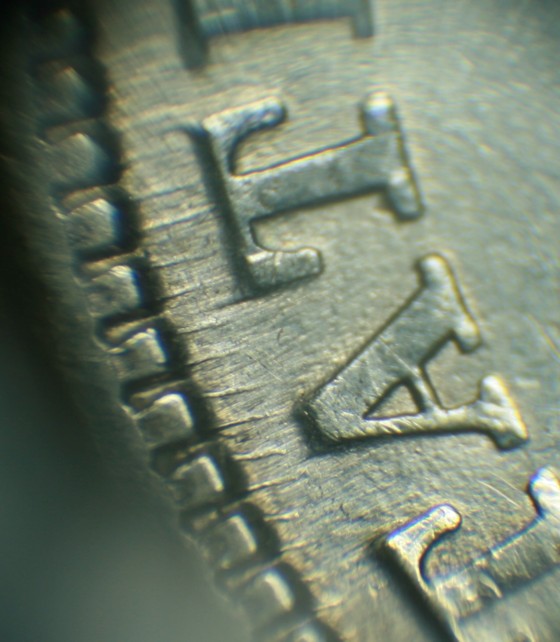
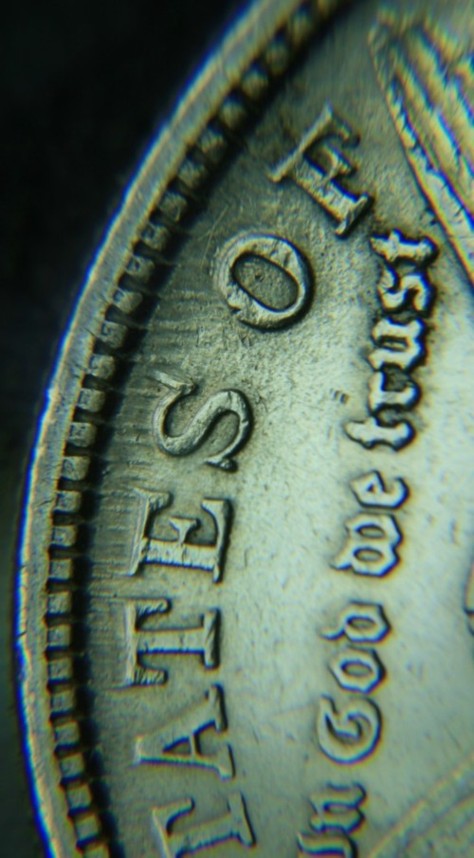
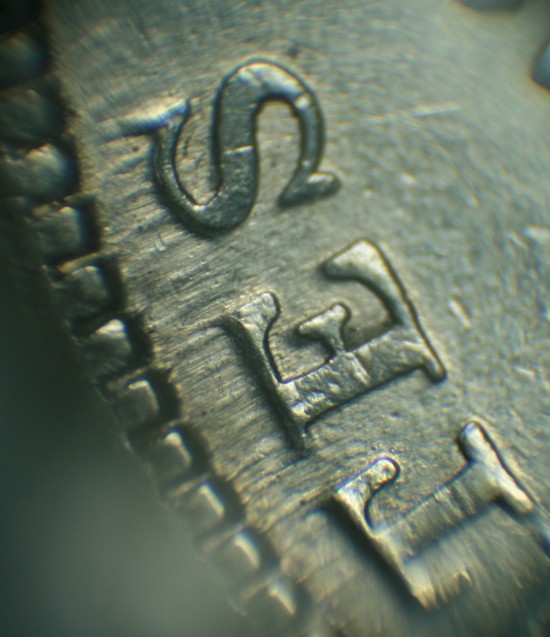
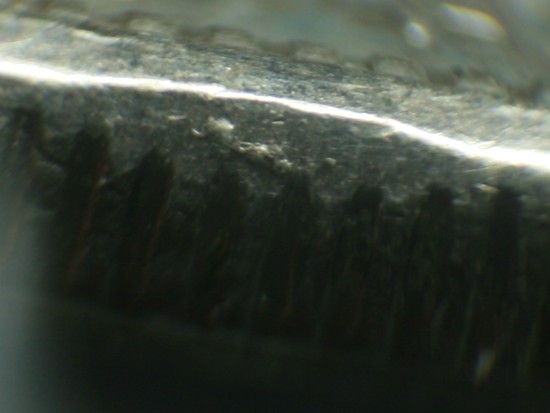
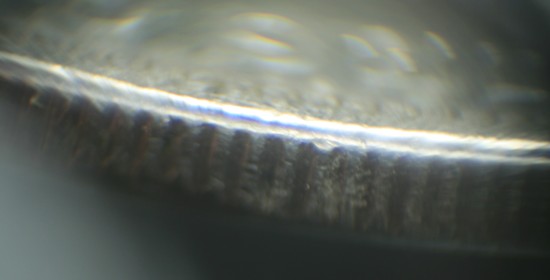
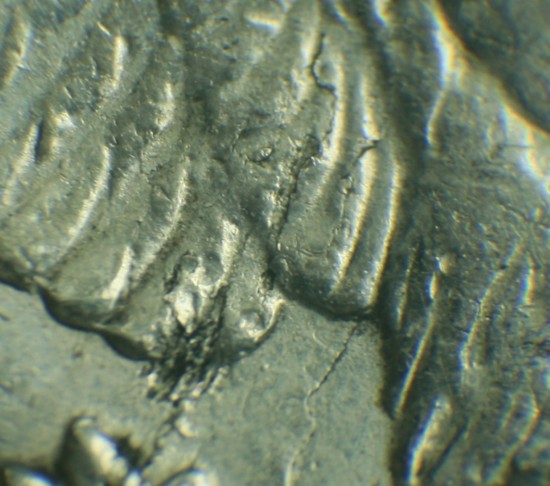
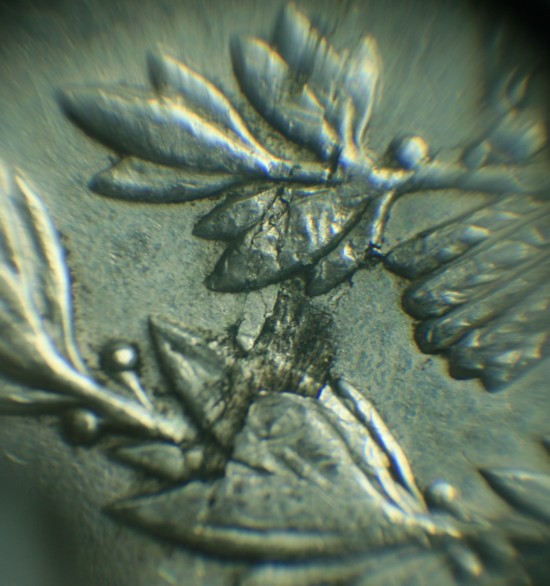
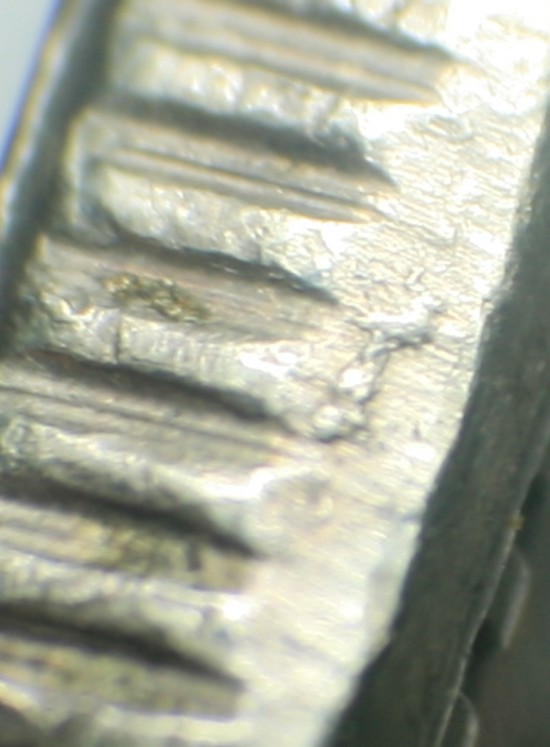
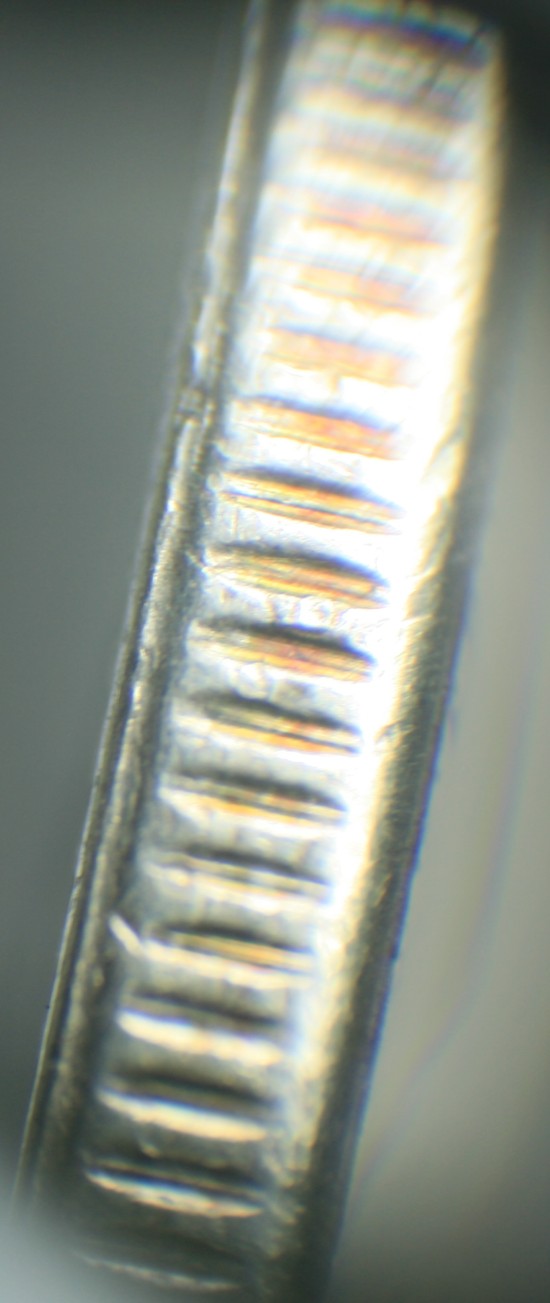
What a totally ugly coin you have there Russ.  The draw lines from the letter tops to the rims shown in the first three photos are indicative of a worn die (LDS in this case). The lamination problem is pretty obvious, and while some folks find these things to be focal points to premiums, I consider them to be distractions. The funky rim is also a coin specific planchet flaw, resulting in incomplete displacement of planchet metal upon strike. If the effect is limited to what you have shown, I would speculate that the cause was a clipped planchet prior to arrival at the upsetting machine. If the effect encompasses the entire coin edge (which I doubt), there are a couple of other possibilities. |
|
Pillar of the Community
United States
3076 Posts |
very interesting coin there....a lot going on but I tend to agree with Zee's Ideas..there are some flaws in the planchet...looks like infrequent reeding, and your streaks from the denticles into the field, but I do suspect the main faults are in the planchet and not the collar.
|
|
Pillar of the Community
 United States
1551 Posts |
On the viewers left side the upset edge is all the way around. I think the lower die did not drop all the way or something. It almost looks like a multiple strike looking at the left rim. It has the 3 layers. But I do nor really know.
|
|
Pillar of the Community
3660 Posts |
All the way around 'eh ? Then you are correct Russ. The reverse die did not 'fully' retract from eject position (maybe 1/32" away). Beginning of a railroad rim (or whatever you guys call it) on the obverse.
Since the strike occurred very slightly out of collar, there was no containment of the upset rims to work against each other. The obverse rim oozed out and the reverse rim did not displace fully into the rim area of the reverse die.
|
|
Pillar of the Community
3660 Posts |
What about this one ? Did we really spend enough time here? What do you think?
|
|
Pillar of the Community
3660 Posts |
Gene, do you see all of those balls that look like they are on fire? What those fiery balls mean, is that we have beat those horses to death. Lets start on some fresh horses here, okay buddy?
|
|
Pillar of the Community
United States
3076 Posts |
some similar postings on newer coins know as trail dies have been introduced, but I could not confirm this idea. BEAT a new horse "yes"why not, this ones still way in the back round...
|
|
Pillar of the Community
United States
3076 Posts |
listed as 1L it doesn't splane much LOL////
|
|
Pillar of the Community
3660 Posts |
Trial dies 'eh? I am not familiar with such things. Does this mean that the dies were being checked out for something? Or were coins being struck to see the effect of press adjustments? Yeah, the thing about the 1L VAM designation is irrelevant I would think as this seems to be pretty obviously a coin specific phenomena. |
|
Pillar of the Community
3660 Posts |
Russ takes some pretty awesome pictures doesn't he? The close ups are fantastic, couldn't ask for more in that regard. I wonder how his project is coming along?
|
|
Pillar of the Community
3660 Posts |
Quote:
The reverse die did not 'fully' retract from eject position (maybe 1/32" away). Beginning of a railroad rim (or whatever you guys call it) on the obverse.
Since the strike occurred very slightly out of collar, there was no containment of the upset rims to work against each other. The obverse rim oozed out and the reverse rim did not displace fully into the rim area of the reverse die. 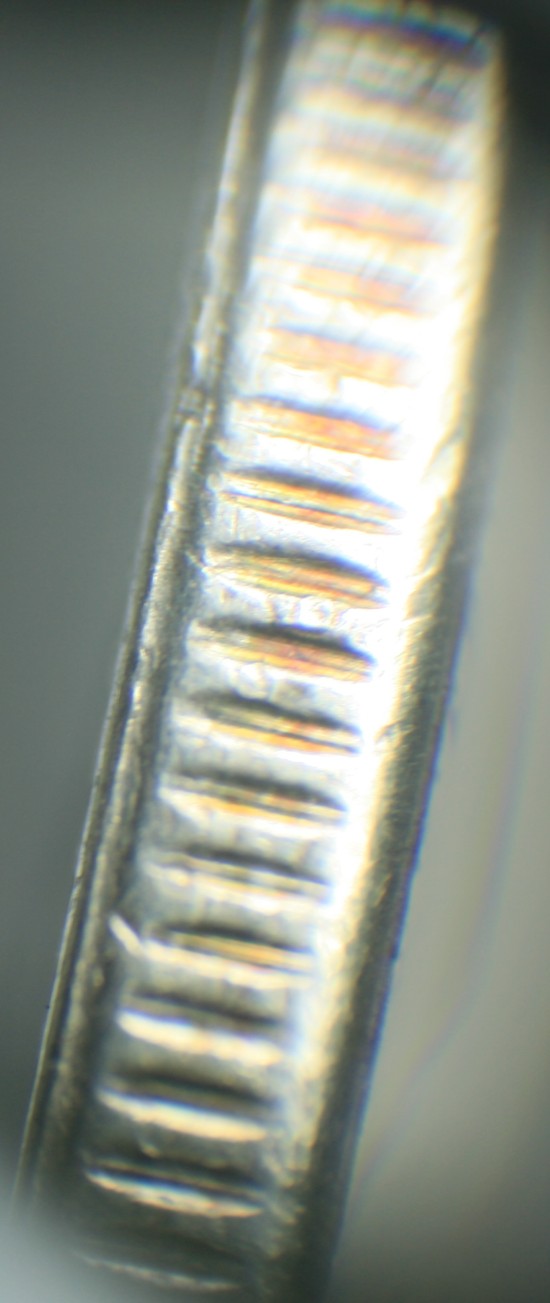 Do you see what I was talking about? Agree, or have something else in mind? |
|
Pillar of the Community
United States
3076 Posts |
the
Idea of "trail dies" meanings is just the 1l shows meaning, there are leading edges from the perifials...much like die scratches or polishing lines from the letters....To you and I, we would wonder why such lines exist and could assume the lines are poor polishing lines(RUFF SANDINGS) at an attempt in 1921 to fix a die...there is no known phenomoemum which could relate to ghost lines of such a phenomenum in the coins surface..notice they are not ghost lines... but rather raised lines.. which can only mean tooling marks into the die to create raised
lines in the coins production...
|
|
Pillar of the Community
3660 Posts |
Those are wear marks Gene. This die was one of the good ones. Any die that lasts long enough in production will develop those marks. The Morgan dies were normally produced in such large volume that they could be retired before they became this worn. Earlier coins (such as CBH) exhibit these marks in a much higher degree of regularity. CBH dies were in short supply and they were used until they fell apart, and sometimes after that. (I'll try to rustle up a picture or two). 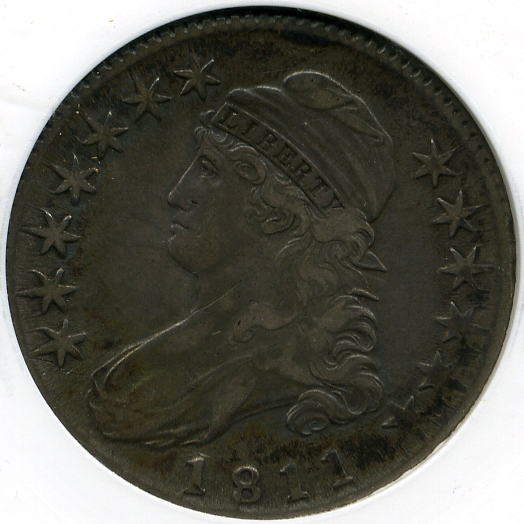 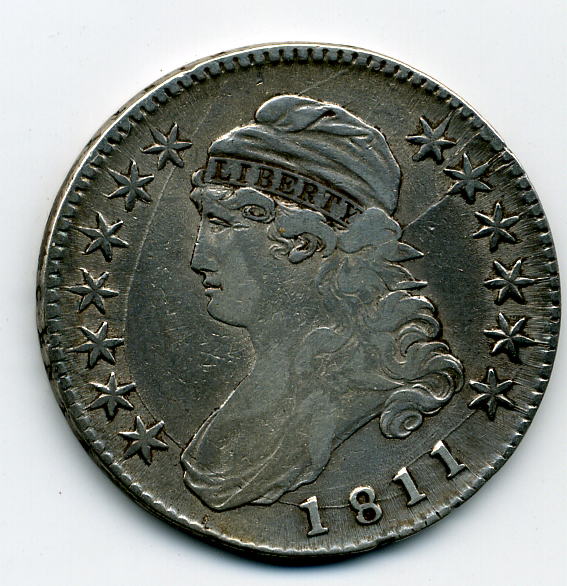 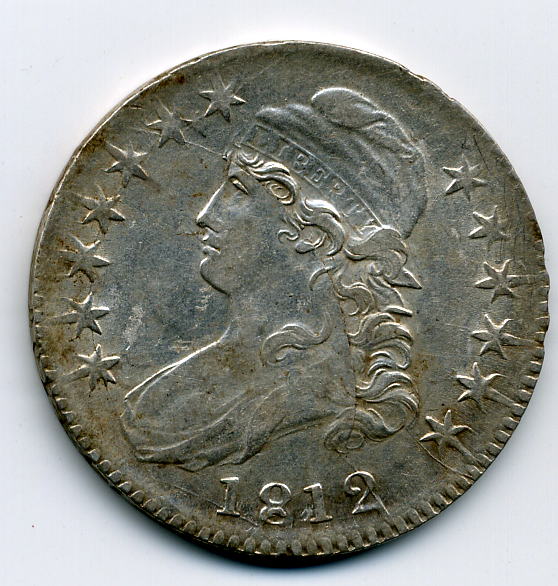 The effect is kinda hard to see on these coins, but it is there, I will try to scan some closeups tomorrow if you like, but if you strain your eyes you can see those lines in the second coin, and the stars are drawing to the edge (same thing) on the last coin. As the dies wear, the effect is that devices (letters or stars) appear to be sucked toward the edge of the coin. Edited by zeewool
08/25/2010 02:13 am
|
|
Moderator
 United States
23522 Posts |
I've done some thinking on this particular variety, without any definite conclusion. If wear, why only 1921-S and why only two? These lines are not known on any other Morgan. Not that I rule out wear; I just feel the subject has been insufficiently explored. Here's a little photographic musing, all my own images of my own coins: 1814 Bust Half  1921-S VAM-1L  1921-S VAM-1Y (Note, this is a very worn die and an abysmal strike, but still Mint State in the opinion of PCGS)  IMO zeewool's opinion of the Busties is undoubtedly correct regarding wear. The 1921's, though, seem to leave room for thought by virtue of their uniqueness among Morgans. I believe the 1Y will be the key because of its' simplicity by comparison to the 1L - whatever happened to the 1Y, the 1L just had more of it. Note the direct relationship between the 1Y's lines and the spaces between denticles. Again, and I believe it's a question which must be satisfied before we have a workable hypothesis: Why only 1921-S? |
|
Pillar of the Community
3660 Posts |
Good closeups Dave. .... I've noticed that there's something about this wear stuff is that. like the CBH, (the effect is more often noticed on the reverse than the obverse). I don't know, as I have not looked at enough of either to even speculate, but the 'reverse' stars on CBH are often noticeably drawn toward the edge (Namely the outermost three points of the stars). On the Morgans, (and these are the only examples that I have seen), it is the 'reverse' lettering that is affected. I also have noticed that the shape of the letters seems to play into the overall effect. Letters with flat tops such as E, T, and F will draw straight to the letter top (meeting it at a right angle). Letters with points at their tops, like A, M, N, and U, (if left in the press long enough) I would speculate to develop a CBH star point effect. Letters with rounded tops like O, S, C, seem to draw at slanted angles. Nevertheless, this would seem natural to me as a weakening result of the hubbing of those devices into the die. I again would think that the alignment of the draw lines and the denticle separations should be a natural progression as the space between the denticles is actually the die periphery, and as such would be the earliest worn portion of the die. I would further speculate that secondary draw lines would emerge between these initial lines as the die wore even further. As for why only the 1921 S dies may show the effect, I speculate (even further) that mint management may have, at some point in time, (for a limited time), decreed that dies would be used past their normal life. (I agree that there should be more than two examples though, if this were the cause). OR....Possibly the store or tool room that issued the dies to the coiner made the determination that the dies were still serviceable, OR maybe the coiner left the dies in the press for an extended period of time without inspection. OR....Maybe the dies were inadvertently issued from the condemn bin rather than the ready shelf. OR....Well, speculation could continue for a good while, but I do feel fairly strongly that these Morgans are of the same effect as the CBH (only nowhere near the same degree of wear). The indicators are the same on Russ' coin I think, the drawing of the letters (circled in yellow). 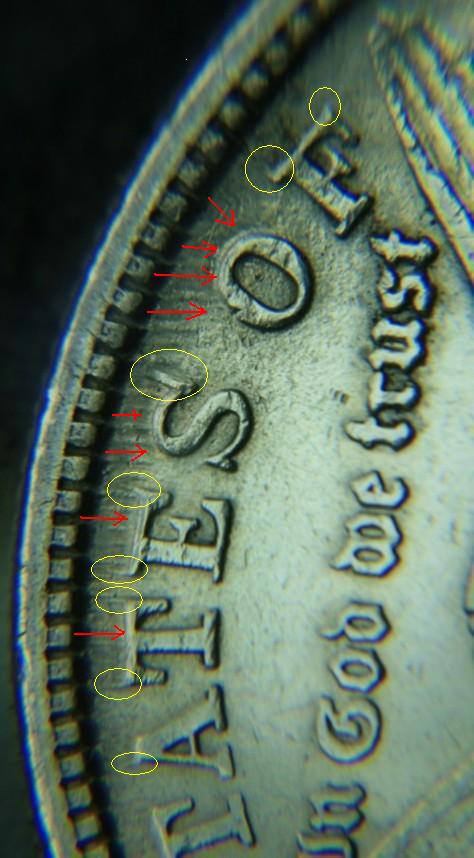 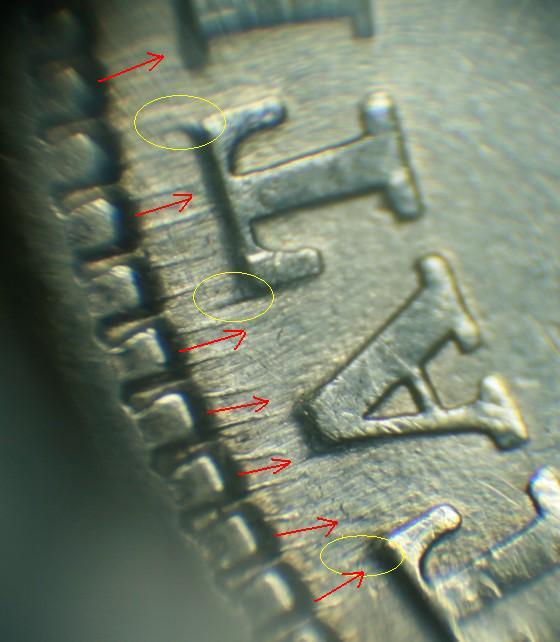 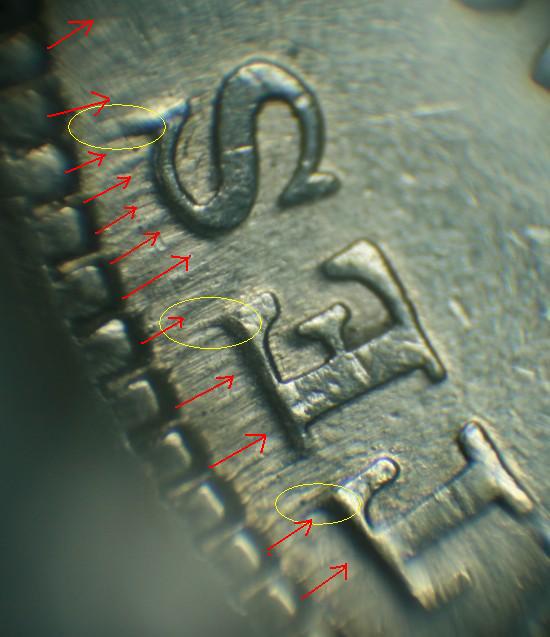 |
| |
Replies: 24 / Views: 3,217 |












 Posted 08/13/2010 12:11 am


