Very nice scans. The coin is beautiful even with the small rim bumps.
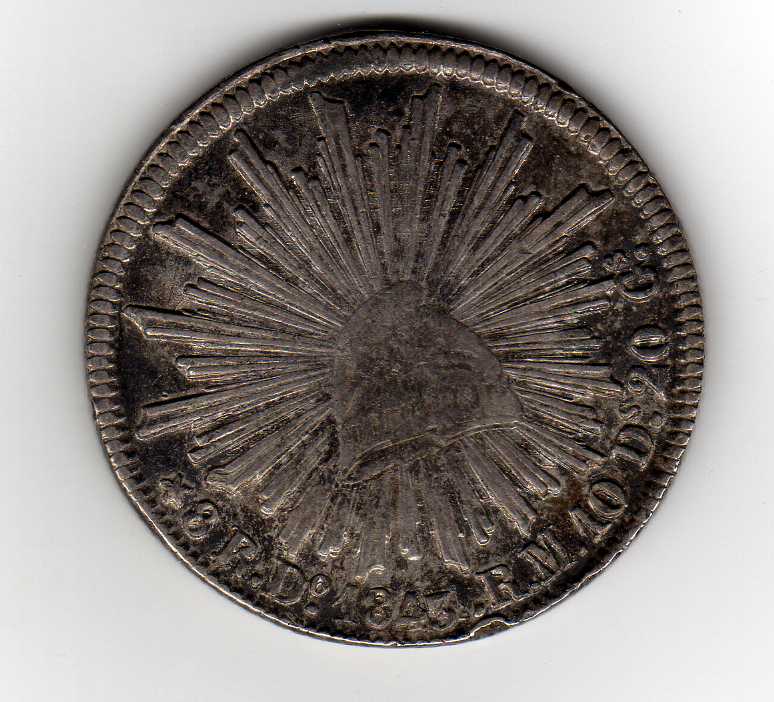
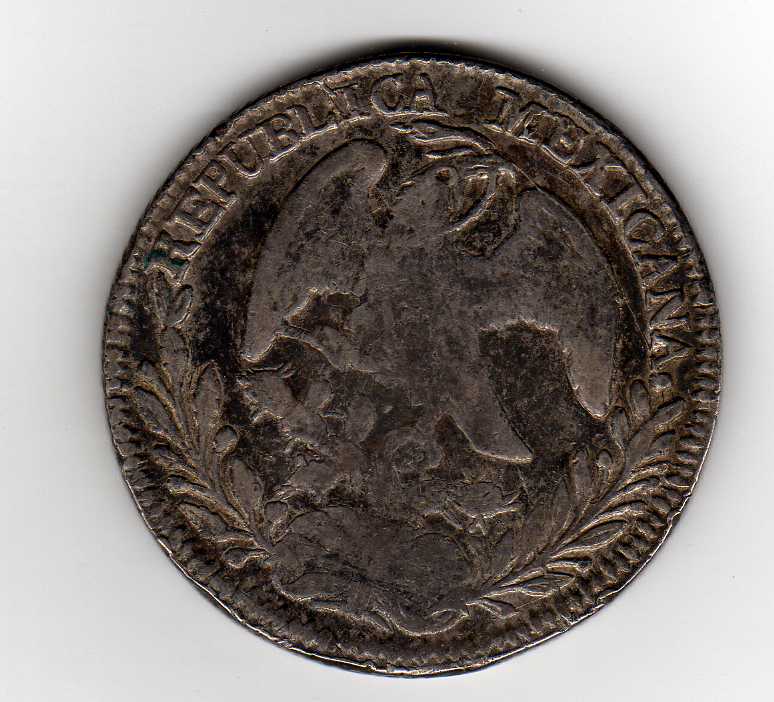
The dentils, as you speculated in your note to me, are shown in their entirety around the top on the cap side and the bottom on the eagle side because the strike was slightly off center. Off center strikes are rather common because the planchets were positioned on the dies by hand during a BRIEF interval between strikes. It surprises me how many on center strikes exist. I would be worried about my fingers.

The 1843 was the second year in which Durango used a coin axis rotation. The dies appear to be properly aligned if you presume the coin is a COIN ROTATION.
The reversal of the rim design (provided it occurs at 180 degree separation as it does in this case) is a mint error caused by positioning one of the two bar (edge) dies in the edge mill upside down. This error happened a few times but it is far from typical on originals. One of my pet subjects that I hope to address is the actual prevalence of this edge error on originals. No one has yet published a definitive study on edges. There are real versions of the reversal seen in 4 mints based on my current knowledge. Only one instance spans an interval greater than one year. But so few people comment on edges that I am still unsure of how often this particular error occurred. It is a far more common error on counterfeits than on originals. But I have no reason to believe your coin is not 100% original.
The coin is a nice one with good looking surfaces. It is in my opinion real and is very likely the 1843/34 overdate variety. It may possibly be the 1843/31 overdate but I think I can see traces of the 4 crossbar on yours. It usually takes a binocular microscopic examination to be 100% sure which variety it is. But it is certainly one of the 2 overdates - no doubt about that.
I was also impressed by the detail in the pictures you sent to me since it allowed a better review than in hand with a 5X loupe. The reverse die is a clear double hub. The cap and many of the features rays and letters (like the o in the mintmark) show very clear hub doubling. The hubs used in Durango in 1843 had seen service for over a decade and they were terribly worn. The reverse die (the Cap) is an old French design which was a feature of the hubs manufactured in France about 1831. Evidence of the resurfacing of the hub is clearly visible in the raised striations between the rays. Many of these striations appear doubled as of course they should be, confirming the diagnosis of a double hub impression. Double hubbing is another subject that is very under reported. It was very prevalent when the hubs were set using manual or horse driven screw presses. It occurs less after steam equipment is introduced and becomes rather scarce after standardization of dies.
Finally, compare the eagle die to the Cap and you will see how rough things were in the Durango die shop in 1843. The eagle die (obverse die) was hand engraved locally. The French hubs for the Eagle side were out of service in 1843. The obverse die used is a super CRUDE mess - but
entirely correct for the year. The 1843 Do coins have some of the poorest lettering of any Mexican mint of that time period. It appears that if they had a letterset of punches they didn't use them at all. Most letters like the A's look like they were individually hand engraved by a second grader (no intent to slander second graders). This issue - 1843 - comes near the end of the Bras de Fer lease and just prior to Hermann Stahlknecht taking over in 1845, As seems typical - degradation of standards occurred in the period just prior to the change in management and may have been the cause for the change itself.








 Posted 09/02/2010 1:08 pm





