jfransch Very nice group of early 8Rs - two hubbed varieties and two made with King Punches. They all appear to be real.
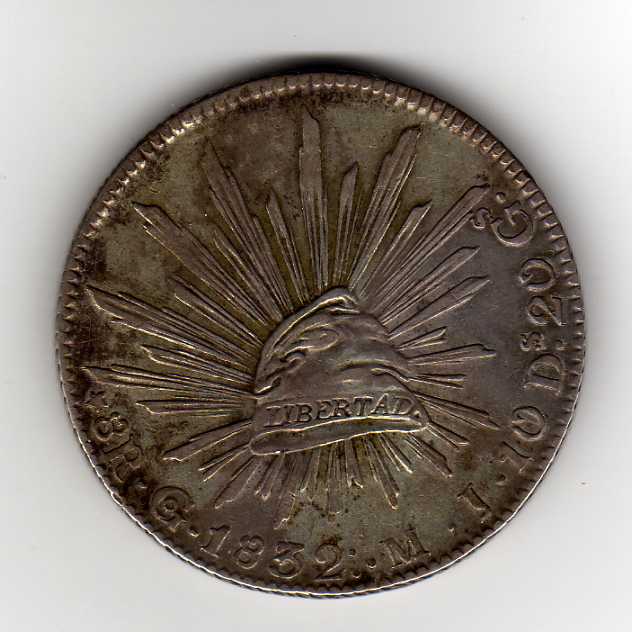
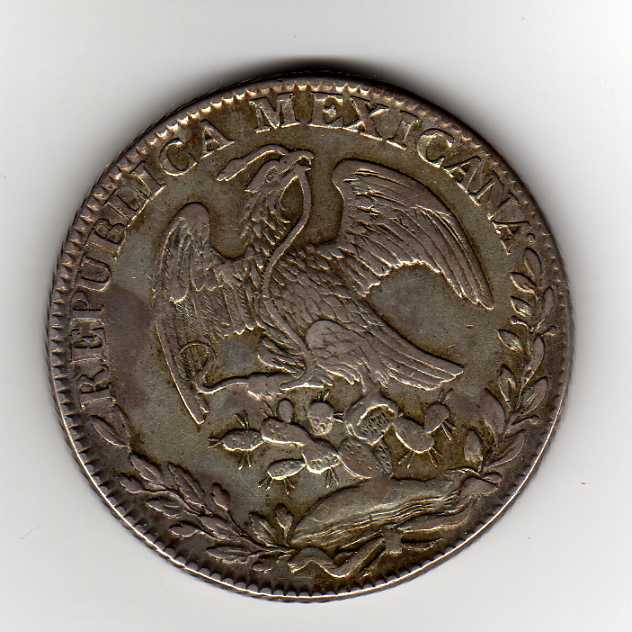
The 1832 Guanajuato was produced from a hubbed die pair. As such variations are few and far between. In 1832 the hubs were fresh so the dies are sharp. I do own a few that have VERY significant variations including recut rays but those were caused by a repaired die. On your coin there may be an interesting anomaly - a tooth (small die chip perhaps) on the eagle's beak - could make for a nice nick name. Is the feature a die chip? There appears to be some surface corrosion but nothing too bad. Nice common variety in average shape for the date.
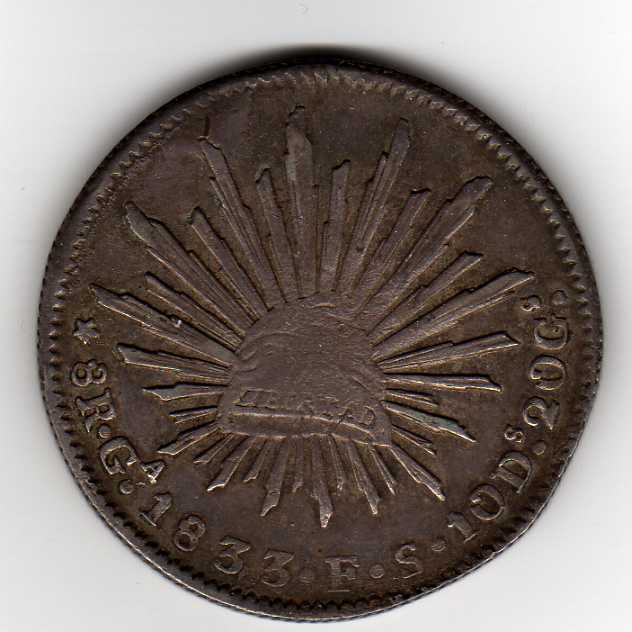
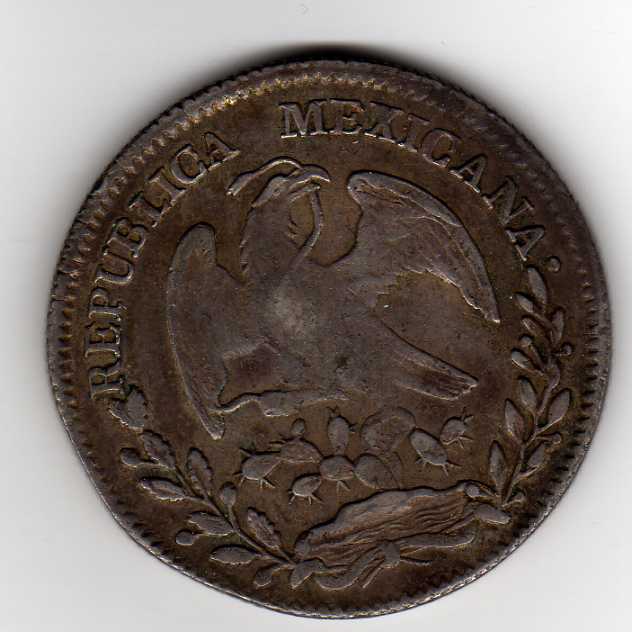
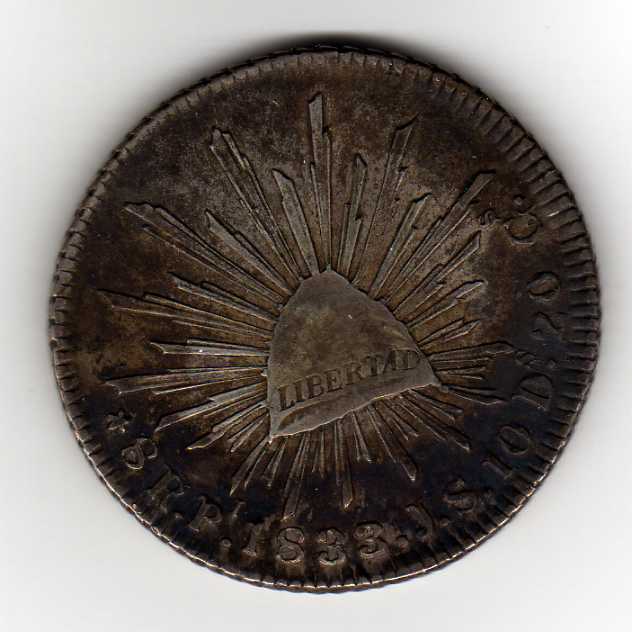
The 1833 Guadalajara is a much scarcer coin made from dies that were produced with King Punches and a punch set. Variations die to die are the norm. Your coin is typical of te type which rarely shows a full struck eagle. The cap has significant detail when contrasted with the eagle. Based on Dunigan's grading notes it would appear to be at the higher end condition wise. The dies used were deteriorating. There is evidence of "orange peel" near the dentils at 10 0'clock. Notice the small raised dot in the field between the central lower ray and the date. That is a die positioning dot left over from the manufacture of the die. Tic marks like that were used to align punches like the King Punch on the die face.
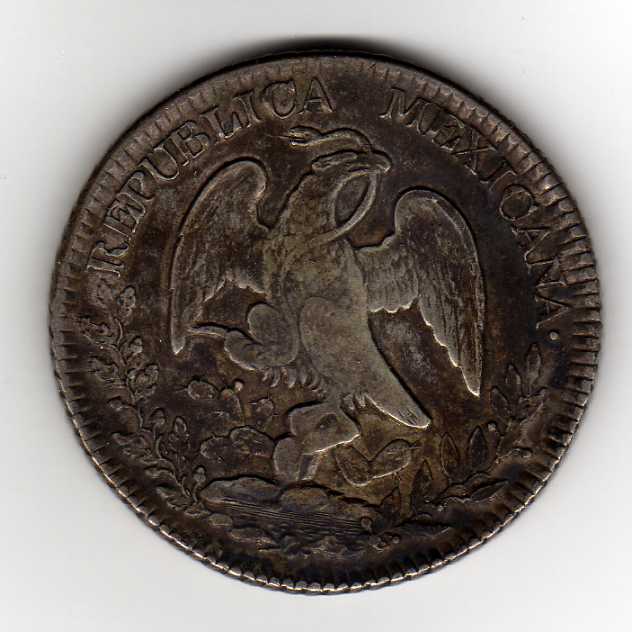
The 1833 San Luis Potosi coin was also made from a punch set. This mint is noted for variation in die sinking. In 1833 it is difficult to find two coins that match identically. Potosi was using King Punches for the eagle at this time but the Cap was initially placed on the dies WITHOUT the rays. They did not have a press in 1833 that could impress the cap and rays at one time. I have been making a study of the Potosi dies for some time and at times you can track the die setter by his preferences for priority and position of punches. In 1828 there was essentially NO standardization but by 1833 some efforts were underway in that regard. Dunigan reports there were two lettersets used this year and he calls them "tall" and "normal". I am less sure about the size but there is a clear difference in the lengths of the seriffs. Yours uses a letterset with particularly LONG seriffs on the E and L. The use of one set versus the other is not as clear in my opinion as Dunigan states. I believe there were dies made with a mixed punchset as well so that the lettering is irregular. Your coin is well struck with clear definition of the eagle's left leg across the breast. It is a decent grade for the variety. Another feature of Potosi coins is the length of the eagle's tail. There was more than one KING PUNCH for the eagle itself. They were essentially identical and are difficult to distinguish UNTIL the tail gets damaged on one punch. At that point there is a Bob Tail bird and a long Tail bird. This happened in 1834. I have yet to find an 1833 Bob Tail.
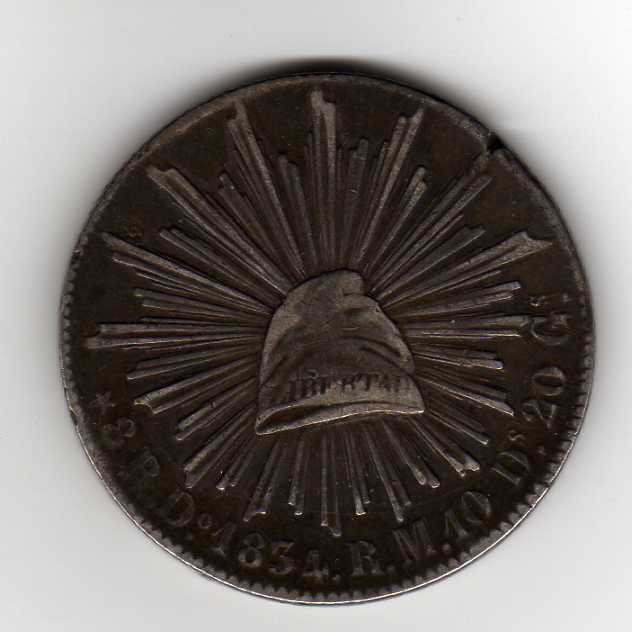
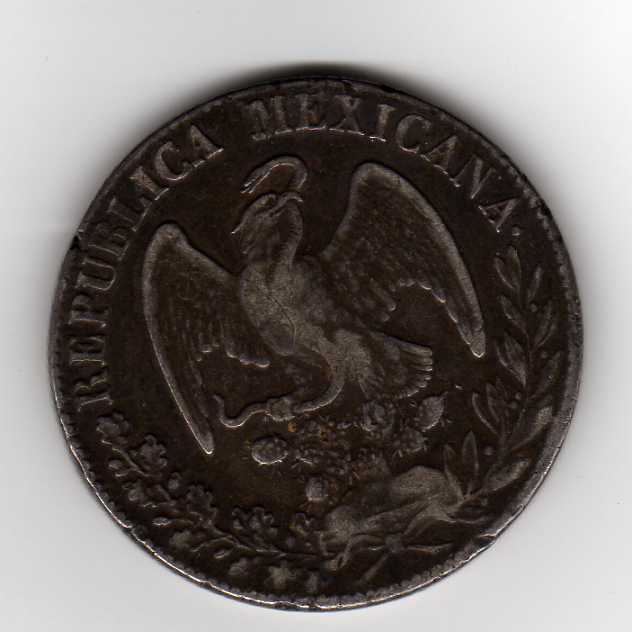
The final coin the 1834 Durango uses the French hubs that were discussed in relation to your 1843 Do 8R. In the case of the 1834 the coin dies were made with BOTH hubs. These hubs were virtually complete so variations are minor. One feature the die sinkers tinkered with was the crest on the eagle's head. You can find long, short and missing crests. One caution - the VAST majority of crestless eagles in this series are COUNTERFEITS. There were multiple hubs made by the French and some hubs were apparently modified by 1832 so that there are minor hub varieties. But the KEY to determining real Do coins is the position of the ray tip between the 0 and the D in 10Ds. That is a feature that is IDENTICAL on all real hubs. If there is an original where the ray is not just slightly shifted off center towards the D (just like yours) - I do not know of its existance. There are exceptionally well made forgeries starting in 1832 where the ray nearly touches the 0 and others where it is positioned near the D. Be cautious, Riddell and US mint officials believed that the forged dies were made in France by the same individuals who made the real hubs. There is a hint in some letters that there was a dispute between Mexico and the French authorities about the purchase of new hubs for EACH year. Apparently the French thought Mexico would bring repeat business but instead the Mexicans redated the dies made from the original 1831 hubs. The forged dies could be a form of pay back. The forgeries are seen in every date from 1832 to 1838 but the 1832 and 1834 varieties are SUPER common.
The weights of your coins all fall in an acceptable range EXCEPT the 1834 Do. That coin was test cut along the rim - so at one point someone was suspicious of the coin. The test cut could have removed 1 or 2 tenths of a gram of material. From the pictures it looks OK - a bit spongy looking with slightly blurred details, but if it passes the other normal checks - edge laps and priority - I would not be too concerned. It is a coin that I would do an SG on to confirm density.







 Posted 08/31/2010 8:26 pm





