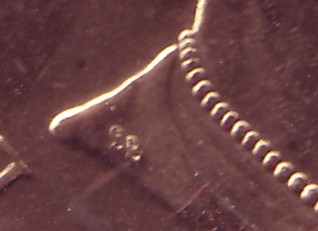
Sure, you can easily make a clip but it still won't have the diagnostics of a genuine incomplete(clipped) planchet. The Blakesely Effect is the primary diagnostic to use. After a blank is punched from the metal stock, it is run through an upsetting mill to form a proto-rim. Below are the stages of a
Lincoln Cent. Far left is a zinc blank with sharp edges while the next one is a planchet that has gone through the upsetting mill, notice the rounded upturned rim.
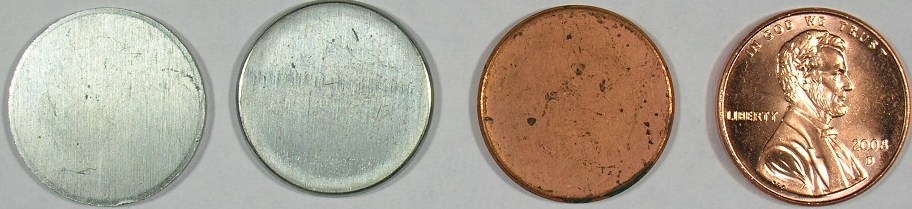
This process allows the rim to fully form when striking the coin. The upsetting mill works by force-spinning a coin through a narrowing channel which creates a smaller diameter than that of a blank along with a thicker edge. I believe that the examples I posted above had a 0.4mm difference in diameter when measured with a micrometer. When an incomplete planchet is run through the upsetting mill, the opposing force is not as strong at the site of the clip which results in a weakening of the rim 180 degrees from the clip.
Another diagnostic is at the site of the clip itself. When the coin is struck the planchet has a natural tendency to fill all of the space bound by the collar and dies. As the planchet expands during striking, the rim and denticles "flow" towards the edge of the clip and it becomes slightly tapered. Instead of an upward and downward flow into recesses of the dies, the flow is directed towards the collar.
The first two coins are genuine incomplete planchets with the second one also having a small secondary clip. The third coin has a damaged rim and tape residue. You may be able to fake the curvature of a clip but the diagnostics cannot be reproduced. If you know what to look for, you will never be fooled by a bogus example.
Edited by biokemist6
09/03/2010 12:50 pm










 Posted 09/03/2010 09:27 am