











 Posted 09/10/2010 09:27 am


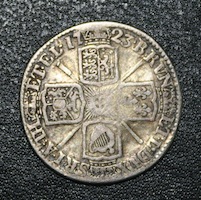
I would agree that it's most likely to be a genuine shilling that's been modified to resemble a guinea. From the looks of them, the "bars" were made by scraping away at the coin to either side of the bars, creating little hollows.
However, I don't think it's "recent"; the crudeness, and the fact that the gilding is mostly worn away by now, implies to me that it was intended to circulate at about the time that genuine guineas looked like that (ie prior to 1727, when the design of the guinea switched to a large shield). Indeed, it was precisely because people were going around gilding shillings and passing them off as guineas that the design of the guinea was changed.
However, I don't think it's "recent"; the crudeness, and the fact that the gilding is mostly worn away by now, implies to me that it was intended to circulate at about the time that genuine guineas looked like that (ie prior to 1727, when the design of the guinea switched to a large shield). Indeed, it was precisely because people were going around gilding shillings and passing them off as guineas that the design of the guinea was changed.
Don't say "infinitely" when you mean "very"; otherwise, you'll have no word left when you want to talk about something really infinite. - C. S. Lewis


