| Author |
 Replies: 42 / Views: 18,247 Replies: 42 / Views: 18,247 |
|
Pillar of the Community
United States
709 Posts |
From the Numismatic dictionary:
Term for the incuse polish lines on the die which result in raised lines on coins. These are usually fine, parallel lines though on some coins they are swirling, still others with criss-cross lines. Planchet striations are burnishing lines not struck away by the minting process and are incuse on the coins.
Zee, I have never seen swirly striations. But I have seen the parallel lines.
|
|
|
|
Pillar of the Community
 United States
709 Posts |
From bestcoin.com Coin collecting defintions: defects in a blank planchet, caused by impurities in the metal, that are not obliterated when the coin is struck.
|
|
Pillar of the Community
3660 Posts |
Yeah, I have never seen them either way, but I now seem to recall the mention of them being swirly in circles, which made no sense to me then or now. As a matter of fact, I don't think that I can buy the definitions from either of those two sources. (I know, that is pretty brash, considering that I have never even seen any of these lines or swirls unless I recognize them as polishing lines or file marks).
Thanks for the info Terry. I hope to see some pictures of these anomalies eventually.
|
|
Pillar of the Community
United States
4212 Posts |
This what you mean? 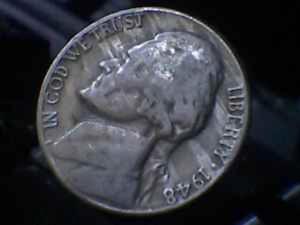 Edited by fioti
10/11/2010 7:45 pm
|
|
Pillar of the Community
3660 Posts |
That sure is not what I had in mind fioti.....I would say that is post mint whatever it is.
|
|
Pillar of the Community
United States
4212 Posts |
Alright, maybe this 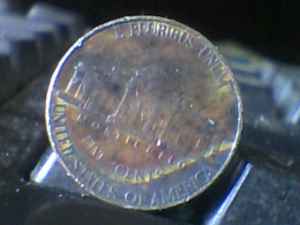 |
|
Pillar of the Community
3660 Posts |
That looks like artificial toning to me. I have visions of parallel scratch like impressions covering the entire coin, but more pronounced in the center (maybe)?
|
|
Pillar of the Community
United States
4212 Posts |
I have a '43 Jeff. that is what you're talking about. I'm having trouble loading it.
|
|
Pillar of the Community
3660 Posts |
I do appreciate your trouble and your help fioti....Thank you.
|
|
Pillar of the Community
United States
689 Posts |
Im not sure but I would imagine they would almost resemble cleaning marks. Correct me if I'm wrong anyone.
|
|
Pillar of the Community
3660 Posts |
This is similar to what I had in mind, but I could not find a picture of the whole coin. I would expect them to cover the coin in both field and device, I could be just imagining things though, as this picture is not very conclusive. I am going to give up for this evening, but will continue the search tomorrow. Maybe I just have a big imagination though. 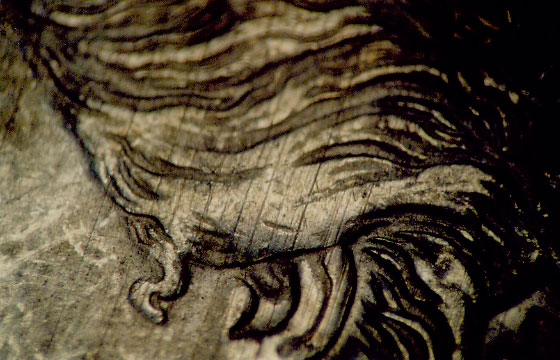 |
|
Pillar of the Community
United States
709 Posts |
That is a planchet striation. Zee, I should have (many close up) pictures to you by Friday, including pictures of the entire obverse and reverse.
|
|
Pillar of the Community
3660 Posts |
I combed Heritage, but all I found were what they called die striations in which the effect on the coin was raised, looking like someone took a file to the die. Thanks for the positive I.D. Terry, I thought that I was on the hunt for a red herring there for a while. Later buddy.
|
|
Pillar of the Community
United States
3076 Posts |
when I finally get settled down, I have a nice example of a striated coin, both OBV and REV...I tried to take a pic of OZ 83-0 but I can't get a good shot of its striations..another 300 miles tomarrow,
but I do want to keep this idea alive..as there are examples of this phenomina in which a coin looks like you took 60 GRIT sand paper and slide the coin across it..AS for the value or how one would grade it I haven't a clue but it would be nice to know how its accepted...
|
|
Pillar of the Community
United States
2797 Posts |
|
|
Pillar of the Community
3660 Posts |
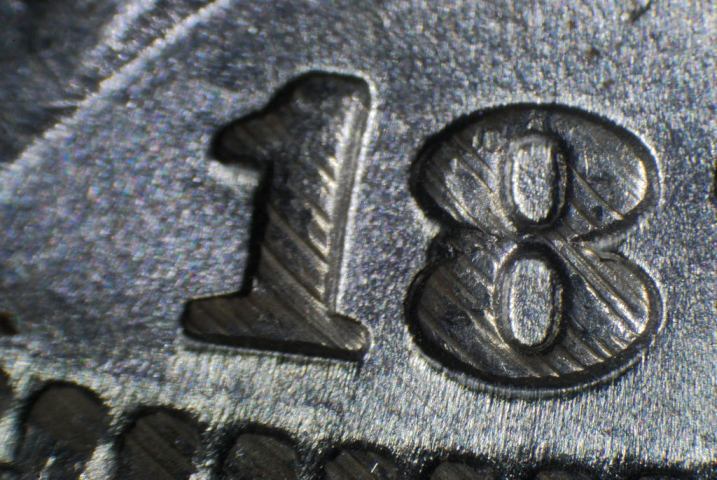
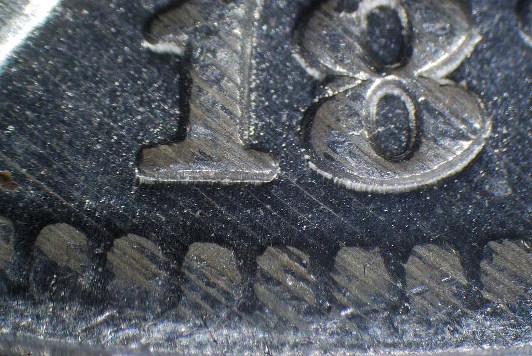
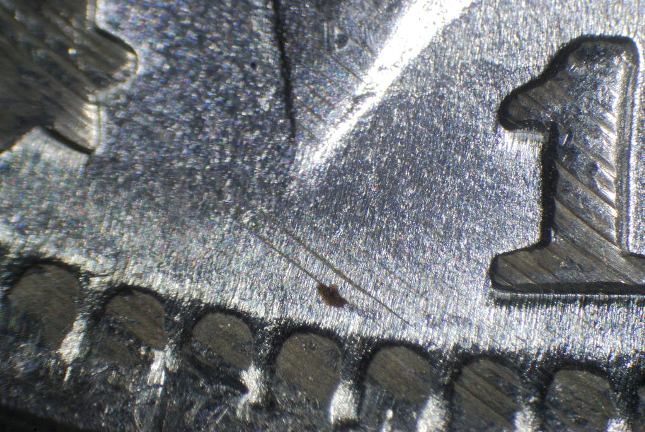
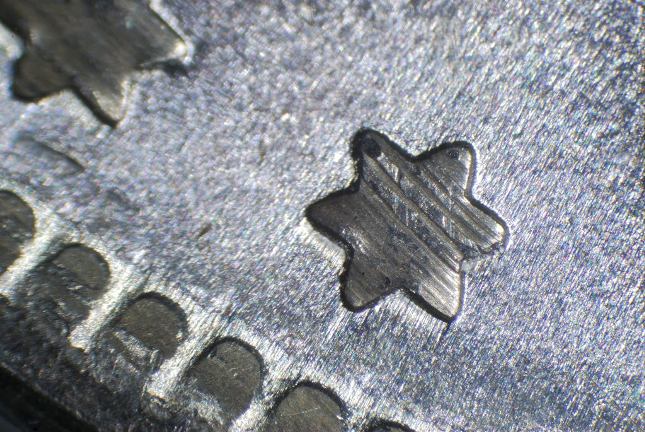
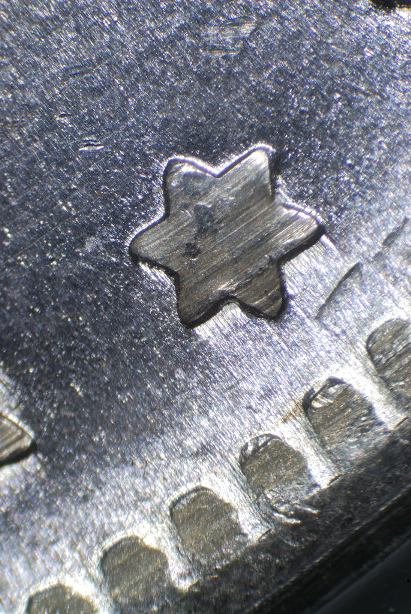
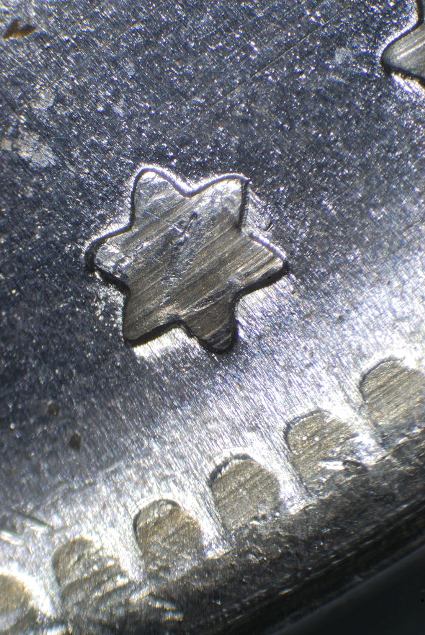
Thanks for posting the most excellent photos Dave. Limited by the illusions often displayed by online photos, this is my interpretation of them:
The grainy radial texture around the denticles cause me to think that this was a worn die.
The 'striation' lines look exactly as I had imagined that they might. Parallel and deeper in the devices than the field due to the fact that solids do not actually 'flow'.
The stars and denticles appear to be flat to nearly non-existent in places indicating to me that the strike was not brought up, giving it a post strike damaged appearance.
|
| |
Replies: 42 / Views: 18,247 |










 Posted 10/11/2010 6:47 pm