| Author |
 Replies: 15 / Views: 3,836 Replies: 15 / Views: 3,836 |
|
|
New Member
United States
7 Posts |
I am trying to figure out if this coin is genuine or a fake, and was hoping someone here could lend a hand. Any opinions on authenticity and value are appreciated. Weight is 26.70 grams, which I heard was a bit light. I know minting standards weren't great back then, so is it possible this is still legit? I have posted a few pictures here, and have a lot more with higher resolution available on photobucket, http://s1124.photobucket.com/albums/l574/cato_x3/Thanks in advance for your help. Tom 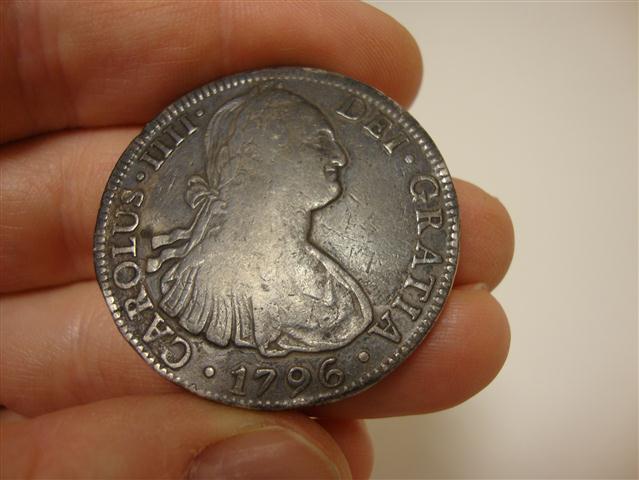 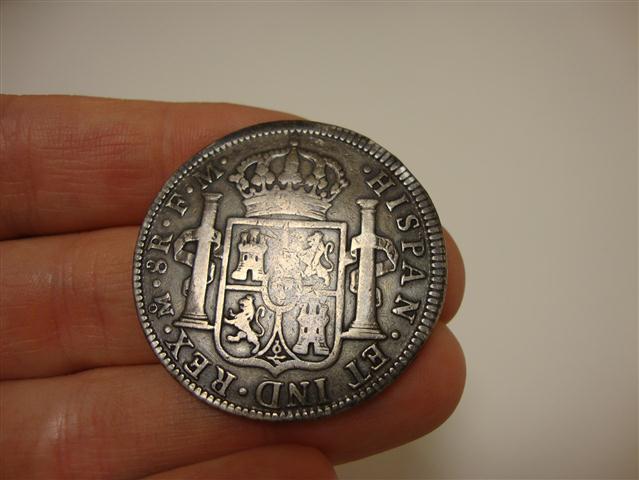 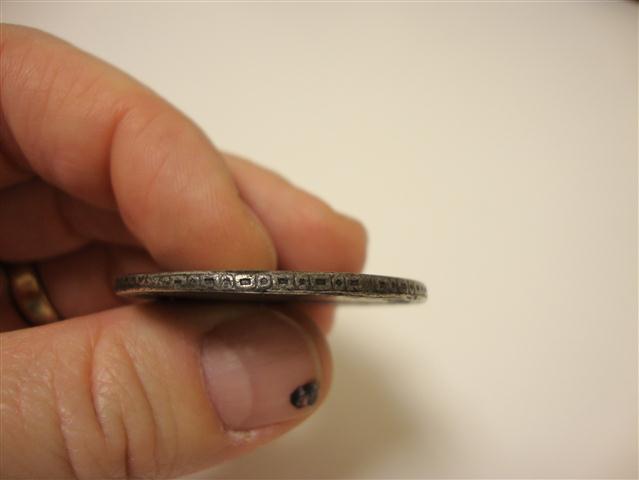 |
|
|
|
Valued Member
United States
426 Posts |
As far as the weight is concerned, I believe it is still within the proper range. Hopefully some more knowledgeable members will come on board to comment.
|
|
Valued Member
United States
425 Posts |
As Real Peso has said, I start to worry about anything that is under 26 grams. This one is almost 27 and has some wear, so that could account for the lost weight.
The Rim looks good, a little ringed up but for being over 200 years old! Not bad.
What bothers me,(and I am no expert on Portrait Pillars), is the edge design. Above ole Carol's head it is nice and heavy, but down below the date it is almost gone......nothing wrong with that but it should match on the Reverse. The back seems to have a heavy edge design all around. This is just something I look at on Pillar Dollars for picking out possible Contem Counterfeits.
Paul.
|
|
Pillar of the Community
United States
1801 Posts |
I see nothing in the pictures that makes me suspect the coin is anything but real. Looks like you have yourself a nice Portrait Dollar.
|
|
Pillar of the Community
United States
5362 Posts |
cato_x3 Nice looking coin. I agree with RealPeso that the weight is within what would normally be considered to be acceptable for a worn 8R. The design near the edge (dentils) are also acceptable for an out of collar strike. I think the anomaly that odentheviking is referring is caused in part by the angle the pictures were taken at. I see the lower dentils as shorter on both pictures and the upper as being longer. There may be more wear on the portrait side or the dies may have been slightly out of alignment as well. But when I looked at the edge I was bothered by what I saw there. The fact that the borders are so prominent makes me concerned. So I looked at the larger pictures. They were not too helpful because they were taken at random it appears. Could you take larger (closer) edge shots that cover the entire perimeter, but which are tilted so that the orientation to one face or the other shows in each shot. I am looking for the 2 overlaps in the edge design and for what the entire edge looks like. There are a couple features I spotted that look like this MAY BE a Boston style edge. Here are the anomalies from the photobucket pictures. 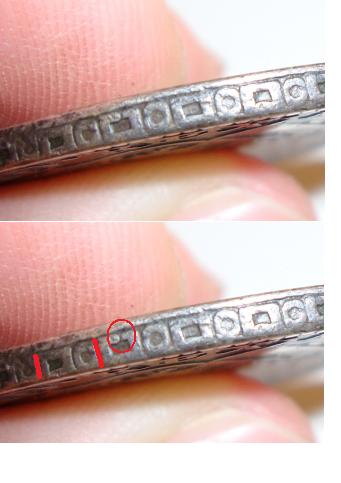 If you notice the circles with the RED lines seem to have squared sides. There is also a single broken top rectangle adjacent. This particular edge defect is often seen on Counterfeits made in the late 1800s. However, the problem could be damage. At this point without seeing the entire edge I can't tell.
Edited by swamperbob
11/06/2010 9:53 pm
|
|
New Member
 United States
7 Posts |
I appreciate all the help so far, especially your thoughts Bob. Yes, the pictures are a bit random. I am actually helping out a co-worker, who owns this coin, so I take a bunch of pictures and then load them on the computer that night to see how they look. If it ends up being genuine I will likely buy it from him since he doesn't collect. I know very little about these coins except that there are lots of fakes out there, which is why I haven't ever gotten one. He is supposed to bring it back in on Monday so we can verify the weight so I will take more pictures then. Thanks again and I will let you know when I have more to look at.
|
|
Pillar of the Community
United States
5362 Posts |
I will await other pictures.
You should also read the posts on edge designs and what you should and shouldn't find.
|
|
Valued Member
United States
425 Posts |
Sorry Gents....... the edge design I was talking about is called the "Dentils". Thank you Swamperbob, I will remember that! Paul.
|
|
New Member
United States
7 Posts |
Ok, I have uploaded some new pictures to the photobucket album at http://s1124.photobucket.com/albums...%20pictures/ I took pictures of several rotations around in order and most you can still see the face of the coin to see where it is. On a couple of pictures I took them straight on to get more details; these will be the same location as the previous picture. I read up on the edge designs and understand what I should be looking for but I couldn't seem to find it on this coin. The probably place I saw for the overlap is at 12 o'clock and 6 o'clock (not sure if there is a standard location), but there is some damage in both of those places that makes it hard for me to tell if there is overlap. I have posted picture of those two places here, the rest are in photobucket. 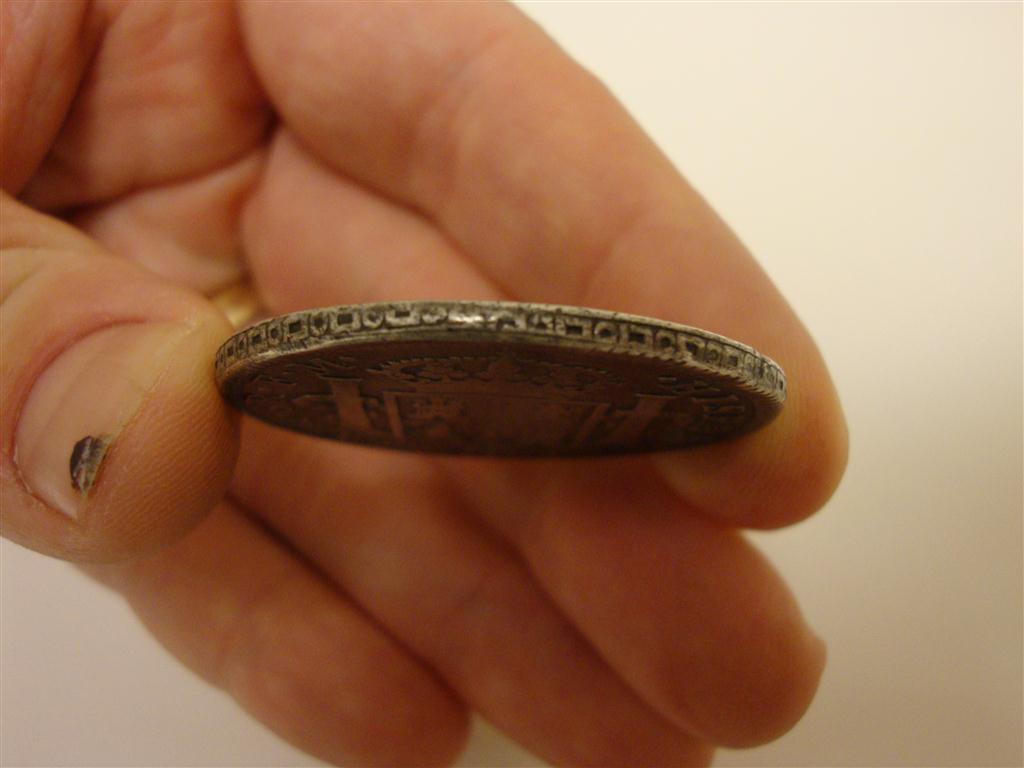 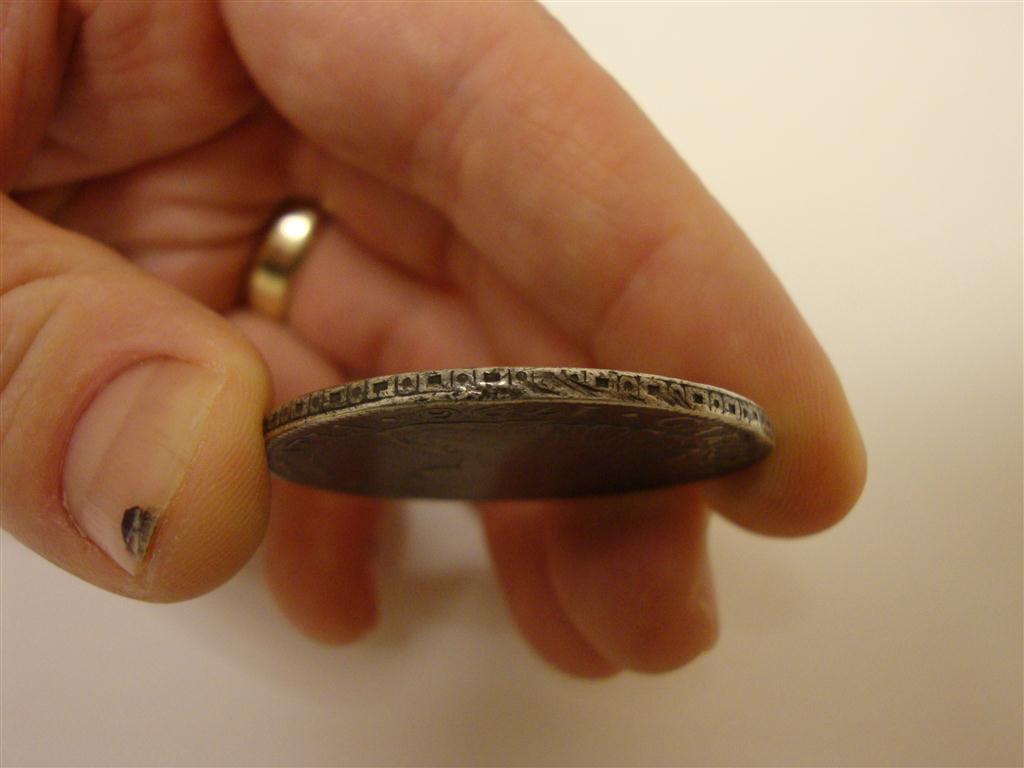 Edited by cato_x3
11/10/2010 7:55 pm
|
|
New Member
United States
7 Posts |
Does anyone else have any opinions on this?
|
|
New Member
United States
7 Posts |
Can someone email Swamperbob to let him know there are more pictures up here? I tried a few times but it said I don't have access to the email system. Thanks.
|
|
Pillar of the Community
United States
5362 Posts |
I have been in the Boston area for a few days picking up a couple tons (literally) of books and papers from the Library I am selling.
The Boston Coin show was great - got 15 counterfeits including one of the Charles IV coins from the 1890s.
I really believe that is what you probably have here. The squared circles in the edge design and the border line are very typical of the type. In addition (provided the edge shots were taken consecutively around the edge) there are diagonal gashes in the edge very typical of certain varieties. Most coins of this type are actually silver and have the proper assay. They also used technology that duplicated the originals in "most" respects - that is why they are very difficult to differentiate and why many dealers simple treat them as REAL. It is very similar in that respect to the Counterfeit 1950 D nickels which still trade as real. The most notable copies are of course the ones where a "factual error" like the wrong initials are used.
But in my opinion and the opinion of a small number of specialists the coins were fraudulently produced for the China Trade in the period from 1870 to 1930.
|
|
New Member
United States
7 Posts |
Glad to hear you enjoyed your trip to Boston. I thought you might be traveling, but wasn't sure. It is disappointing to hear that it's a fake, but at least we know now. Ok, thanks for your help Bob. Thanks again everyone.
|
|
Pillar of the Community
United States
5362 Posts |
cato_x3 It is a Late Bullion Fake - not a worthless counterfeit BY ANY MEANS. So do not treat it as junk.
The coin trades between specialists like myself on a par with originals.
|
|
New Member
United States
7 Posts |
Ok, well that is better news then. What kind of value would you put on this one?
|
|
Pillar of the Community
United States
5362 Posts |
cato_x3 The value of a Boston style forgery is based on the interest of the collector, but personally I have a standing offer with several dealers (the ones who are used to the type) for coins like this at $35 each.
Since yours has no test cuts or serious blemishes I would say it is a $40 type coin.
|
| |
Replies: 15 / Views: 3,836 |
|










 Posted 11/06/2010 11:01 am


