| Author |
 Replies: 8 / Views: 2,255 Replies: 8 / Views: 2,255 |
|
|
Valued Member
United Kingdom
498 Posts |
Bought this example over the weekend - quite attractive AU possibly lightly cleaned at some point. Lots of lustre, best 8 reales I have yet had. Was just wondering about the 'dot' next to the chin, some sort of minting error? Any opinions would be much appreciated. 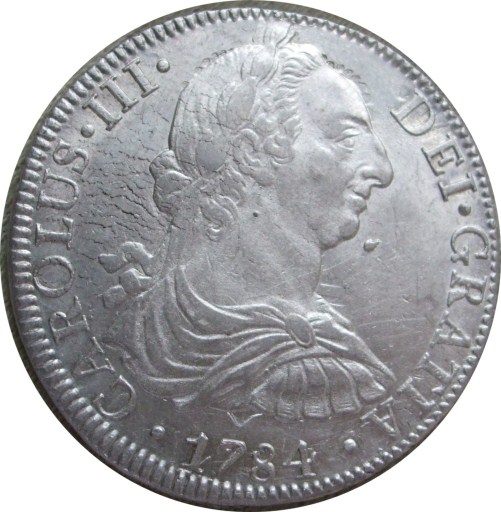 www.kingstoncoincompany.co.uk
|
|
|
|
Valued Member
United States
425 Posts |
The "dot" is interesting, never seen a flaw like that allowed out, where was this minted?
I am more interested in the cracks/waves behind his head and through the hair!
Reminds me of a 1744 Pillar I have, it looks like it was shot by a small caliber weapon and then there was an attempt to flatten it back out.
How about a pic of the back and edge.
|
|
Valued Member
 United Kingdom
498 Posts |
Heres some more pictures: 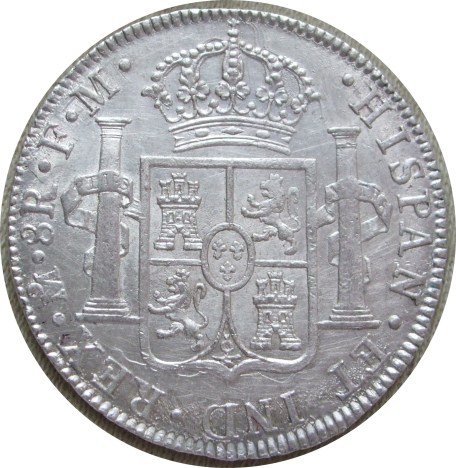  www.kingstoncoincompany.co.uk
|
|
Pillar of the Community
United States
1418 Posts |
Nice coin. The dot could be a die chip.
|
|
Pillar of the Community
United States
1801 Posts |
Looks like a nice 8! The dot is probably a die chip as pointed out by Tumbleweed, the die was old, note the rust spots at "ET IND" and "F M" as well as the die clash marks above the kings head and below the bust. As for the "broken lines, those are stress fractures in the planchet, happens on 8s on a regular basis.
|
|
Pillar of the Community
United States
5362 Posts |
Jeff 11 Nice high grade coin. I agree with most of the comments but would like to make a couple comments.
First the die lump near the chin. As was noted, a lump like this means there was a hole in the die. So the question really is - How was the hole in the die made? And is the explaination REASONABLE? I ask this second question when assessing the probability of a coin being fake when the other clues are not conclusive. Holes are usually the result of dropping something metal onto the die - or by dropping the die during the mounting process. These holes are rarely round bit could be. A glancing blow is far more likely.
A hole in the face of a die can also occur when a void in the original die steel is exposed by either wear of the die surface OR by the strike pressure. It is not uncommon for a die surface to crush into a void as a result of repeated striking.
So you really need to look at the lump under a microscope to see if the details of the impact on the die are still visible.
The coin has - as was noted - a nice clash mark - sharp and fresh - not wprn down. The presence of a clash was at one time accepted as proof that a coin was struck. Today they can be duplicated on fakes and they are no longer a "positive proof" of originality just like a chop mark.
Next the surface breaks - striations that usually occur in the stage where the silver ingots are rolled into a silver bar that is the proper thickness to punch out blanks. If the silver ingot is too cool when being rolled it can crack at the surface. This occurs in forged coins as well - especially the bullion varieties.
The final comment is on "die rust". There are many people who use this term inappropriately. Dies can rust but often they just wear. Many die wear features are "rough" surface areas on does that translate to the small problems with coin dies.
|
|
Valued Member
United Kingdom
498 Posts |
Thanks so much for the detailed info. Thats seems to cover everything I could have needed to know, vey interesting. The provinance of the piece is quite good - came with other pieces that have a solid authenticity, so fairly confident it's ok.
Thanks again Swamperbob and jfransch
www.kingstoncoincompany.co.uk
|
|
Pillar of the Community
Canada
3692 Posts |
I'm concerned about the area in the hair. Looks like bent leather. What could've happened there?
|
|
Pillar of the Community
United States
5362 Posts |
Libertad You say - Quote:
I'm concerned about the area in the hair. Looks like bent leather. What could've happened there? That surface cracking happened during the rolling process. Silver ingots were cast and then drawn out to the proper thickness by rolling. The stress on the ingot came in TWO dimensions. The ingot was PULLED through the rollers so there was stress along two planes at the same time. The cracks result from the PULLING force. If the surface of the silver ingot was too cool it CRACKED near the surface instead of drawing out smoothly. This surface cracking often survived the striking process and produced coins that look just like this one. One caveat - the same thing happened to many of the forgers who used substandard silver or worked too quickly. These surface cracks are MOST common on the late 1800s "Boston" style forgeries made fro the China trade.
|
| |
Replies: 8 / Views: 2,255 |
|







 Posted 11/15/2010 12:48 pm





