| Author |
 Replies: 13 / Views: 1,925 Replies: 13 / Views: 1,925 |
|
|
Previously Banned Member
United States
71 Posts |
I like the contrast of the field vs. capturing the field color - I was thinking about experimenting a bit to see if I can capture the coin with color in the field at top morphing to near black at the bottom or visa versa. Which image do you prefer?  
|
|
|
|
Moderator
 United States
23522 Posts |
Black and white, baby! Proofs aren't for collecting, they're for taking black & white pictures of.  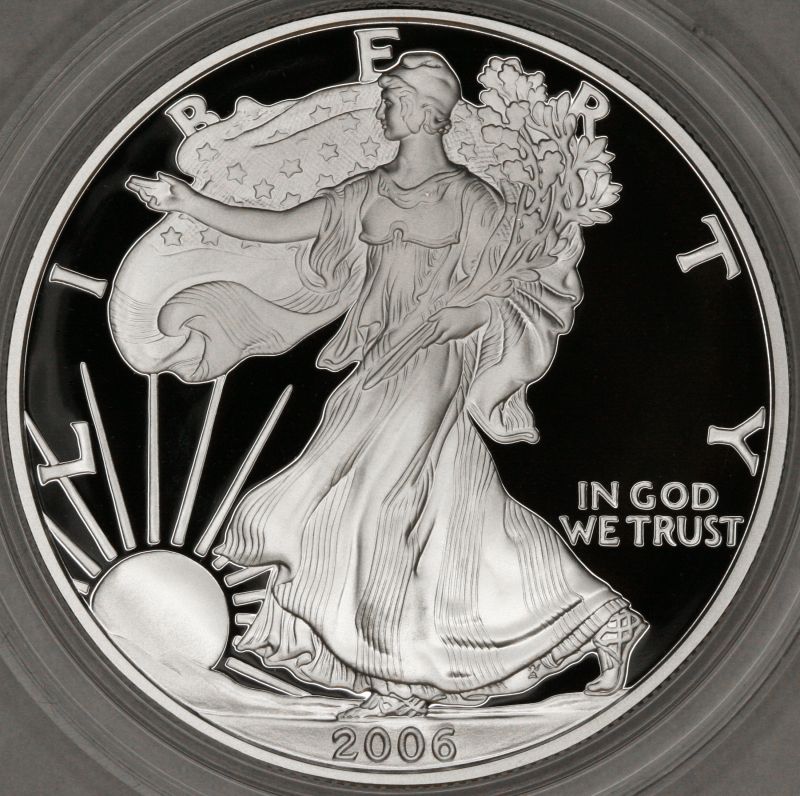 |
|
Previously Banned Member
 United States
71 Posts |
Oh wow.... now why did you have to go and do that! My god.. against a white or black background.. WOW.. that is strikingly uh.. I'm speechless.
|
|
Previously Banned Member
United States
71 Posts |
|
|
Pillar of the Community
United States
1659 Posts |
Great pic SuperDave! I never thought about taking B&W pics of proofs. I'll have to remember that one!  |
|
Moderator
United States
23522 Posts |
I hit on a slam-dunk method of lighting Proofs for that cameo look, but it won't work with copper. I bought a 9" round-fluorescent kitchen ceiling fixture. Painted it matte black, cut a hole through the center and stuck the camera through the hole. 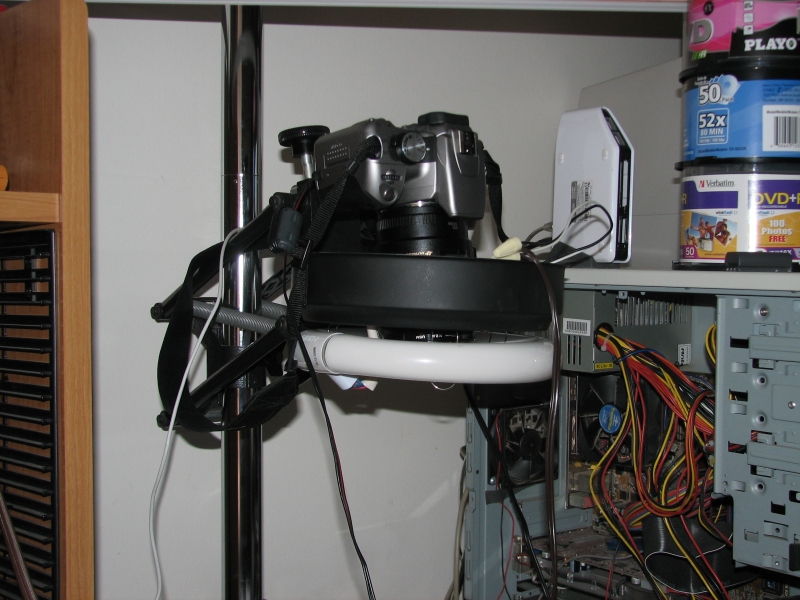 Bang. The trouble is, the color temperature of the bulb varies around the diameter. Near the connector, it gets much lower. Even custom white balance is darn near impossible with it; a quadrant of the coin will always be out of whack. I have to pretty much desaturate the images. With silver, it's no big thing; that's what they look like. But copper will drive you batty trying to get consistent color. Word to the wise: I suspect an LED ring, full-circle, with a large number of LED's, will do the same trick and no color balance problems. You just want a large number of small light sources. When I get around to it, that's what I'm going to do to this fixture. Edit: That photochop is stupid pretty, EyeEatWheaties. Makes the coin look like it was routed from billet. |
|
Previously Banned Member
United States
71 Posts |
I'm getting quicker with choppin photos. more like gettin gimpier! I just noticed I stole your photo, hacked it into a blackground and uploaded back onto here in 6 minutes. I use a axial set up to light up the fields on the Lincoln Proofs. The clearest piece of glass I could find was in a picture frame. I feel I am still getting too much reflection from stuff in the room. Modifying my little photo both at this point.. gotta get the new lens first... Question, I think I read somewhere that axial lighting works well for well circulated copper. You can't prove it by me. no luck here Something I have been wanting to ask, is whether anyone has experience with fiber optic lighting? Dave - I am thinking ILO of your gooseneck set up that this might work?  |
|
Bedrock of the Community
United States
12437 Posts |
I have no experience using fiber optic lighting for imaging coins but I do use a fiber optic light source for my dissecting microscope at work, very nice light source for working under magnification. Only downsides I can think of would be price and light intensity but getting a box with a rheostat should negate light issues.
|
|
Previously Banned Member
United States
71 Posts |
Thats what I am thinking about the one above. I find myself moving lighting back and forth too much, a dial would be nice, ha how cool would it be if I could hook that into the computer too! No reason why it couldn't be.. Off to build a better mousetrap!
|
|
Previously Banned Member
United States
71 Posts |
Oh no nevermind... that thing is waaaaaaaaaaaaaaaaaaaaaay outa my league
ECO-150 Tungsten-Halogen Light Source = $595.00
Fiber Optic Light Guide Options:
BG-018: Bifurcated light guide, 18" long with vinyl-clad sheathing = $375.00
Love to see one of these for kicks and giggles:
RL-360: Annular ring light for the highest degree of uniform illumination, 3' flexible stainless steel sheathing= $325.00
|
|
Bedrock of the Community
United States
12437 Posts |
Yeah, that is why I mentioned cost as a downside. A fiber optic light box will cost you about as much as a microscope. You also have to be careful with purchasing used equipment- I have seen goosenecks perfectly rigid but the fiber optics were mangled from twisting the gooseneck around too much, all the money is in those thin glass filaments.
|
|
Pillar of the Community
Canada
1248 Posts |
Dave, there are fluorescent light rings available which have the connectors at the back. you get a full ring in that case,
|
|
Moderator
United States
23522 Posts |
Quote:
Dave, there are fluorescent light rings available which have the connectors at the back. you get a full ring in that case I suspect if I had the patience to let the light warm up, the problem would be lessened, too. Unfortunately, patience isn't in my skillset. EEW, it's axiomatic that smaller sources make for better lighting, especially with more lustrous coins, because you can get it closer to the lens and therefore more vertical above the coin. With that said, Mark Goodman, the best coin photographer I know of, uses standard A19 incandescent bulbs and simply slaps around my best work with lustrous silver. His unacceptable stuff is better than my best. I really gotta explore A19's. I'm thinking fiber-optic sources might be *too* pinpoint of a source, leading to irregular coverage of the coin's surface. Hot spots and dark spots. |
|
Moderator
United States
23522 Posts |
Hmmm. This has potential. 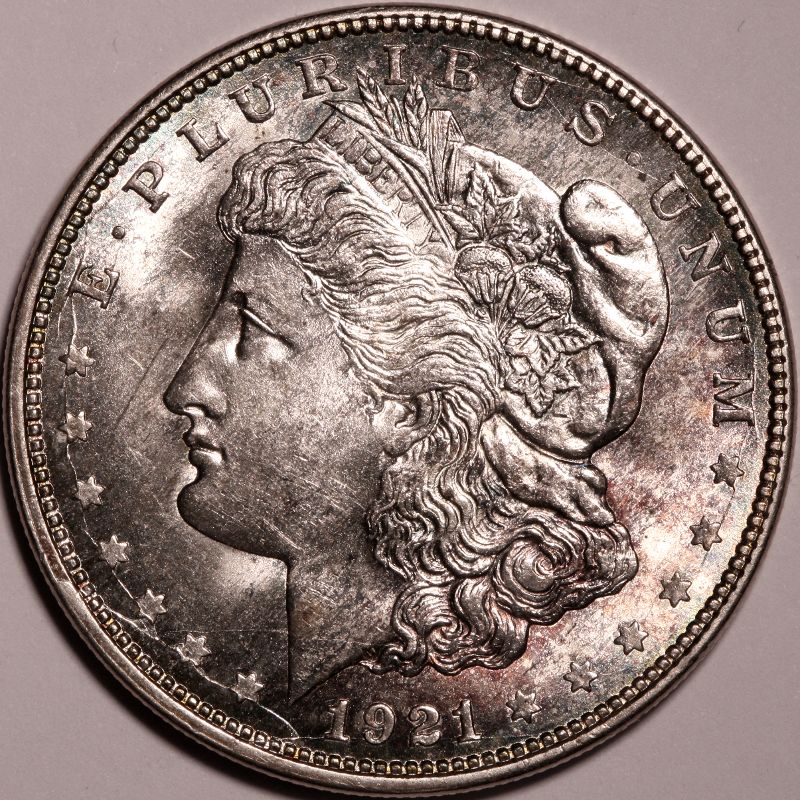 |
| |
Replies: 13 / Views: 1,925 |
|




 Posted 12/14/2010 7:25 pm





