| Author |
 Replies: 18 / Views: 4,432 Replies: 18 / Views: 4,432 |
|
New Member
United States
11 Posts |
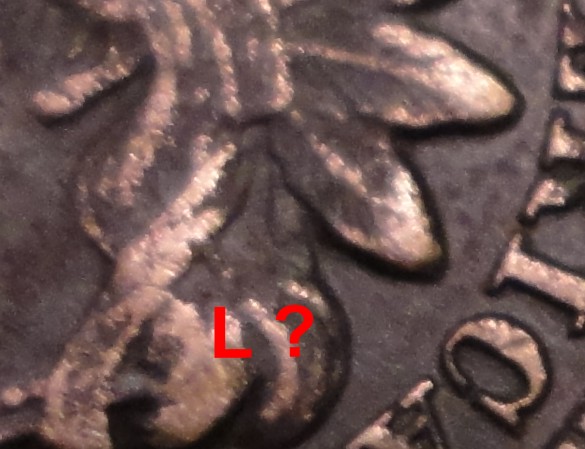
Ive recently aquired an 1863 Indian Head cent that appears different than others, thicker and heavier, possible bronze? How can I determine if this is a J-302? --Moved to the Classic US coins forum |
|
|
|
Pillar of the Community
United States
1510 Posts |
can you put up a pic?
Retired USAF 1983-2003
|
|
Bedrock of the Community
United States
10045 Posts |
The thicker and heavier IHCs are typically cupro-nickel. They were struck on thicker planchets.
The Judd 302 is a proof coin dated 1863, bearing Longacre's "L" and a pointed bust. The reverse is the "Shallow N" style, which suggests it was struck 1870 or later. There are only 5 examples known.
|
|
New Member
 United States
11 Posts |
I would love to post a pic but I can't figure out the post pic feature....it doesn't like big files and JPEG's that's pretty much any picture taken by a modern camera.  |
|
Bedrock of the Community
United States
11951 Posts |
Mal1980
When I started on this site, I had the same problem with file size.
One of the members posted to download picasa3 (free download)
With the program you can crop the file, so the pic is just the coin (shows detail better)
For file size you can use the function "export pictures to folder" from File drop down menu
at that point you can select a image size that will create a new file that will be less than
the needed 100kb file you need to post ..
I hope that makes since ..
|
|
Pillar of the Community
United States
1081 Posts |
You could use a hosting website such as Photobucket to upload there then just link over, very easy.
|
|
New Member
United States
11 Posts |
Also wanting to know if this other 1863 IHC could be an Aluminum. 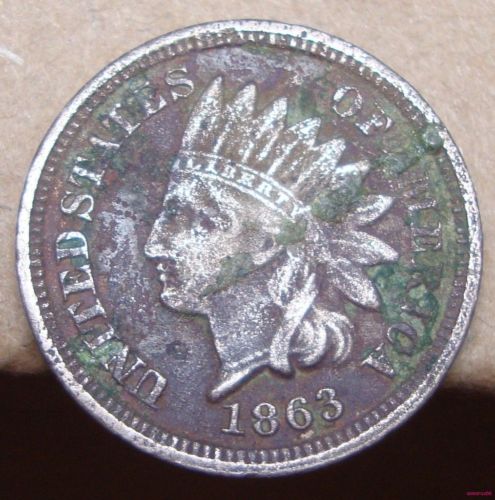  |
|
Pillar of the Community
United States
1081 Posts |
That does not appear to by anything other than an ordinary 1863 IHC. It has a rounded bust and no "L." It is very corroded and pitted, It does look like at some point it was an XF coin, but no longer. |
|
New Member
United States
11 Posts |
Thanks Guys. I figured it out. What I did was post the pic to facebook and then saved it from my facebook page as a smaller file which was under 100K.
|
|
New Member
United States
11 Posts |
|
|
Bedrock of the Community
United States
11951 Posts |
mal1980
There is a 1864 L, but I don't think there is one for the 1863
|
|
Pillar of the Community
United States
1081 Posts |
During 1864, Longacre began to put his "L" onto the IHC. Most 1864 and earlier IHCs do not have an "L." Thus, I believe this to be an ordinary 1863 IHC. |
|
Pillar of the Community
United States
1081 Posts |
As for your aluminum theory, I do not believe so. I have never heard of the mint in the 19th century experimenting with aluminum. It doesn't make any sense. At that time, due to the difficulty in refining it and the relatively scarcity of it, aluminum was worth as much as silver. The Washington monument was capped with an aluminum pyramid weighing about 6lbs, which at the time was the single largest piece of aluminum ever made mainly due to the difficulty and lack of understanding of how to purify the aluminum. I do not believe the mint would have made cents out of a material as expensive as silver.
Edited by DavidZerbato
01/12/2011 11:25 am
|
|
Pillar of the Community
United States
3284 Posts |
Like stated above that is a run of the mill BS '63 cupro-nickel IHC, nice shape but with corrosion issues |
|
Bedrock of the Community
United States
17884 Posts |
Yes the mint did experiment with aluminum in the 19th century. During th 1870's they considered it for coinage to redeem fractional currency. They were interested in aluminum becuase although it was as valuable as silver it's lower density meant than an equal weight of silver was close to five times the valume and could therefore strike more cons per unit of weight. They also thought they would save on the number of dies needed because the softness of the metal. (Actually pure aluminum is rather hard on dies. Aluminum is very reactive and the metal almost instantly forms a protective coating of aluminum oxide. While aluminum is very soft, aluminum oxide is the second hardest naturally occurring material. Only diamond is harder. When planchets are struck the movement of the metal drags this oxide coating across the dies and it wears them out fairly quickly.) There are various patterns struck in aluminum and in the 1880's the mint even struck proof sets cent through double eagle, for some VIP's all in aluminum.
|
|
Pillar of the Community
United States
2760 Posts |
Just for the record, they did make 1863 Indians out of Aluminum. However, there were 2 or 3 made, all proof, are Judd304, and probably all accounted for in PR64 and 62. There were a couple )potentially) made in Oroide (copper, tin, and zinc) - although there is only one known and this Snow thinks it's just a copper nickel cent, although it is listed as Judd-303. Reference: Rick Snow s Flying Eagle & Indian cent Attribution Guide 1859-1869. |
| |
Replies: 18 / Views: 4,432 |










 Posted 01/11/2011 12:12 am