| Author |
 Replies: 35 / Views: 5,933 Replies: 35 / Views: 5,933 |
|
Valued Member
United States
476 Posts |
|
|
|
|
Bedrock of the Community
United States
12437 Posts |
Quote:
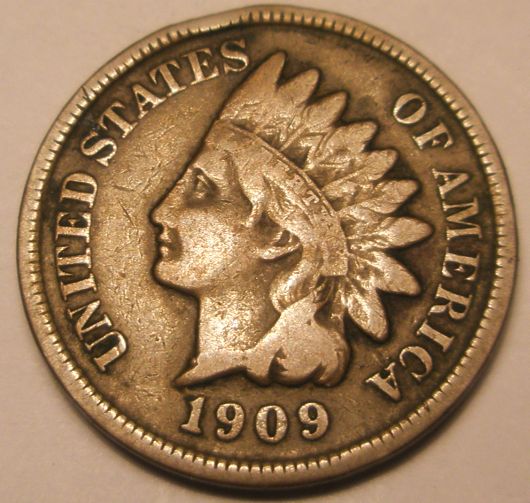
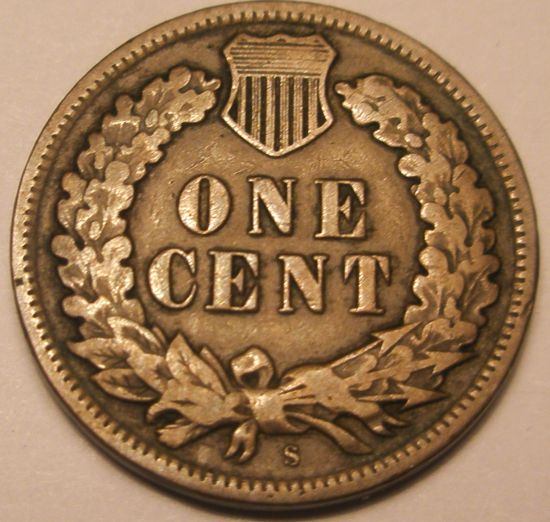
it does seem unlikely to me that my Father's coin from 1970(ish) would have been a counterfeit. Why would you think that? Counterfeits have been around as long as money has existed. There are many unsuspected counterfeits in old collections accumulated before the age of widely disseminated reference books and the Internet. With a mintage of only 309,000 there could not have been more than a few dies used to mint them. This makes the specific mintmark position very important. 1909-S VDBs can be easily authenticated by mm position- four dies with four specific mm positions were used. If the mintmark does not match one of those four positions, the coin is most definitely counterfeit. An improper position means one of two things- the mintmark was added to a genuine 1909 or the entire coin is a fake. With that said, I do not know the proper positioning for a 1909-S IHC but I am sure someone here will  |
|
Pillar of the Community
United States
8904 Posts |
|
|
Pillar of the Community
United States
1000 Posts |
Do they charge for a label like "Questionable Authenticity"? It seems like them saying I'm not sure on this one. The customer would prefer the glass is half full approach.... Why not "Might be Authentic" ?  |
|
Bedrock of the Community
United States
10982 Posts |
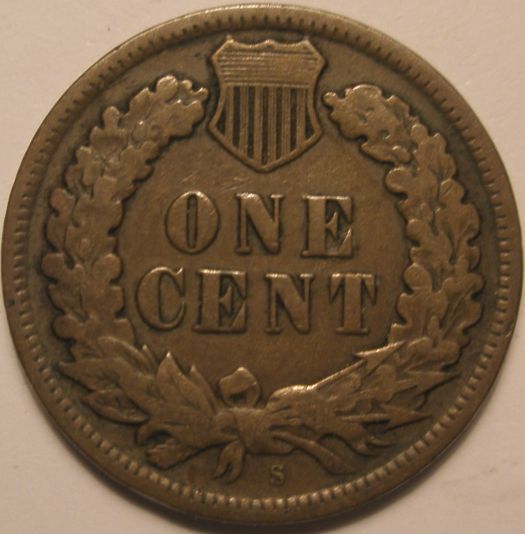
I saw Rick Snow's comment on CU Forums about this coin. He said your reverse does not match either of the 2 reverses for 1909-S IHC. Rick said it was an altered 1909 IHC. |
|
Valued Member
 United States
476 Posts |
That's no fun bherring...I was gonna hold off on that comment for awhile and see what everyone here thought without putting the kabosh on the discussion by telling what Snow thought. ;) But yes indeed, Rick did believe it was an added MM.
|
|
Pillar of the Community
United States
4992 Posts |
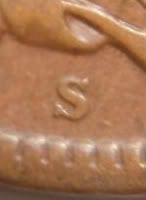
Details are all accurate. Mintmark looks good.
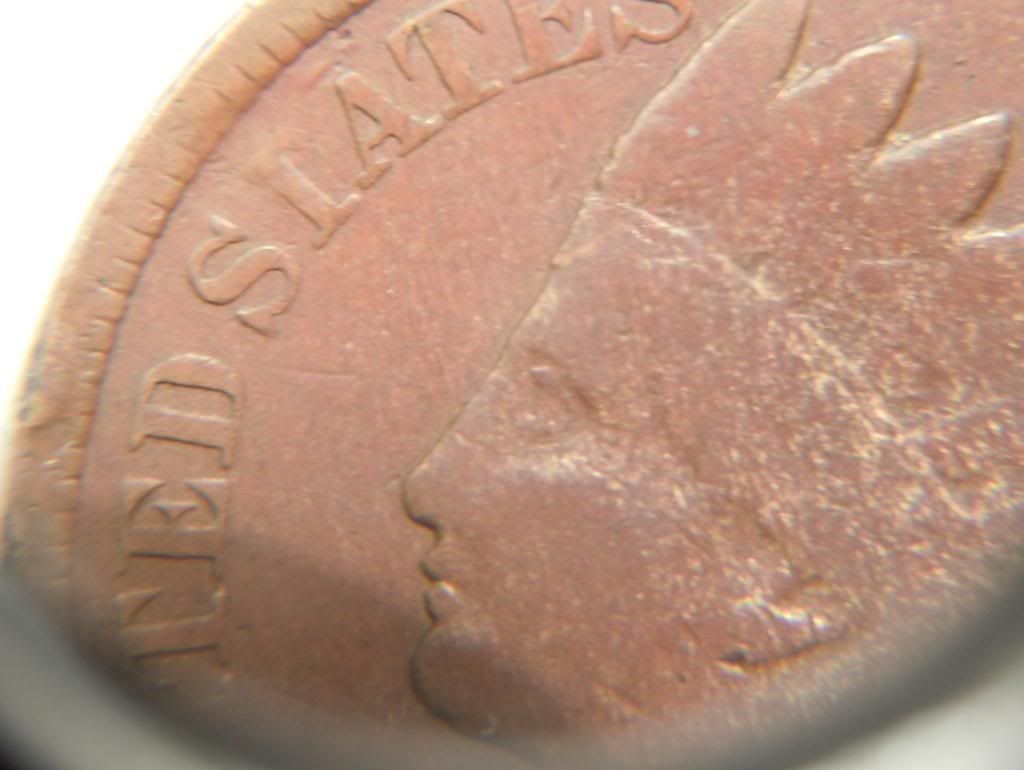
One thing that sticks out is the weakness of the "T" on States. 1909-S pennies are known to be weakly struck in some areas but I'm not sure that is one of them. Anyone familiar enough with the issue to comment? Are there other examples out there w/ weak T?
|
|
Bedrock of the Community
United States
10045 Posts |
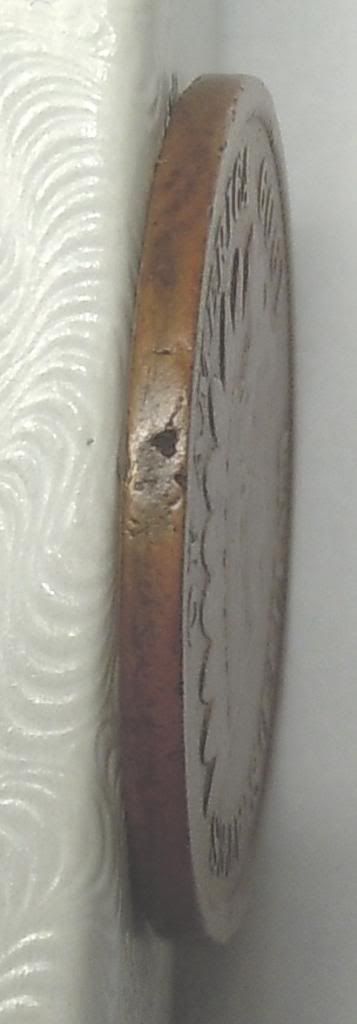
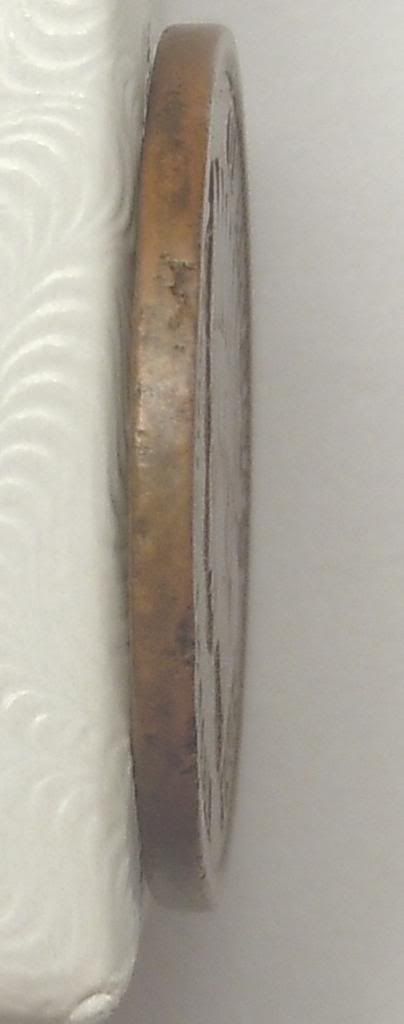
Quote:He said your reverse does not match either of the 2 reverses for 1909-S IHC. Rick said it was an altered 1909 IHC. I had written something that wasn't quite so succinct or accurate. Rest assured, Rick Snow knows what he's talking about. Judging by that mark on the rim, the S on your coin may have been carefully worked up using a tool and a fake mintmark die. |
|
Bedrock of the Community
United States
10045 Posts |
Nowhere approaching Rick Snow's experience, I turn to photographs for answers. The far left is your mintmark postion, and the right shows the two 1909-S mintmark positions on certified coins. Carefully compare where the S begins in relation to the denticles.  |
|
Bedrock of the Community
United States
14454 Posts |
it looks to me like the one on the right is different than the other two if you are going by denticles but it could be camera angle that causes it to look different I guess
|
|
Bedrock of the Community
United States
10045 Posts |
To my eyes the two on the right are different positions. I thought pictures would say more than my own interpretation; adding lines or overlays can easily force a wrong conclusion. There is an S which starts about mid-denticle, and another which is closer to the gap. I have posted a clearer pic of the S which begins mid-denticle. The coin in question has an S which begins slightly right into the denticle, which to my eyes differs from the 2 verified rev dies.  Edited by DVCollector
01/19/2011 2:18 pm
|
|
Valued Member
United States
476 Posts |
Rick had also discussed the MM position in relation to the denticles indicating that genuine examples the left serifs is lined up with the right side of a denticle, and on mine it's on the left edge. Obviously, I'm in no position to question either Rick or PCGS's opinions on it, but let me assure you it's an outstanding fake, as I have no indication that the MM is not original to the coin based upon examination under a 16x loupe.
|
|
Bedrock of the Community
United States
10045 Posts |
Quote:
I have no indication that the MM is not original to the coin based upon examination under a 16x loupe. Yes, based on what I see too. That's why I suspected the mm was worked up from the actual reverse of an 1909-P. From what I've read of the process, a fake mintmark punch is created. Then, using a fine tool inserted into a hole from the rim, pressure is exerted in the direction of the reverse field, against the fake mintmark punch. However it was made, suffice to say there isn't a reverse die #3, so the actual process is moot--imo. Take my opinions with a grain of salt--Rick Snow can always take a look for a small fee. I'm sure he knows what to look for. |
|
Pillar of the Community
United States
4992 Posts |
Wow that is a scary good forgery makes one curious how many slabbed 1909-S IHC's are floating around where the forger got the placement of the Mint Mark correct. |
|
Bedrock of the Community
Canada
10743 Posts |
I'll tell you, if that's a fake.. it's a real good one.  I can see where a lot of collectors would get taken with that coin.. |
|
Valued Member
United States
476 Posts |
On the CU board someone had asked Rick Snow this question:
Could you describe how the electro-depositon process would be done on a coin/cent to add a mintmark
without effecting the rest of the coin.
Rick's response was:
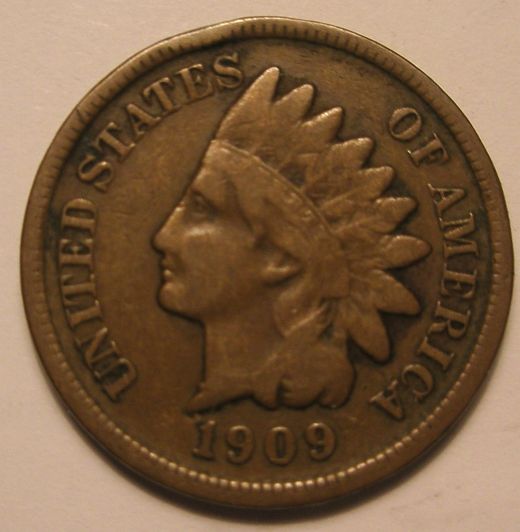
By running a current from a copper source to the cent you can deposit copper on the coin. if you cover the area of the coin with wax except for the mintmark, you can deposit metal in the shape of the MM on the coin. Then the coin is retoned brown. They missed the obverse on the color a bit.
Edited to add: the hole in the side is where the electrode was attached.
I found it very interesting that the rim damage was where the electrodes were attached.
|
| |
Replies: 35 / Views: 5,933 |







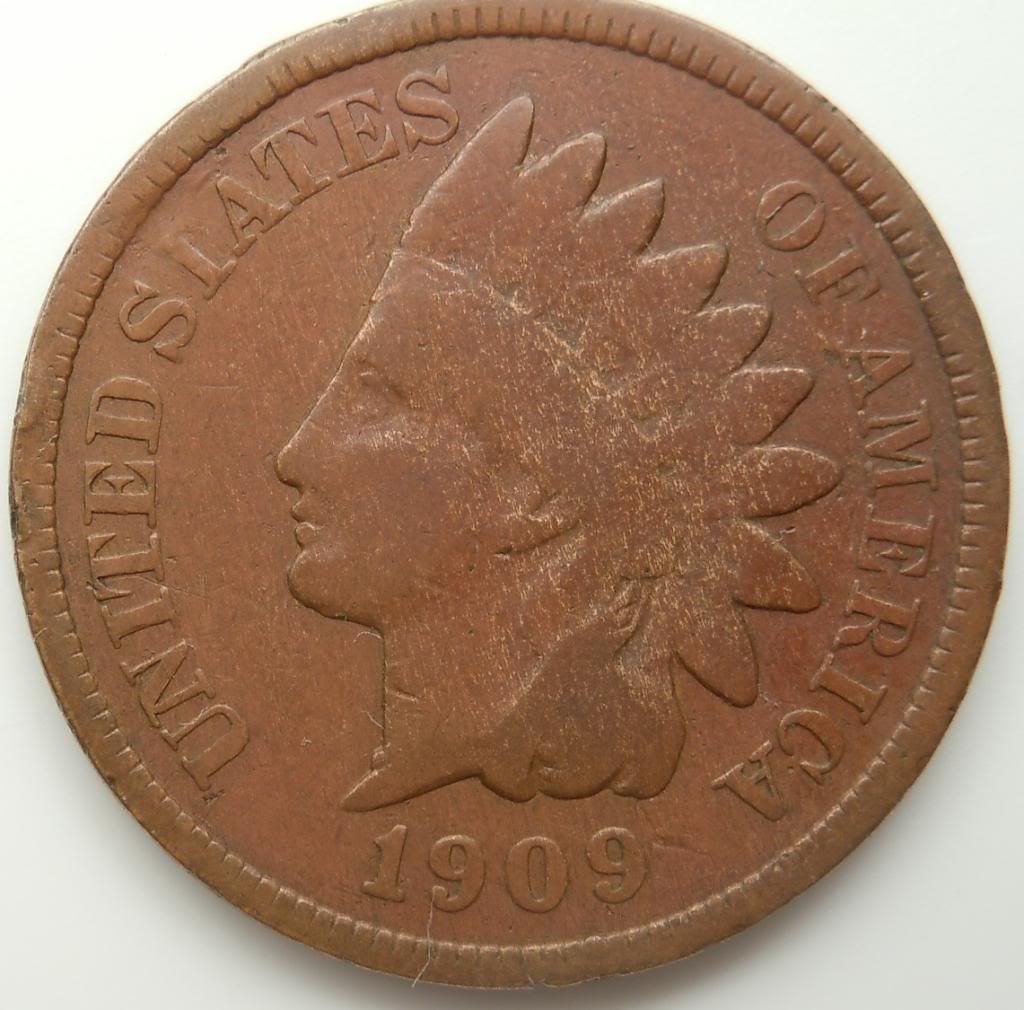
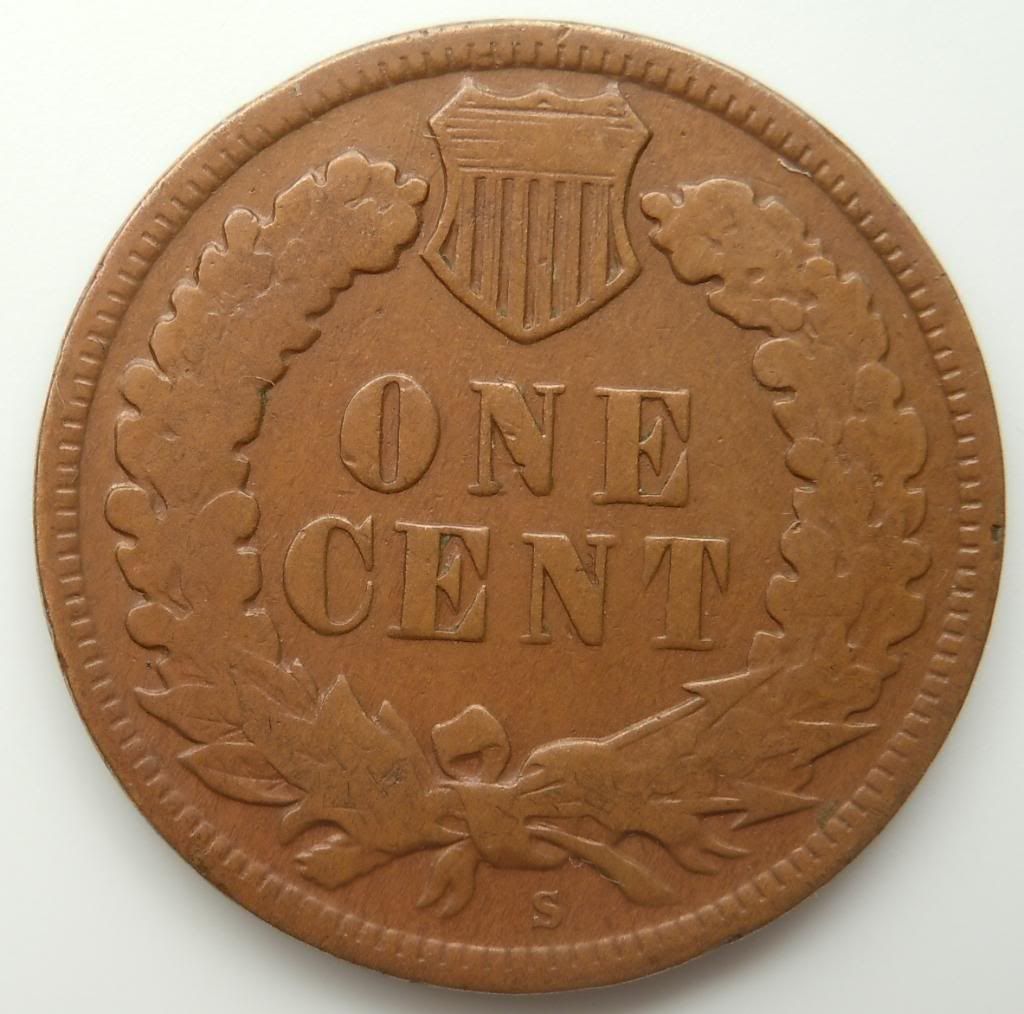
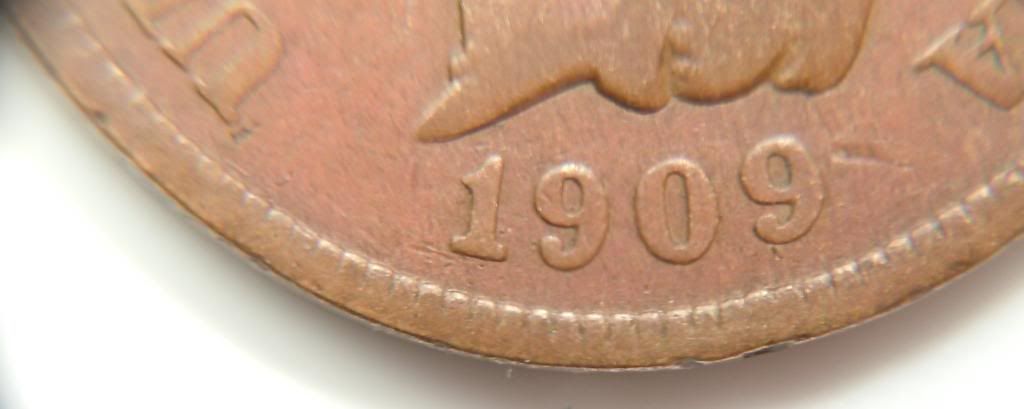
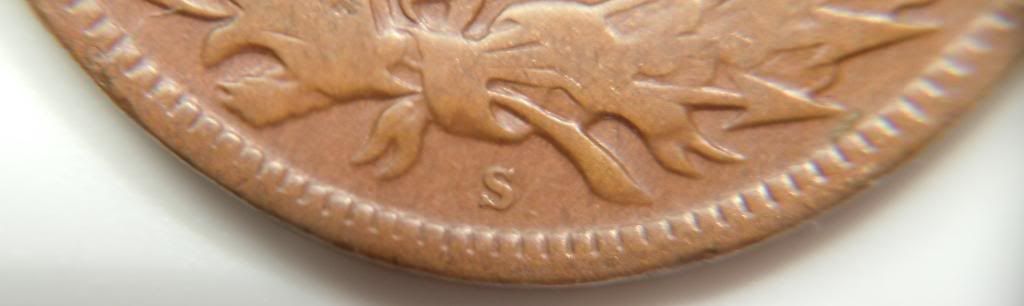


 Posted 01/19/2011 11:49 am