Posted 02/02/2011 8:04 pm


1. Not to my knowledge.
2. Pennies are far more common in circulated grades; here in Australia you often find them in Worn Flat grade, sitting in bargain bins for a dollar each. Twopences just didn't circulate enough for many of them to become worn.
3. From the pricing on Tony Clayton's website, the twopence in Britain is worth £25 in Fine, £45 in VF; those British grades would be equivalent to US VF and EF respectively. For the cartwheel penny, prices in those grades are £15 and £35. British EF (American AU-low MS) prices are £280 and £180.
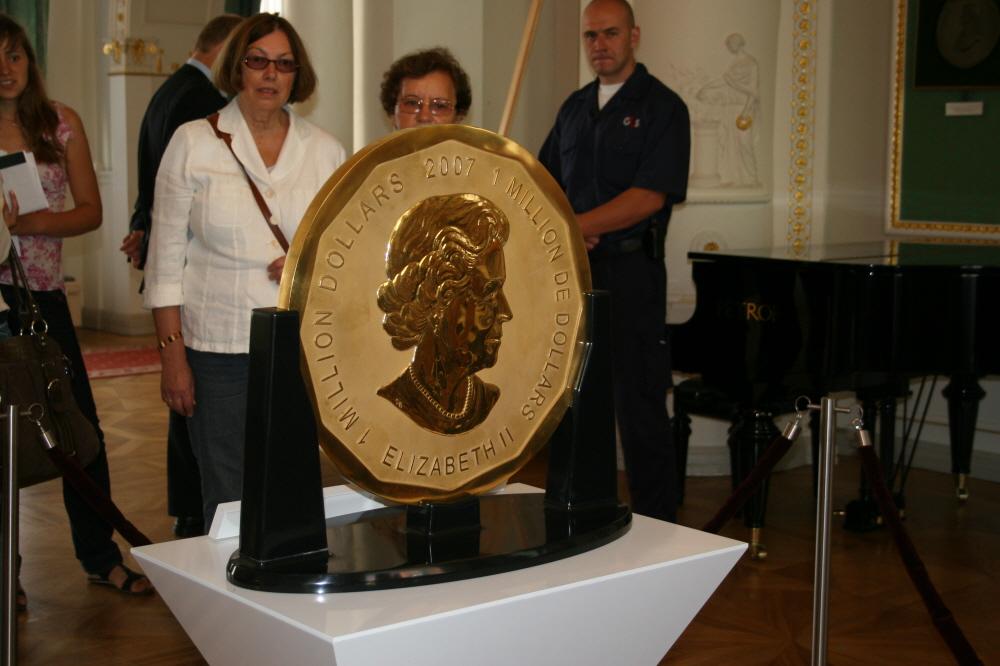
4. The twopence is 41mm across; there are several circulation coins that have been larger. The Russian series has several large copper pieces from the 1700s that were larger. Swedish plate money were larger again, as JMerrick said - the 10 daler was a rectangular slab weighing nearly 20 kilograms - though one could debate their qualification as "coins".
If one were to stretch the definition of "coin" to include non-metallic objects, then Yapese rai stones come in at number 1: the largest of these is a 4-tonne disk three metres across.
2. Pennies are far more common in circulated grades; here in Australia you often find them in Worn Flat grade, sitting in bargain bins for a dollar each. Twopences just didn't circulate enough for many of them to become worn.
3. From the pricing on Tony Clayton's website, the twopence in Britain is worth £25 in Fine, £45 in VF; those British grades would be equivalent to US VF and EF respectively. For the cartwheel penny, prices in those grades are £15 and £35. British EF (American AU-low MS) prices are £280 and £180.
4. The twopence is 41mm across; there are several circulation coins that have been larger. The Russian series has several large copper pieces from the 1700s that were larger. Swedish plate money were larger again, as JMerrick said - the 10 daler was a rectangular slab weighing nearly 20 kilograms - though one could debate their qualification as "coins".
If one were to stretch the definition of "coin" to include non-metallic objects, then Yapese rai stones come in at number 1: the largest of these is a 4-tonne disk three metres across.
Don't say "infinitely" when you mean "very"; otherwise, you'll have no word left when you want to talk about something really infinite. - C. S. Lewis