| Author |
 Replies: 13 / Views: 4,437 Replies: 13 / Views: 4,437 |
|
|
Pillar of the Community
 United States
2366 Posts |
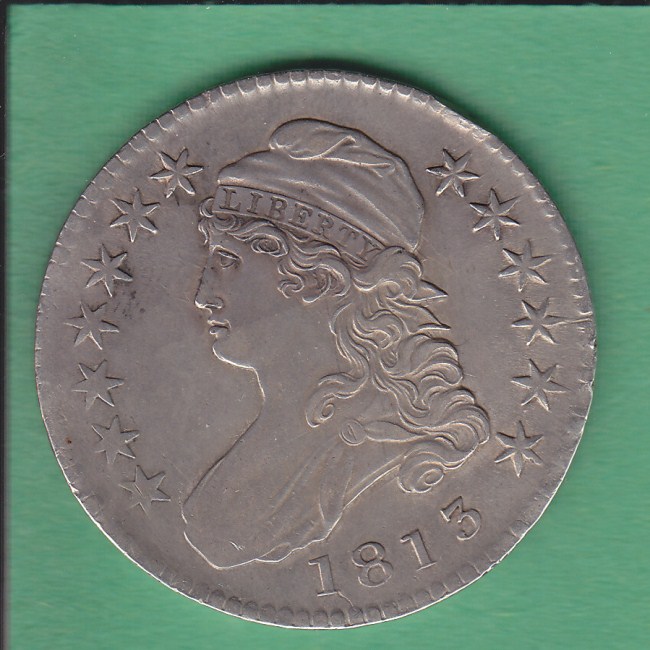
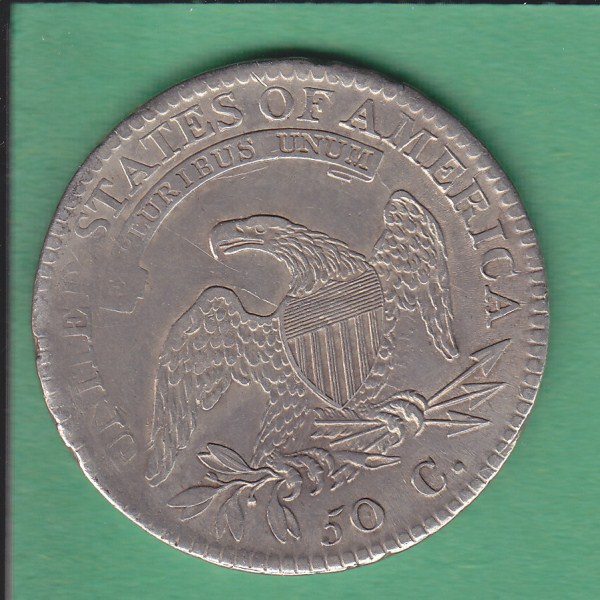
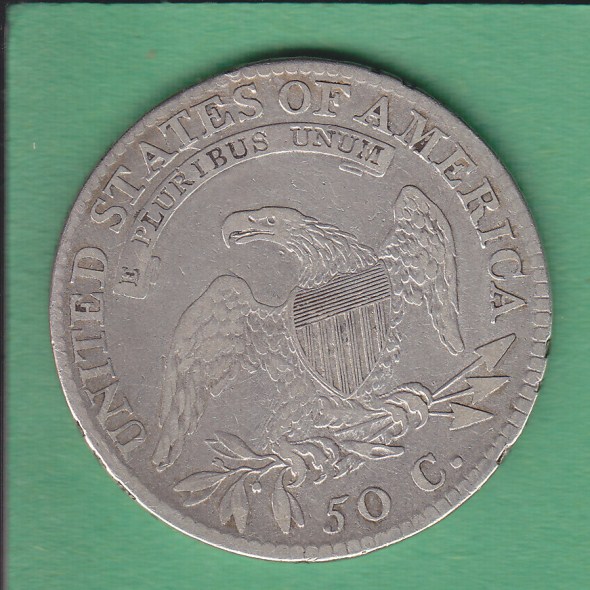
I'd appreciate your help understanding an overstrike. I already had a nice (based on my budget) 1813 half dollar (see pic) and then I saw this overstrike and bought it. I understand the basics of varieties but is this different - is an overstrike not a variety? I've provided some closeups of both coins and the placement of the date on the coin also seems different. Any help would be appreciated. 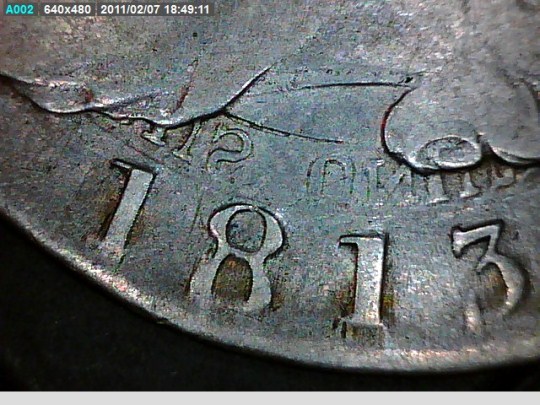 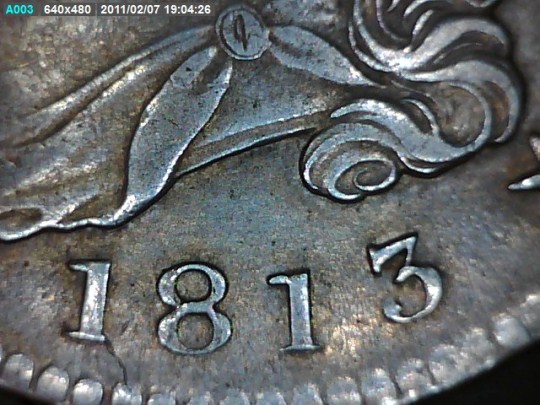 Member ANA and EAC "You got to lose to know how to win". Dream On by Aerosmith |
|
|
|
Pillar of the Community
3660 Posts |
Quote:
I understand the basics of varieties A lot of us don't, so you should be quite an asset here then. Quote:
the placement of the date on the coin also seems different. Yes, I see what you mean, why do you suppose that is? Is that what you are referring to as an "overstrike", or is it those backwards letters above the date in the first picture? |
|
Pillar of the Community
 United States
2366 Posts |
Hi,
Maybe I'm using the wrong terminology. I just purchased the coin in the first picture which was described to me as an overstrike. I already owned the second coin in the pics. There are differences in the two coins - so is the first pic an overstrike or a variety and what does that mean? Does it add anything to the value of the first coin?
Member ANA and EAC "You got to lose to know how to win". Dream On by Aerosmith |
|
Pillar of the Community
3660 Posts |
There were eight different obverse dies and seven different reverse dies used to strike the 1813 CBH..... many portions of each of these 15 dies were struck with a hand punch, so each die is unique in its placement of letters and numbers.....it is the pairing of these unique dies that is the basis for the varieties.
Your two coins are of different obverse dies and that is why the dates look so very different.... They are two different varieties of the ten varieties of 1813 CBH...... As for what you are calling an "overstrike", I assume you are looking at the backwards letters of US UNU from the banner on the reverse (e pluribUS UNUm)...... this is called a clash, and occurs when the obverse and reverse dies collide with each other because there was no coin blank (planchet) between them upon strike..... one die leaves its impression in the other die, and that impression is then transferred to any subsequent coin that is struck from it..... Clashes such as this are extremely common on CBH, and are usually not cause for a premium.... Whoever told you that this coin is an overstrike, told you wrong..... If you would like to know which varieties you coins are, post whole coin photos of both sides of each coin.
|
|
Bedrock of the Community
United States
17884 Posts |
It isn't an overstrike. What you have is a severely heavy clashed die. The dies came togerther forcefully with no planchet between them. The rev die cut the motto from over the eagle into the field below the bust. I forget the variety but one of these is very well known for coming with severe die clashes. It comes in various stages from no clashes, one clash, two clashes, up to four to six clashes.
|
|
Pillar of the Community
United States
2366 Posts |
Member ANA and EAC "You got to lose to know how to win". Dream On by Aerosmith |
|
Pillar of the Community
3660 Posts |
Conder is quite knowledgeable on virtually any type of coin..... I am still learning about just a few.
Your first coin is the variety known as O-106..... On the reverse side of the coin, you might think that "UNITED" as well as "E P" (in e pluribus) are worn to the point of invisibility, but this is very normal for this particular variety, and has nothing to do with wear, your coin popped out of the press like that.
Your second coin is the O-110 variety.... Those clashed letters and the funny looking stars on the obverse are not only common to this variety, they are on all known specimens..... Although this coin shows more wear than your first coin, this one is still a nice CBH (in my opinion)..... I like drawn stars and heavy clashes.... while many CBH show clashing in the area above the date, not too many show these clashed letters in front of the bust.... quite an eye catcher.
|
|
Pillar of the Community
United States
2366 Posts |
Thank you for the variety information!
Member ANA and EAC "You got to lose to know how to win". Dream On by Aerosmith |
|
Pillar of the Community
United States
1204 Posts |
|
|
Pillar of the Community
United States
2540 Posts |
what condor said, common variety
|
|
Valued Member
United States
225 Posts |
Very cool die clash. That one is quite strong!
|
|
Pillar of the Community
United States
4433 Posts |
Having owned a few examples of the 1813 die clash and seen many others over the years, this oldtimer can firmly state that this example is the strongest clash I've seen. Great example!
|
|
Pillar of the Community
United States
2130 Posts |
That is an incredible clash.I want one  |
|
Pillar of the Community
3660 Posts |
You shouldn't have much trouble finding one Chris..... that clashed lettering is quite common on many different CBH (under the bust)..... the clash extending in front of or in back of the bust is another matter.... you do not see that too often.
|
| |
Replies: 13 / Views: 4,437 |
|










 Posted 02/07/2011 8:15 pm