Quote:
You sure that's not a National Bank Note (as opposed to National Currency)?
Yes Fred, I am sure..... As I have been dragging this thread through the mud already with currency as opposed to the coin which was the original intent of the thread, I will apologize to Prethen, and make this very brief:
I order to understand the differences between a National Bank Note and a Federal Reserve Bank Note and a Federal Reserve Note, it might be helpful to first be familiar with the National Banking Act of 1863 and the Federal Reserve Act of 1913.
VERY basically, the National Banking Act of 1863 became law to alleviate the situation of privately owned banks issuing their own money locally (which led the public at large to be unsure as to whether the money was good, or even real).... currency was not accepted as payment very far from the bank that issued the note, and gold and silver remained the standard mediums of tender.... land could only be purchased with gold or silver coin..... In order for a bank to remain in business, it required the confidence of the public that it dealt with, and the public had confidence in gold and silver, not locally printed paper money on a bank that was very loosely chartered and poorly controlled by individual states.
The National Banking Act remedied this situation by Federally chartering private banks in all states and territories with Federally issued paper money that was uniform in appearance and backed by the U.S. Government..... To receive a national charter, a private bank was first required to deposit Government Bonds (as security) with the U.S. Treasury.... In return, the banks received banknotes for a total value of up to 90% of the value of security deposited with the U.S. Treasury.... The banks prospered because the public was assured that the currency was backed by the U.S. government (if the bank failed, which many did in the early 19th century) the bank notes were an obligation of the Federal government, not the bank.
National Bank Notes 1902 and 1929 (MY NOTES).
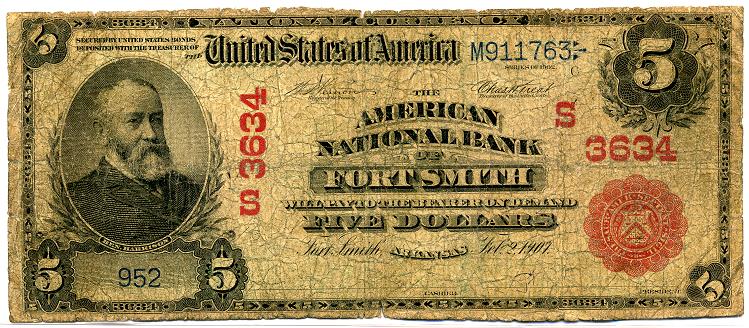
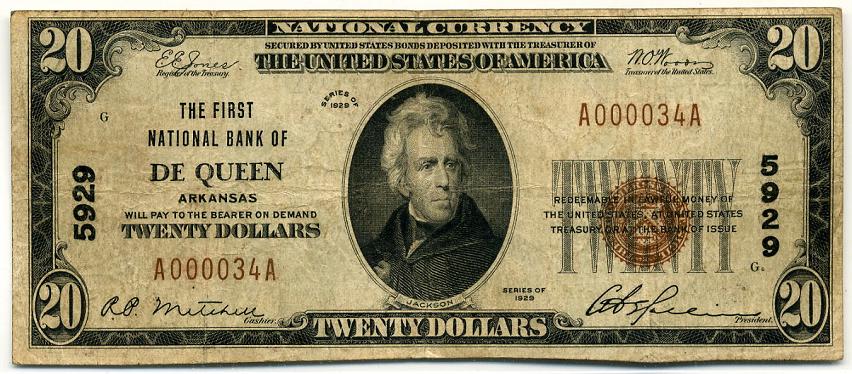
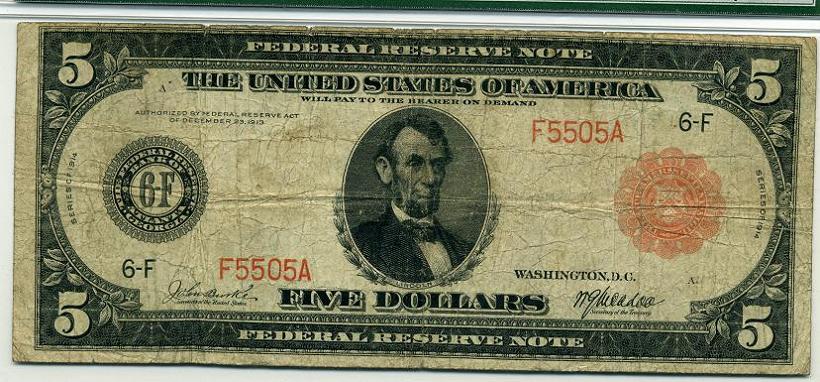
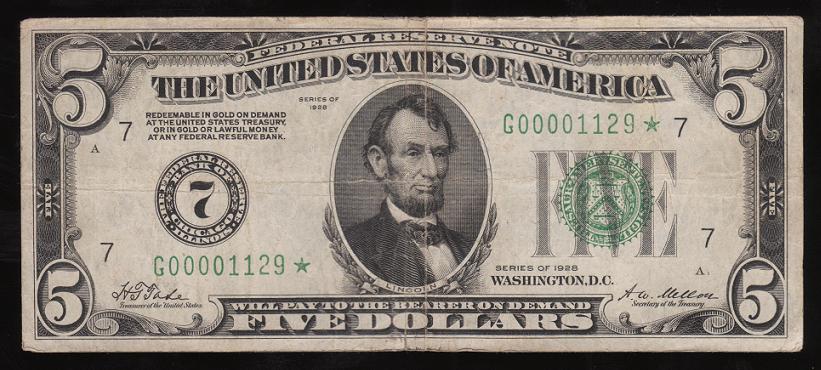
The Federal Reserve Act was a totally different animal, and has been amended well over 200 times since becoming law in December 1913.... It was basically a power grab by the U.S. Government to gain total control of all banking affairs. The Act established the issuance of the both the Federal Reserve Note (to replace the National Bank Note) and Emergency Money (Federal Reserve Bank Note) to be used in time of 'National Emergency' (as so proclaimed by the President).
Federal Reserve Note 1914 (MY NOTE)
Federal Reserve Note 1928 (NOT MY NOTE)
The Pitman Act of 1918 made it very profitable for the government to melt down 370 million silver dollars to sell abroad.... an equal number of silver certificates were therefore required to be destroyed as silver certificates were backed by 'silver dollars' at the time (not just silver), so this was declared an 'emergency' (of sorts), and the Federal Reserve Bank Note was issued to replace those silver certificates removed from circulation.
Large size FRBN 1918 (MY NOTE)
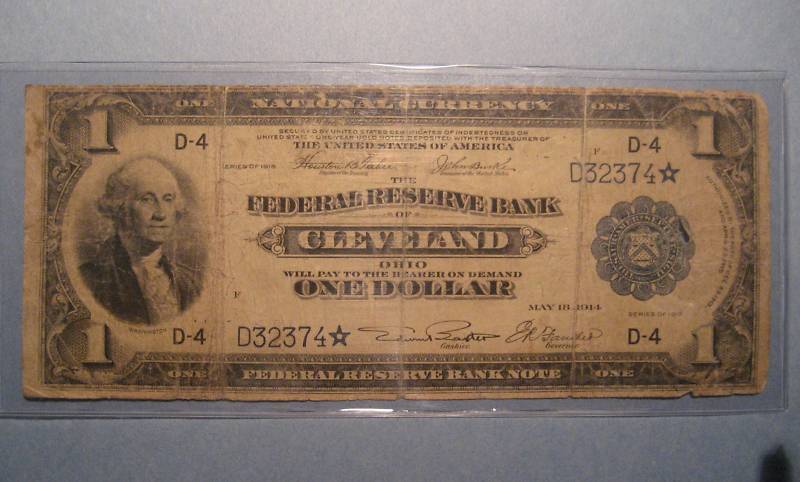
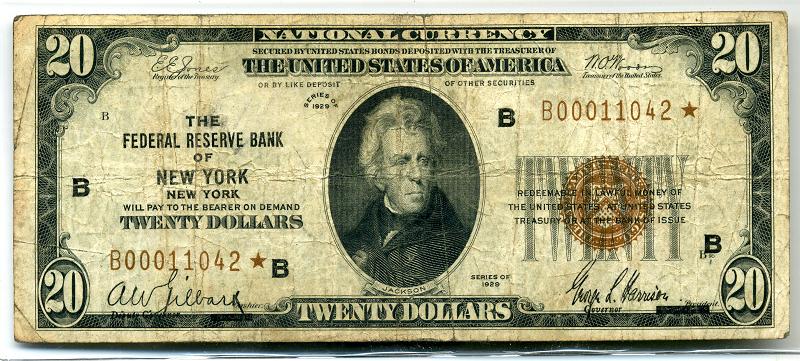
The Gold hulabaloo of 1933 (mentioned earlier in this thread) required the removal of Gold Certificates from circulation... The nation now used small size currency however, and to quell public fears over the disappearance of gold, time was of the essence in replacing those Gold Certificates..... not enough time to design approve, and produce new printing plates, so those already being used for National bank Notes were employed for this new Federal Reserve Bank Note (Emergency Money).... That is why the wording ("National Currency") at the top of the note. (National Bank Note plates were used to print these notes).
Federal Reserve Bank Note 1933 (MY NOTE)
Quote:
Wouldn't the series 1934 FRN be the new kind of note, with different wording?
No..... if you have specific or in depth questions about currency, I (or someone) will answer on the currency forum, as I will not revisit this thread for fear of compulsion to further comment.
My apologies Prethen.... (I'm outta here now).








 First Page
 Previous Page


 Posted 03/07/2011 11:10 pm


