| Author |
 Replies: 17 / Views: 3,869 Replies: 17 / Views: 3,869 |
|
New Member
United States
42 Posts |
I found this interesting coin the other day while roll searching. Can anyone tell me their opinion of whether it is damage or error? On the obverse covering the Liberty and on the reverse to the left of the house. 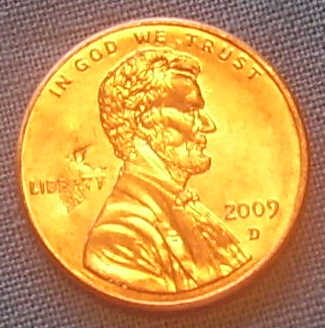 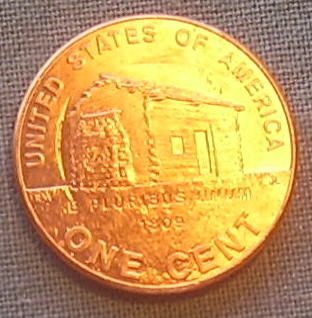 |
|
|
|
Pillar of the Community
United States
601 Posts |
The presence of the anomaly on both sides of the coin suggests damage. If it were something struck into the coin, or pre-strike planchet damage, you'd only see it on one side of the coin. BUT- it's tough to tell what we're seeing- any chance you can give a close up of the area on both sides?
|
|
Pillar of the Community
United States
7629 Posts |
I'm pretty certain it's damage - pretty much for the same reason.
|
|
New Member
 United States
42 Posts |
I have a great close up, but it's too big to upload. I think it's about 135 KB or so. any suggestions on how to make it smaller?
|
|
New Member
United States
42 Posts |
how is this? 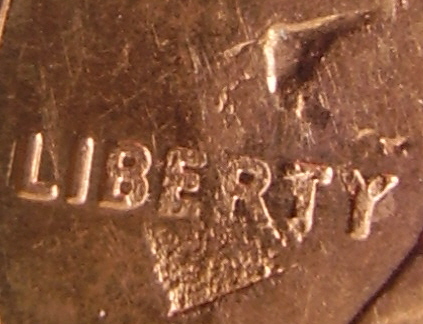 |
|
Pillar of the Community
United States
601 Posts |
I know I'll get a lot of flack for suggesting this- but it looks like this could possibly be pre-strike damage.
Hear me out- if the planchet were pinched somehow, and then struck, it could look like this. What makes me suggest so is the fact that it appears that the letters of LIBERTY weren't fully struck. I don't see evidence of the letters being smooshed as they would be if this were post strike damage. The anomaly seems to be under the strike so to speak.
The scenario I suggest is uncommon, most coins exhibiting something similar are going to be just damage to the coin after strike, but I believe this coin warrants further inspection.
|
|
Pillar of the Community
United States
4897 Posts |
|
|
Pillar of the Community
United States
601 Posts |
The reverse is circular, similar to what a rolling machine would do. But, excepting incredible coincidence, I think that the issues on the front are directly connected to what's on the reverse. They're in the exact same place on opposing sides.
|
|
Pillar of the Community
United States
4897 Posts |
But your first post contadicts that statement! "If it were something struck into the coin, or pre-strike planchet damage you'd only see it on one side of the coin". ?
|
|
Pillar of the Community
United States
601 Posts |
Yes- without a close up photo it was easy to write off as damage. In most cases, when a planchet is damaged before strike, it's on one side- a scratch, scrape, ding or gouge. I hadn't considered that the planchet could have been pinched, and wouldn't have thought so without being able to see the area in greater detail. The additional information changed my opinion. I'm not someone who insists I'm right beyond all reproach. I only offer an educated opinion based on the information in front of me.
|
|
Pillar of the Community
United States
4897 Posts |
No offence intended. Just trying to learn. Unfortunately I learn by questioning everything (I'm told it is an anoying trait) but it is me. You are undoubtedly more experienced in regard to these errors than I. Just trying to feed off the knowledge that is here.
|
|
Pillar of the Community
United States
601 Posts |
Absolutely no offense taken- I don't mean to suggest that the things I say are without doubt correct, just offering an opinion formed through lots of learning on the subject.
ASK QUESTIONS!! If anyone knocks you for it, it's probably because they don't have the answers. The only time it's annoying is when the same person asks the same question on dozens of coins, getting the same answers and not learning anything from it, lol. I'm not referring to anyone specific, just suggesting that learning requires understanding. Some people post coins not wanting to hear anything but "jackpot", never learning why it is or isn't.
|
|
Bedrock of the Community
United States
62064 Posts |
Well lets look at the position of the dies to see if the two areas are over each other? 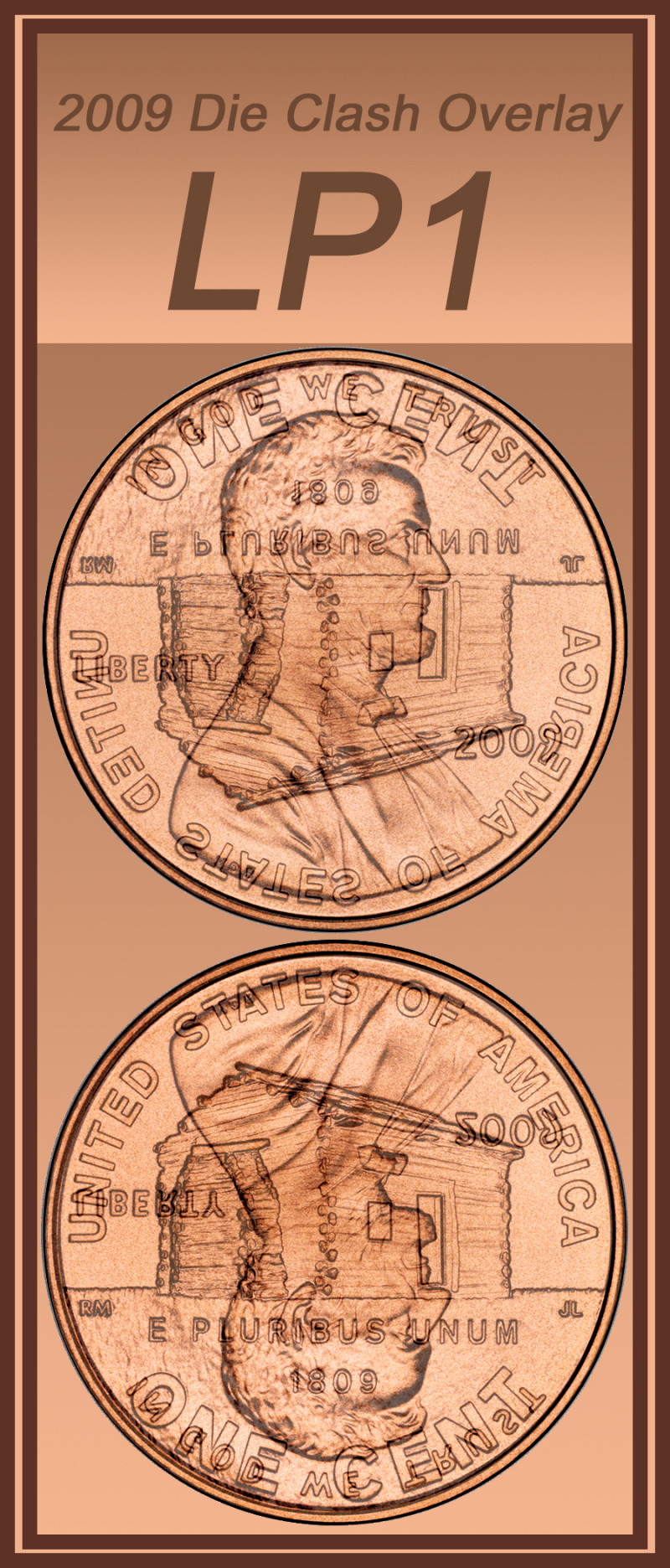 The area of where the indent is, is over the LIBERTY area. So if a coin was hit slightly off center with another coin on the a rough surface it would leave damage on the obverse in the same area. So I would say PMD. |
|
New Member
United States
42 Posts |
Thank you all so much for your comments and input. Coop, I am curious what you think of Liveandie's comment about the letters in Liberty not having the appearance of being smooshed, but rather looking like an incomplete fill (I don't know if that is the correct terminology). If you look at the B and the Y in particular, the outline of the letters is still intact, yet the damage is evident, so what happened to the missing material? If the coin was intact after minting then the material would have to have gone somewhere or the letters would look smeared or squashed, wouldn't they? Your thoughts?
|
|
Pillar of the Community
United States
601 Posts |
Wow Kris, those are really excellent points. I mean that in the sincerest of ways, I saw that you just joined.
I was surprised to see that you're in my neck of the woods, I'm up in Spokane. If you ever find yourself up here in the "big city", I'd be more than happy to take a closer look at it. Even if it's a genuine error, you're looking at dozens of dollars, not hundreds. But very interesting being on the one year type coin that it is. Thanks so much for sharing.
|
|
Pillar of the Community
United States
2751 Posts |
As coppercoins correctly stated, this is a case of post-strike damage. The letters of LIBERTY are crushed, not obstructed.
Error coin writer and researcher.
|
| |
Replies: 17 / Views: 3,869 |







 Posted 03/03/2011 6:29 pm





