There are basically three different kinds of fake ancient coins.
1. Fake coins made in ancient times, back when the real coins were circulating as money. These are known as "contemporary counterfeits" or "circulating counterfeits" and are often just as collectable (and just as expensive) as genuine coins, since they are now historic artifacts in their own right. They're usually fairly easy to spot because the silver or gold plating has broken unevenly over time.
2. Coins made to fool coin collectors. These often look very much like the real thing; they are usually made from the same materials that the genuine coins were made from - some unscrupulous people even melt down genuine cheap ancient coins to make the blanks for their more expensive counterfeits. These "numismatic counterfeits" are the hardest to detect, and even experts can be fooled.
3. Coins made for sale to tourists. These are usually very crudely made copies, usually in the wrong metals, wrong weights, wrong size, and have a distorted or grainy appearance. These coins aren't trying to fool an expert, but a new collector or tourist might easily be fooled. Coins that are made as jewellery replicas or advertising gimmicks by companies like Readers Digest would also fall into this category.
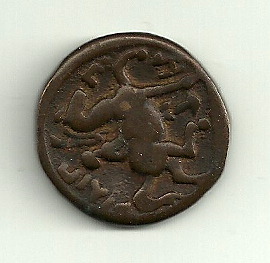
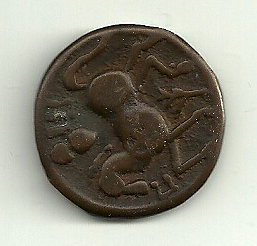
Yout coin had the typical hallmarks of the third category: the background fields of your coin have the distinctive bubbly-grainy appearance of a cast fake, and the two sides are mixed up, taken from two different coins. There should be a portrait on one side, with the horse-and-rider on the other - this is basically a "two-tailed coin". The owner of the button-coin in
this recent thread found some examples online of coins similar his, and yours; also see many of the the gold, silver and copper coins on
this page.
Don't say "infinitely" when you mean "very"; otherwise, you'll have no word left when you want to talk about something really infinite. - C. S. Lewis







 Posted 03/07/2011 5:28 pm





