| Author |
 Replies: 63 / Views: 7,632 Replies: 63 / Views: 7,632 |
|
|
|
Pillar of the Community
 United States
723 Posts |
|
|
Moderator
 United States
23522 Posts |
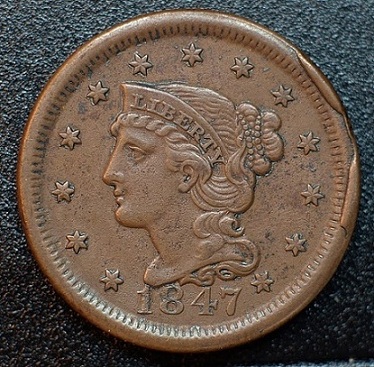
Holy Rim Cuds, Batman! See how contrasty it is by comparison to the Quarter? Like I said, you're learning with the worst-case scenario, and it will only make you a better coin photographer in the long run. Is this one faithful to color, or, as I'm thinking, a tad bright? |
|
Pillar of the Community
United States
723 Posts |
Color is just about right. I didn't tune it other than crop.
I see a "1" when I look at the EXIF numbers for contrast.
I suppose that means something eh?
|
|
Moderator
United States
23522 Posts |
Yeah, I'm thinking you'll want to turn off any in-camera adjustments like Sharpening or Contrast. In all cases, postprocessing software will give you the ability to do much more subtle adjustments. The Large Cent looks overprocessed, as well.
|
|
Pillar of the Community
United States
723 Posts |
Hmmmm . . . . . now that I am getting a bit less befuddled, maybe I should experiment with shooting in RAW?
Or will that be a whole 'nother can of worms?
|
|
Pillar of the Community
United States
723 Posts |
|
|
Moderator
United States
23522 Posts |
Keep in mind, though, if you shot that in RAW, something had to convert it into an image you can post. Whatever software you used had to have applied some (even if slight) modification. It's a *little* blurry at full magnification, but as good as anyone on the forum is getting at display size. Time to quit calling yourself a rookie, Jon.  |
|
Pillar of the Community
United States
4051 Posts |
Nice pics! The blurriness in last shot may be caused by camera tilt. The background is more blurry on the left than on the right, making the coin more blurry on the right than the left since it is at a higher image plane. You can calibrate your flatness by replacing the coin with a mirror and then adjusting until you center the image of the camera sensor in the frame.
On the quarter photo, if you want to reduce glare you can put a diffuser over your lights. But I caution you on this, it is a major rabbit hole that you may not want to jump down. Getting lighting just right to eliminate hot spots and shadows simultaneously with a single lighting setup and single exposure is a major undertaking. I've spent countless hours fiddling with lighting, light positions, diffusers, reflectors, ad nauseum and am still not fully satisfied with my setup.
Contact me for photographic equipment or visit my home page at: http://macrocoins.com |
|
Moderator
United States
23522 Posts |
Quote:
You can calibrate your flatness by replacing the coin with a mirror and then adjusting until you center the image of the camera sensor in the frame. Wait. I've been beating my head against this issue for five years, and you just solved it in one sentence?  |
|
Pillar of the Community
United States
844 Posts |
 That's how it works around here SuperDave! This has been excellent information by the way guys! |
|
Pillar of the Community
United States
509 Posts |
Quote:
You can calibrate your flatness by replacing the coin with a mirror and then adjusting until you center the image of the camera sensor in the frame Possible with bellows? Or even necessary if using a lens optimized for flat field work? |
|
Pillar of the Community
United States
723 Posts |
Wow! Great tip.
I have been away from the camera for a bit, but the mirror trick will be the first thing I try when I get back to it.
|
|
Moderator
United States
23522 Posts |
Quote:
Possible with bellows? Or even necessary if using a lens optimized for flat field work? The bellows setup will be pretty much fixed, I think; if you had screw-in feet at each corner of a u-shaped base, you could twiddle those with a coin sitting in the center of the U. Or, arrange a base for the coin capable of the same manipulation. Regardless of lens optimization, you still have to get the plane of the coin and the plane of the lens parallel. |
|
Pillar of the Community
United States
4051 Posts |
This is one of the reasons I am a proponent of a fixed setup, ie lens/bellows and stand bolted together and adjusted for flatness. I don't want to have to adjust things all the time! When I put together a bellows setup on a stand, I shim the bellows mount with thin pieces of sticky felt until lens and coin planes are parallel. Having things parallel gives you more flexibility in choosing f/stops since you don't have to worry as much about depth of field.
Contact me for photographic equipment or visit my home page at: http://macrocoins.com |
|
Pillar of the Community
United States
509 Posts |
This new copy stand of mine has a bubble level on the tripod head. Have you found these to be effective? Or just eye candy?
|
| |
Replies: 63 / Views: 7,632 |






 First Page
 Previous Page




 Posted 04/27/2011 12:30 am


