| Author |
 Replies: 20 / Views: 4,994 Replies: 20 / Views: 4,994 |
|
Valued Member
United States
257 Posts |
*** Moved by Staff to a more appropriate forum. ***I recently received a 1961 silver one joule coin from the Nation of Celestial Space (deeded in Cook County, IL, USA). Upon inspection, I noticed that the rim was separating from the rest of the coin. The seller pointed out that this was of the "rimmed variety" as opposed to the "broad rim variety." I still didn't understand the minting process that would cause rim separation. Upon further questioning, he explained that they were "stuck then put through a rimmer machine unlike US coins that are rimmed before they were struck." I still don't get it, obviously and enormously ignorant about minting processes. Could someone talk down to me with a quick lesson explaining the process that would result in rim separation? I always thought rims were part of a one-piece coin, formed when struck, instead of a separate step added on before or after the striking of the coin? Thanks in advance for your usual generosity in sharing information and knowledge.
|
|
|
|
Rest in Peace
United States
1943 Posts |
Could you post a photo to show what you mean by rim separation? At the US mint the rim of the coin is formed by the collar when the coin is struck. There is a previous operation where the punched out blank is run through an upset mill which forms a small rim which helps in the striking process. It is at this point where the blank becomes a planchet. But the rim is formed from the one piece that makes the coin. I have never heard of rim separation and maybe after seeing the photo could help you figure out what you have.
|
|
Valued Member
 United States
257 Posts |
I am not sure how well a picture would show the condition, or even how to post an image here. But this wasn't minted at the US mint. It was a private minting as part of a series of coins from the micronation of Celestia aka Nation of Celestial Space. I will see what I can do to post a pic. Thanks for your reply.
|
|
Valued Member
United States
257 Posts |
I don't seem to have the green camera icon present, despite having this site bypassed by my popup blocker (per the CC Tutorial for Uploading Photos). If anyone can walk me through THIS process, I do have requested photos to share. Thanks.
|
|
Rest in Peace
United States
9104 Posts |
Just click my name on the left and email me the images if you don't see the link that says add image below the box where you type the text. You have to be using the reply to topic, not the quick reply. Use only letters and numbers to name your pix, and it must be smaller than 100k.
|
|
Valued Member
United States
257 Posts |
biggfredd, thanks for the tip. I had been using quick replay, and not reply to topic. I am adding pictures to show the rim separation. My photography skills are limited, but the separation can best be seen at about 10 o'clock to 3 o'clock. The dark areas at the rim are spaces from separation, not toning. I hope these photos, together with my description and the explanation of the seller, are helpful and will lead to an explanation of this phenomenon. Thanks in advance for whatever light you may be able to shed. 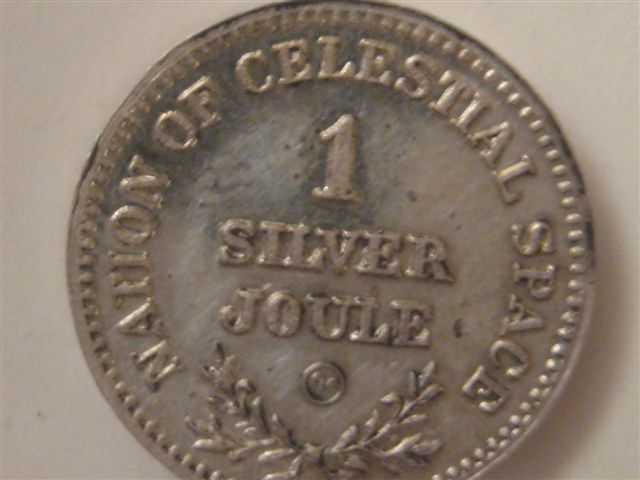 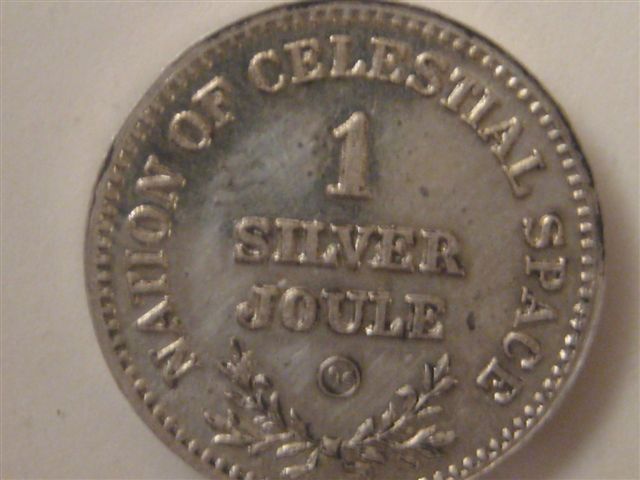 |
|
Rest in Peace
United States
9104 Posts |
The only rims I can think of that are done in a separate process are lettered edges on early US coins. They were rolled between two bars that served as dies, each printing half the edge wording. The security edge is used on some non-US coins. It's like an Oreo cookie. The top and bottom thirds are reeded, the center third is inset and is a series of beads. The edge is put on first, then when the coins are struck, the pressure squeezes the reeded part slightly over the beads, like a letter C. If a counterfeiter tries to make a cast, his casting material sticks in the top and bottom curls of the C, and it can't be removed without damaging the detail. |
|
Rest in Peace
United States
9104 Posts |
It's hard to tell, but it looks like the coin was struck without a collar, or with a collar bigger than the diameter, and this is metal wrapping around the open space. When you say "separation", do you mean it would actually split off if you were to put a knife between it and the coin?
|
|
Valued Member
United States
257 Posts |
I don't know if the rim would actually split off if I could get a blade between it and the coin. The same space between the rim and coin does not appear on the other side of the coin. Please remember that this was likely produced in a garage somewhere 50 years ago. The seller says that this coin is of the rimmed variety as opposed to the broad rim variety. I don't know what either of the variety descriptions mean or what actual process was used that would account for the appearance of the rim separation. I know there is an expert here on practically every coin issue, so I am here for my education on this issue. Thanks again in advance.
|
|
Valued Member
United States
257 Posts |
If anyone knows, and can explain this 'homemade' minting process, as they relate to the terms "rimmed" vs "broad rim" varieties, I would most appreciate it. I only have a few days left to return the coin, if at all. It is a rare coin (between 50 and 100 produced) and the only one of this kind I have see offered anywhere. But I don't want to spend money on condition issues I don't really understand. Thanks much, in advance.
|
|
Bedrock of the Community
United States
20753 Posts |
Glad you posted this one. I never heard of this organization so I looked it all up via Google. Interesting organization that at one time not only made those coins but petitioned many governments that they owned outer space. What I really found amazing is it started in an area of Chicago and was verified in the Cook County Building here in Illinois. I find it amazing since I go to coin shows and coin stores all over his area nd no one ever mentioned this organization.
Next coin show is not far from that place so I'll start asking about them. I wonder what those coins are worth.
|
|
Rest in Peace
United States
1943 Posts |
I see you are not getting a lot of answers here and it sounds like you are running out of time so I'll give you my opinion. First, I think you are making a mistake calling this a coin (it is probably what the seller is calling it). But by definition a coin has a monetary value and is officially distributed by a country acceptable for all transactions in that country. A token also has a value but is only accepted by the private distributer of the token. Tokens for stores are a good example. So when you research this I think you should use the word token instead of coin. You mention rarity, keep in mind rarity does not equate to value. There might only bo 50 of these made but if only 40 collectors are intersted in them then they have very little value. I think by the number of responses here you can see there is possibly a small collector base familiar with them. As far as the varieties, this sounds like something the seller has made up so it is hard for any of us to determine what these varieties really mean. To me this looks like a crudely made piece and I question how much if any silver is actually in it. I am not trying to be harsh but it sounds like you are deciding whether to send it back or keep it and I thought you should hear the worst just to weigh against what you already have to help with the decision. Again I know nothing about this piece and this is only my personal opinion. Whether you keep it or not you will always have the photos and I'm glad you posted it.
|
|
Bedrock of the Community
United States
17884 Posts |
The pictures are not good. I see what appears to be finning at 10:00 (Metal squeezed up between the collar and the neck of the die.) The rest of the dark areas just look like corrosion in these pictures.
|
|
Bedrock of the Community
United States
12437 Posts |
I agree with Conder, it just looks like a bit of rim finning(metal extrusion between the die and collar) and I do not see anything that looks like separation. Since this token was minted by some obscure outfit using unknown techniques that may not match modern minting technology, it is really difficult to say with any certainty what happened without physically examining the coin.
|
|
Valued Member
United States
257 Posts |
Thanks for the input. And I apologize for the poor photos. I'm afraid they are made of the best photographic skills I possess. What looks like crud, outside of 10 o'clock, is actually spacing.
I know this coin is the real thing, and highly desirable for those who collect micronation tokens (I used the term "coin" too loosely perhaps). It is listed in the Krause Unusual World Coins catalog, along with the small variety of .900 and .999 gold 1 Celeston 'coins.' The seller is a long-time, major collector of these. I just didn't understand his explanation, because I don't know the terminology. I am confident the piece is silver, and I know there are more than 100 collectors of micronation offerings. I am, indeed, deciding whether or not to send it back, only because of the rim issue. For those not familiar, it is worth a few minutes Googling The Nation of Celestial Space. It is a terrific story with a terrific history. Thanks again for your help. This is an amazing place. Any other comments or explanations would also be appreciated.
|
|
Valued Member
United States
257 Posts |
BTW, what is a collar? Is it the same thing as a rim added later instead of being pressed from one piece of metal? Thanks in advance.
|
| |
Replies: 20 / Views: 4,994 |







 Posted 03/30/2011 11:09 pm


