| Author |
 Replies: 19 / Views: 2,996 Replies: 19 / Views: 2,996 |
|
New Member
United States
24 Posts |
This 1873 Indian Head cent looks like a classic Cud date coin... until you look closer and see the 1 and 8 don't line up properly. I have several 1873 cents open and closed threes and this is the only one I have where the 1 and 8 touch. Whats your opinion. 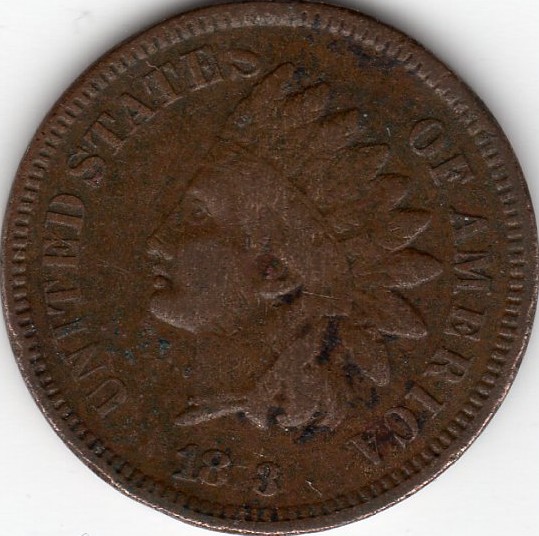 |
|
|
|
Pillar of the Community
United States
601 Posts |
What is a "Classic Cud Date Coin"? What does that mean? |
|
Pillar of the Community
United States
1547 Posts |
Yeah, the terminology escapes me, too. BTW, you are aware these dates were hand-punched up until 1909, right?
|
|
Pillar of the Community
United States
601 Posts |
By the way- Which Die Variety Reference books are in your collection? I saw in your member profile that you've been collecting since you were 8 and are now retired, what are your preferred references?
|
|
New Member
 United States
24 Posts |
Let me rephrase that I don't know how I got Cud and wax crossed. I was referring to wax buildup in the die mint marks. I started collecting in 1969,I Am 49 retired Vet due to injuries in Iraq March 1991. |
|
Pillar of the Community
United States
1164 Posts |
Whatever it is...gotta love them old indians!
|
|
Pillar of the Community
United States
1547 Posts |
Yeah, I'll ditto that remark. Whatever that is, it's very nice.
|
|
Pillar of the Community
United States
601 Posts |
Mintmarks signify the Mint of origin, where the coin was made and were not used on Cents until 1908. Were you suggesting Struck Through Grease? Which reference books do you utilize for your research? |
|
Pillar of the Community
United States
1547 Posts |
Quote:Were you suggesting Struck Through Grease? I think that's what he meant. FWIW, though, I don't think that's what it is. |
|
Pillar of the Community
United States
601 Posts |
|
|
Pillar of the Community
United States
7629 Posts |
Don't look at me...I'm clueless.
|
|
Valued Member
United States
260 Posts |
I enjoy IHC but honestly I don't know much about them. I can never pass a chance to thank anyone for serving or for having served our country. So thank you for helping to protect and defend USA.  |
|
Valued Member
United States
64 Posts |
Thank you for your service, jsb!
|
|
Bedrock of the Community
United States
12437 Posts |
Quote:
I was referring to wax buildup in the die mint marks. Wax is not involved at all. A coin press is a big honkin' machine that needs lots of lubrication so grease is prevalent around it. A die is a negative impression of a coin and the recesses of the die can become clogged with said grease and metal dust to the point that there is a significant impairment of detail. This is known as a filled die/struck through grease error. Most of the time, it is an annoyance that ruins an otherwise nice coin. Even though 1873 is a better date IHC, I would expect this coin to fetch less money than another one in a similar grade with a full date simply because part of the date is missing. Sure, it is a minor error and some collect these minor struck though errors but an example of this error type can be found on a much less expensive coin. Major struck though errors can command a premium when significant(>75%) detail is impaired. |
|
Valued Member
United States
260 Posts |
It's always interesting to know how those machines work. When I went to the mint there was only one or two lonely souls working the floor.
Thanks for the info biokemist6.
|
|
Pillar of the Community
United States
1547 Posts |
Biokemist6, is it possible one can get a little more specificity on just how this happened? Maybe it's not. But, the wild card is, why just that one digit? It seems a little implausible, I'm saying, to simply throw that off on a grease-filled die.
The die is incused. The presses were stopped and maintenance was performed on that die, it was attempted to be wiped clean, and they just didn't notice that area was still plugged when they started the presses back up. Is that the missing link? That would explain that, I'm saying.
|
| |
Replies: 19 / Views: 2,996 |







 Posted 03/30/2011 10:25 pm





