Although I have heard about new notes either printed (or will be printed) on 50 note sheets, all small size notes printed between 1928 up through recent years have been printed in sheets of 12, 18, and 32 notes..... the note shown above is a silver certificate, so that era of note is what I am talking about here.
The paper that small size notes are printed on is blank on both sides to start off with..... in the case of a 18 note sheet, the backs are printed on an entire sheet all at one time on this oversized sheet of paper, three vertical columns of notes, with six notes in each column (a 12 note sheet consisted of two columns of six notes and a 32 note sheet was four columns of eight notes).
After the backs are printed (first printing), but
before the sheet is flipped over to print the faces on the other side (second printing), the outer margins must be trimmed..... this is made easier by using these alignment marks that are printed onto the outer margins of the sheet at the same time as the backs are printed.... these alignment marks will be both vertical and horizontal..... the alignment marks were followed to trim the sheet to a specific rectangular size prior to the second printing (the note faces)..... in addition to these alignment marks, the sheet number was also printed at the top of the sheet for accounting purposes (in case an error was found, and the entire sheet needed to be replaced)..... this large top margin containing the sheet number will be cut off after the third printing (serial numbers and seals are added), until then, the sheet number is used to identify the sheet.
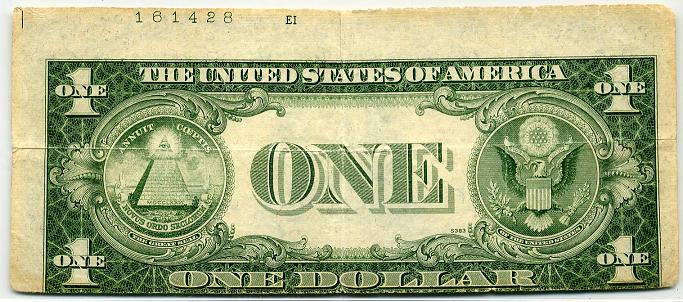
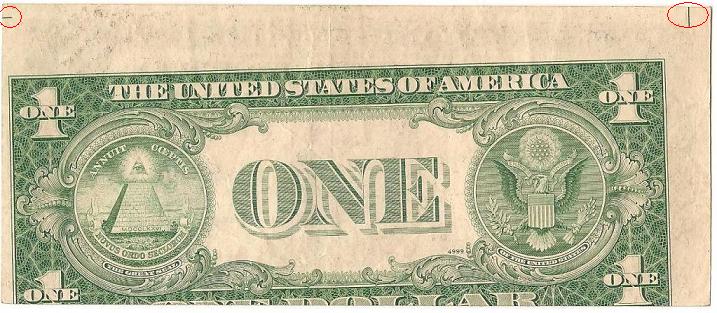
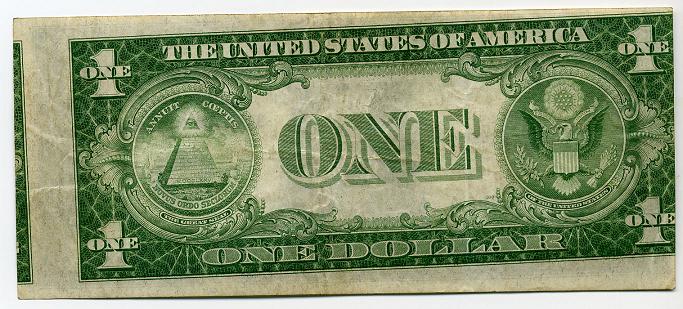
The notes shown above are results of neglect to use the alignment marks when trimming the sheet after the first printing..... after the sheet is trimmed, the sheet is flipped over to print the faces on the sheet, the faces will be printed in relation to the sheet size from this first trimming.
In the second printing (the faces), additional alignment marks are added to the face side of the sheet... (they were used to center the sheet for the addition of the third printing (seals and serials), and then to cut the sheet into individual notes after the third printing).
A lot of this stuff is done automatically today without the factor of the human error, by new and sophisticated equipment that prints, cuts and packages notes without the need for a lot of the things discussed above.







 Posted 04/03/2011 5:39 pm





