| Author |
 Replies: 12 / Views: 4,929 Replies: 12 / Views: 4,929 |
|
|
Pillar of the Community
United States
3546 Posts |
Hi, I have already tried acetone and silver cleaner to remove these ugly black stains. What substance and methods should effectively remove these stains? Thanks 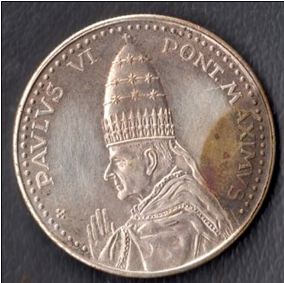 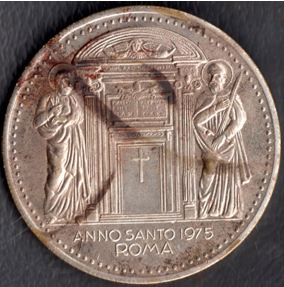 |
|
|
|
Valued Member
Netherlands
309 Posts |
Try on silver coins always as first a gum (the once you use to erase pensil stripe), it's soft, non agressive, and not scratching. It also works on farious other metals to get dirt, and even stripes of fingerprints off.
|
|
Bedrock of the Community
United States
12437 Posts |
NOOOOOO! DO NOT use an eraser on it unless you want to do further damage to the medal. An eraser may be soft but I guarantee it will still scratch a coin as will any type of dry mechanical rubbing. What kind of silver cleaner did you use and what is the composition of the medal?
|
|
Pillar of the Community
United States
1144 Posts |
If you have access to blue ribbon I would try that as it tends to remove toning both good and bad. Have no idea of the coins worth but if it isn't expensive and your not concerned about removing some of the luster then dip it in coin luster followed by a wash in bottled water.
|
|
Pillar of the Community
United States
1674 Posts |
Cannot be removed without damaging the coin. This medallion is NOT solid silver. All normal versions of these souvenir Vatican medallions are silver gilding on base-metal alloy, usually mostly nickel (except a few proofs, which have silver hallmarks on them).
This is not really a stain on top of the surface, it's oxidation of the metal itself. In order to remove the dark areas you literally would have to remove the topmost layer of metal.
Always be careful using acetone for alloy coins. Even if it's diluted to a fairly low concentration - if not properly washed off it will discolor the surface in short time.
Edited by Numismat
05/12/2011 12:23 pm
|
|
Bedrock of the Community
United States
12437 Posts |
Based on the appearance, I was wondering if it was silver plated base metal. Since that is the case, there is nothing that will save the medal. Acetone will not harm the coin at all though, I have never seen it discolor a coin that was not already discolored and you should certainly never dilute it as that would render it useless for its intended purpose- the removal of surface organic matter.
|
|
Pillar of the Community
 United States
3546 Posts |
biokemist6, I have unsuccessfully attempted to remove the stains with the liquid silver cleaner from http://www.connoisseurs.com/jc/LDC_main.htm. I was unable, however, to acquire the MSDS of this solution. This token appears to be silver-plate over some unknown base metal per another owner's research: http://cgi.ebay.com/ws/eBayISAPI.dl...ZpuHnG4%253DBecause of the low value of this token I did try to erase the stains with one of those soft rose-colored removable pencil erasers. It removed about 50% of the intensity of the stain leaving a yellowish base color remaining on the obverse. The eraser did little to change stains located on the reverse because of the existence of the multiple engraved areas being affected by the discoloration. Consequently, I am still searching for that perfect chemical solution to put this coin out of its misery.  |
|
Pillar of the Community
United States
1674 Posts |
Quote:
Acetone will not harm the coin at all though, I have never seen it discolor a coin that was not already discolored and you should certainly never dilute it as that would render it useless for its intended purpose- the removal of surface organic matter. You may be surprised! I use nail polish remover, which is a diluted acetone, and it works like magic for verdigris, old glue or adhesive. The problem is with coins that are not pure metal. When I've use acetone on bronze, copper, aluminum-bronze or brass coins, it quickly caused the surface to have an unnatural shine, though not as strong as typical from chemical cleaners. If left exposed to acetone too long, either by leaving it in the solution or not washing it off afterward, these coins begin to darken almost as if they were exposed to high heat. The same is true for silver coins that have a significant percentage of alloy mixed in. From what I noticed, anything below .750 is prone to slight discoloration - and the lower the purity the higher the risk. Pure acetone would only accentuate these risks and your window of opportunity before the risks kick in. Unfortunately I have found this out the hard way on many occasions.  Actually - if the only problem is verdigris/PVC slime (not hard verdigris that's begun to eat into the surface) you are much better off using rubbing alcohol. Isopropyl will do the job just fine (though not as quickly) and there is no risk at all for affecting the surface. I also noticed that you can lightly rub coins with a soaked alcohol pad to remove dirt or PVC slime without causing hairlines, though I personally would not recommend any kind of rubbing (a.k.a. don't try that at home). Quote:
Consequently, I am still searching for that perfect chemical solution to put this coin out of its misery. As mentioned before, this is not something that can be removed from the surface, as it is very much a part of the surface. There is no chemical solution that will help. If the dark spot is that much of a bother, you can only really rub it off with a metal polishing cloth. Of course there is no guarantee that the color beneath will be any different. Base metal alloys can vary widely in appearance. Edited by Numismat
05/12/2011 8:52 pm
|
|
Bedrock of the Community
United States
12437 Posts |
Quote:
I use nail polish remover, which is a diluted acetone That is your problem right there Nail polish remover is not just "diluted acetone", it is a mixture of dyes, fragrances, softeners, conditioners, and other various proprietary chemicals- a bunch of stuff you do not want on your coins. Nail polish remover is not even always acetone, some brands use less volatile solvents such as methyl ethyl ketone. Those substitutes are almost always inferior solvents compared to pure acetone. Acetone can remove layers of organic material revealing previously covered stains and discolorations but that would not be caused by acetone, only revealed by acetone. Pure acetone is not chemically capable of reacting with coinage metals under normal circumstances. Every bad effect you had is directly attributable to using nail polish remover instead of pure acetone. |
|
Pillar of the Community
United States
1674 Posts |
Biokemist: Hmmm, you may be onto something there. I never did bother to check the additional solvents in the nail polish remover. You obviously know quite a bit about chemistry, so I will try it your way.
Thanks! =)
|
|
Bedrock of the Community
United States
12437 Posts |
The purity of acetone is checked with an evaporation test. You pour a small bit in a clear glass dish and let it evaporate. If there is no visible residue left, it is pure enough to use on your coins. Try that with nail polish remover and see what you are leaving on the coin  Solvent-grade acetone found at most hardware and paint stores is typically >98% with the balance as water. |
|
Pillar of the Community
United States
1674 Posts |
The one I use leaves a thin white film on my hands when it evaporates. I had to use alcohol in combination to then clear off the white film. Thanks for clearing up some confusion on my part. =)
|
|
Pillar of the Community
United States
4008 Posts |
Quote:
The one I use leaves a thin white film on my hands when it evaporates. Most solvents will cause the skin exposed to it to take on a white appearance. It could be that the solvent has de-oiled the skin, causing that appearance, whether there is an actual residue or not. There very well may be a residue but this does not prove or disprove it. |
| |
Replies: 12 / Views: 4,929 |
|










 Posted 05/11/2011 5:32 pm


