








 Posted 06/03/2011 1:40 pm


Unfortunately, the information that you gleaned from another site is grossly inaccurate. In 1982, the US Mint switched the composition of cent planchets from 95% copper to copper-plated zinc. These new planchets are soft enough that they do not require annealing so there is zero chance of any copper contamination transferred from the cents to other coins. It is also worth noting that the copper only represents 2.5% of the coin so there is very little copper to contaminate anything even if they were annealed.
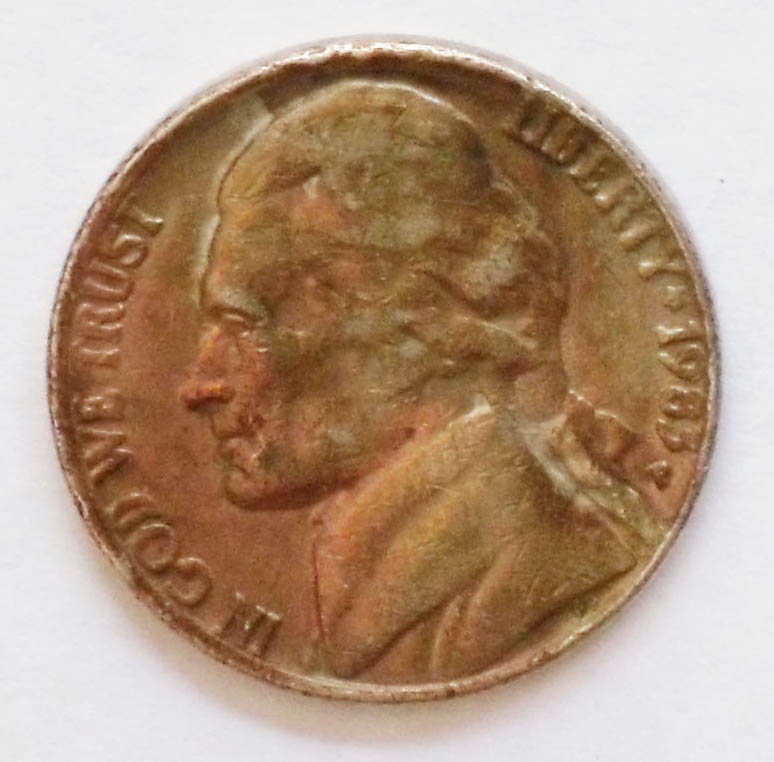
The process described is also inaccurate, copper dust is not involved at all in improperly annealed planchets. A combination of high heat and/or high oxygen levels in the annealing oven will cause copper and nickel atoms to migrate and separate into relatively pure layers. Any surface copper on an improperly annealed planchet came from the coin itself, not any outside influence.
Improperly annealed planchets are uncommon and the vast majority of coins purported to be improperly annealed are actually affected by environmental damage. I suspect that is the case for your coin.


