| Author |
 Replies: 9 / Views: 2,317 Replies: 9 / Views: 2,317 |
|
|
Valued Member
United States
469 Posts |
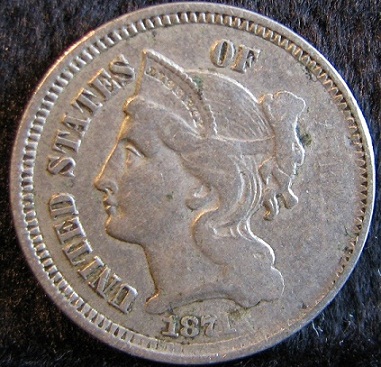 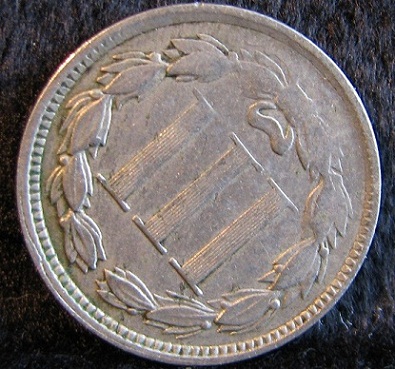 I recently acquired this nice 1871 3 cent nickel because I noticed the drastic difference in condition in opposite quadrants of the obverse and reverse as well as the obvious rotation of the reverse. The images reflect the actual orientation on the reverse as I simply turned the coin directly over. My question is to the error aficionados out there. Was this struck through a lot of grease on both sides of the coin or would it be something else. It is nearly impossible to see in my photos but there appears to be small amounts of mint luster in certain areas when held to the light just right. My other question is, if this is an error as I believe it is, what does the strike issue and rotation do to the value. I really do look forward to your input!
|
|
|
|
Moderator
 United States
23522 Posts |
Fascinating. I suspect it's a die adjustment strike; a Grease Fill on one face wouldn't affect the strike of the other face to that extent. |
|
Bedrock of the Community
United States
17884 Posts |
I think you have a coin struck from axially misaligned dies. The dies faces were not parallel. They were closer together at 8:00 and further apart at 2:00. They don't have to be far out of alignment, just a couple of degrees. Grease might be a possibility but the unusually sharp strike on the left side for a copper nickel coin makes me lean toward the first possibility.
|
|
Valued Member
 United States
469 Posts |
Is there any premium for this type of error or does it actually bring the value down? I am hoping for the former!
|
|
Pillar of the Community
United States
2760 Posts |
How much is your coin rotated? (it depends whether you flipped your coin heads-over-tails for the picture or side-to-side). If your coin is rotated 90 degrees or more, then there is most certainly a premium. I checked the rotated die census, and there are no 3 cent pieces from 1871 that have been reported to the site. But there is also a very low demand (even though there is also a low supply). The obverse just looks like a Grease Filled Die, which would normally detract from the value a little. But all together, a nice error. |
|
Pillar of the Community
United States
860 Posts |
I support the misaligned dies theory.
|
|
Bedrock of the Community
United States
10045 Posts |
That's cool!  How is the thickness of the coin--even from edge-to-edge? |
|
Valued Member
United States
469 Posts |
The thickness is even. The rotation is as shown as well. Do you think this is an EF? I looked at PCGS Photograde and it looks like it to me and again, there are areas where there is still luster. Any stabs at value?
|
|
Pillar of the Community
United States
8904 Posts |
 VERY cool! VERY cool! |
|
Pillar of the Community
United States
4000 Posts |
I know you're twitching for an estimate of value, but I can't help you there. Conder101's diagnosis makes the most sense of any scenario to me. I would think since it is an error with an error, it would help the value as opposed to an error on a variety for instance. Awesome coin brother! Nice score! |
| |
Replies: 9 / Views: 2,317 |
|










 Posted 07/04/2011 1:55 pm


