| Author |
 Replies: 11 / Views: 1,575 Replies: 11 / Views: 1,575 |
|
|
Valued Member
United States
191 Posts |
If anyone could tell me what these marks are I would greatly appreciate it. These dots are definitely raised.
Thanks
|
|
|
|
Moderator
 United States
23522 Posts |
" Cuds" are areas of raised metal created when outside edges of dies break off, and either fall away completely or recess somewhat. Either way, a Cud always begins at the rim of the coin and proceeds inwards to whatever extent the break covers. Like so: 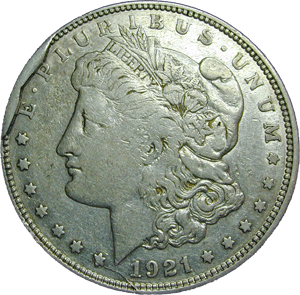 It's kinda tough to visualize what you're talking about without a picture. |
|
Valued Member
 United States
191 Posts |
|
|
Bedrock of the Community
United States
14454 Posts |
looks like it may be some pitting but cant be sure, pitting could come from the dies being rusted and it is usually on the reverse because it is the die that is on bottom and condensation can sit in the die and cause it to rust and pit. I am not 100% sure what is on your coin (I can see it looks raised) because I have not really ever seen anything like that on a 1878 Morgan
|
|
Bedrock of the Community
United States
14454 Posts |
quote:
Originally posted by SuperDave
.
I think you just posted that picture just so you could look at it |
|
Valued Member
United States
191 Posts |
I want to post another just dont know how and I really am wondering whats up with those marks.
|
|
Bedrock of the Community
United States
14454 Posts |
newdavid I will email you and you can just reply to my email and attach the picture into the email and I will upload it for you
|
|
Moderator
United States
23522 Posts |
quote:
Originally posted by Bryan1315
quote:
Originally posted by SuperDave
.
I think you just posted that picture just so you could look at it
That too.  Newdavid, those are interesting features. Like Bryan said, they're obviously raised, and in an area where they're obviously not part of a planchet defect - they'd have been flattened during the strike. Pitting is unlikely, although it has happened on obverses. The spots are too few, and too raised, to look like pitting. It's possible that something happened to the coin post-mint that deposited something on it - splatter from welding or brazing, for instance - but they sure look like part of the coin. Another possibility is that the coin was minted from imperfect alloy, which then bubbled after mintage. I don't think the bubbles would be so sharp, though. This one's fun. I gotta think about it. |
|
Bedrock of the Community
United States
14454 Posts |
woohoo! get that post count up there SuperDave by posting the same thing twice Ahhh! You deleted the second one before I could get this one posted!!!Edited by Bryan1315
11/16/2006 7:49 pm
|
|
Moderator
United States
23522 Posts |
Golly, you're fast. I had the double post off the page in 30 seconds.  |
|
Bedrock of the Community
United States
14454 Posts |
wasn't fast enough to get my responce in there before you took the second post off though
|
|
Valued Member
United States
397 Posts |
SuperDave, since you like 'em so much, I will repost my 1921 for ya.... Although not a VAM of any kind, I still like it....   One note though: If ya notice where the cracks are in relation to the E and the period, maybe this was a VAM 1X predecessor.... MM  Edited by morganman
11/16/2006 10:25 pm
|
| |
Replies: 11 / Views: 1,575 |
|







 Posted 11/16/2006 6:35 pm



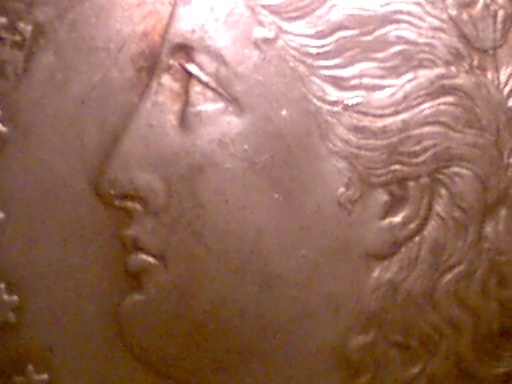 freckle face.jpg


