| Author |
 Replies: 12 / Views: 2,238 Replies: 12 / Views: 2,238 |
|
|
Valued Member
Canada
96 Posts |
Greetings all, I was woundering what you can tell me about this coin please. It looks genuine and pretty thick. weight : 13.3 gm Diameter : 2.15cm Any ideas ? 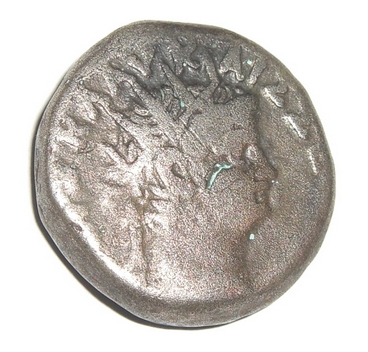 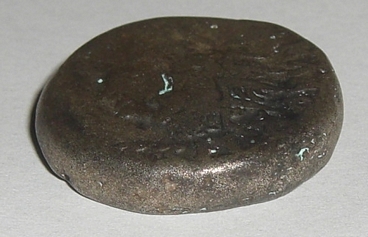 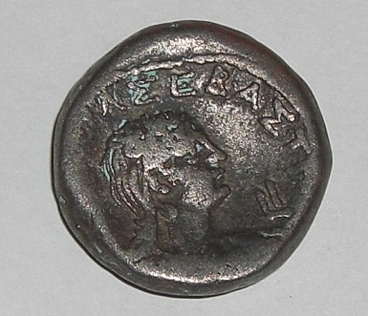 Edited by pat44
07/15/2011 2:58 pm
|
|
|
|
Pillar of the Community
United States
648 Posts |
|
|
Pillar of the Community
United States
4253 Posts |
I'm not 100%, but I believe it is a Nero Tetradrachm from Alexandria with Greek lettering. I have something similar. Mine is a Tetradrachm identified as Köln 172-174; Curtis 36-54, Dattari 204, SGI 633, RPC 5289. 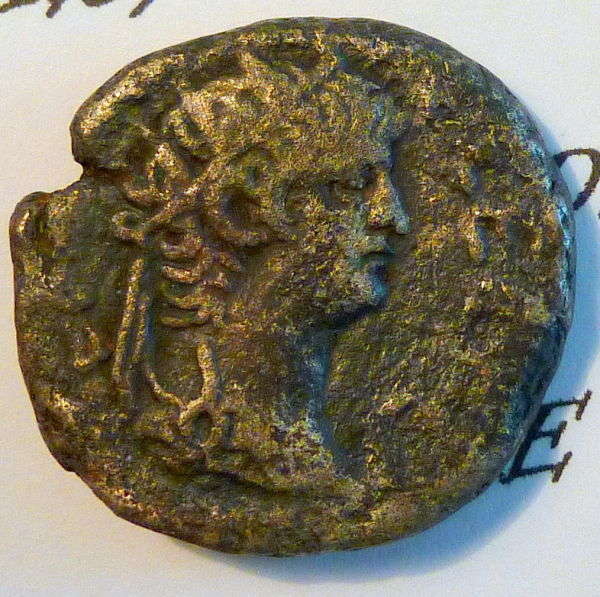 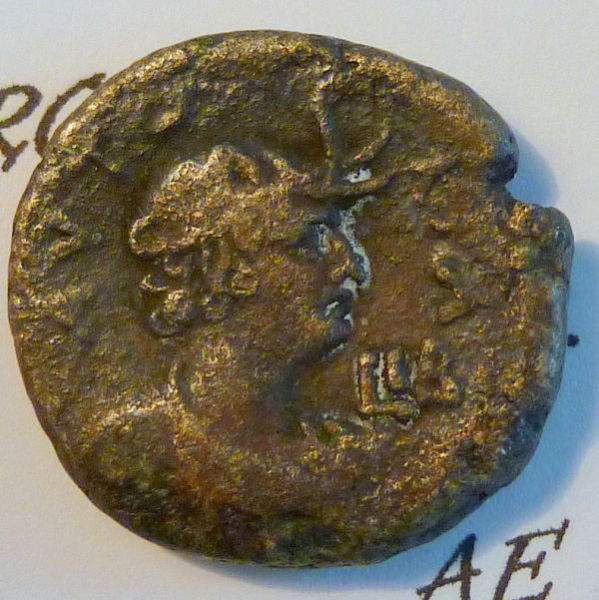 Here is the picture. |
|
Moderator
 United States
23731 Posts |
That's what it is. Nice coin.
|
|
Pillar of the Community
United States
4253 Posts |
It was so late when I responded, I neglected to give full details: NERO AR Billon Tetradrachm of Alexandria minted in 65-66 AD
OBV: NERW KLAV KAIS SEB GER, radiate bust right, wearing aegis
REV: AVTOKPA, draped bust of Alexandria right in elephant skin headdress, LIB to right, year 12
I hope this helps
|
|
Moderator
Australia
17002 Posts |
Yours is AVTOKRA, jwharper, but the one in the OP has a different reverse: POPPAIA SEBASTH, the empress Poppaia. The year is LI, Year 10, or AD 63/64. Here's one of the Wildwinds examples. Don't say "infinitely" when you mean "very"; otherwise, you'll have no word left when you want to talk about something really infinite. - C. S. Lewis
|
|
Valued Member
 Canada
96 Posts |
Alright...Thank you all very much ! I woundered who was that on the obverse ? Never thought it was nero and Poppaea his second wife..Yup you are right Sap :)..Thanks. You mean that(below)tokenmast ? No idea. It looks like bronze disease eh ? But I don't think so. Maybe it was found with a bunch of bronze coins that were eaten up by bronze disease and so the Nero tet got a bit on it and got glued over the passage of time. 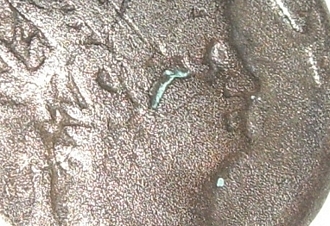 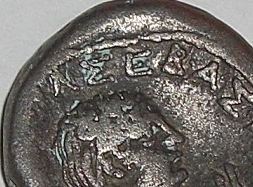 |
|
Pillar of the Community
United States
648 Posts |
Thank You pat44 for the bigger photo! sounds like like a reasonable explanation to me .  |
|
Moderator
Australia
17002 Posts |
As for the green stuff, it probably is copper form the coin itself. Egyptian tets of this period are quite debased. As a general rule of thumb, there was as much silver in a tetradrachm as there was in a denarius of the same time period - and tetradrachms weigh three or four times what a denarius weighs. There's plenty of copper in there to give it a greenish tinge under the right (or wrong) conditions - or, in jwharper's case, to make it look brassy.
Don't say "infinitely" when you mean "very"; otherwise, you'll have no word left when you want to talk about something really infinite. - C. S. Lewis
|
|
Pillar of the Community
United States
648 Posts |
 -------------------------------------------------------------------------------- Thank You Sap for the bigger picture ! sounds like like a reasonable explanation to me . ( practicing recycling ) |
|
Pillar of the Community
United States
648 Posts |
Quote:
There's plenty of copper in there to give it a greenish tinge under the right (or wrong) conditions - or, in jwharper's case, to make it look brassy.
let me run this by? so that might be silver " precipitate" by the nose of Alexandria right in elephant skin headdress ? silver brought to the surface by the conditions of say in fire out of ,in out ect.? on purpose to make a fouree? or debased coins look good ( better )ha. :) |
|
Valued Member
United States
397 Posts |
Billon is usually a copper/silver mixture - usually heavier on the copper than the silver.
In actuality, billon is gold or silver mixed with any other base metal - but is usually silver and copper.
|
|
Valued Member
Canada
96 Posts |
Thanks again guys ! I appreciate your input! The coin had eeither a intimate life of say like 1900 years with some bronze coins who had developped bronze disease and the tet got some on it's body or a bit of copper seaped out by some unknown? means and got the disease. Regards, Pat Edited by pat44
07/25/2011 5:22 pm
|
| |
Replies: 12 / Views: 2,238 |
|









 nice looking coin
  Oxide in low places
  is there chance of higher magnification


 Posted 07/15/2011 7:42 pm


