











 Posted 08/10/2011 9:40 pm


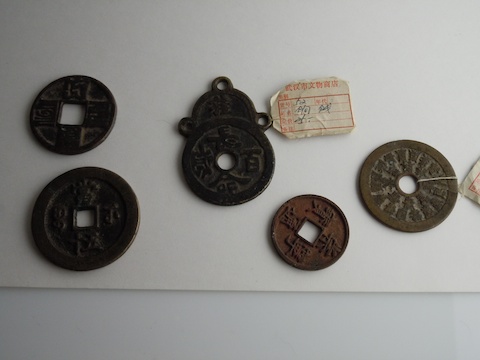
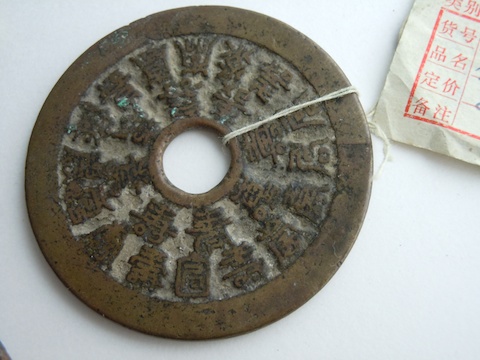
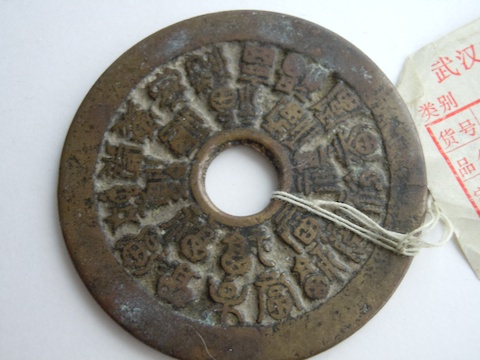
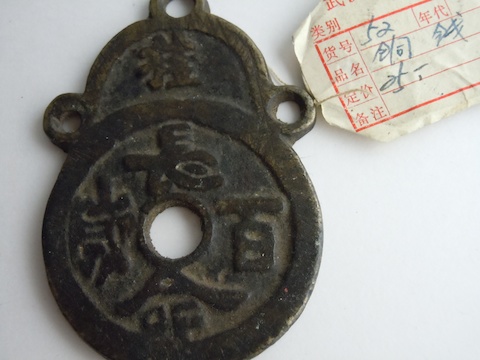
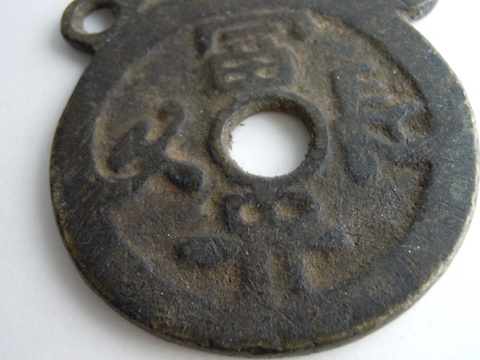
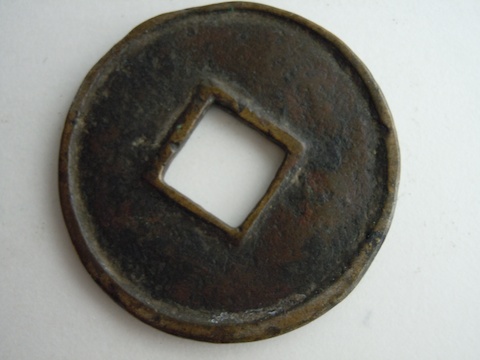
On the contrary, the two with tags on are charms; the others are all coins. There's no indication of scale in your pics, but I assume they're all fairly large.
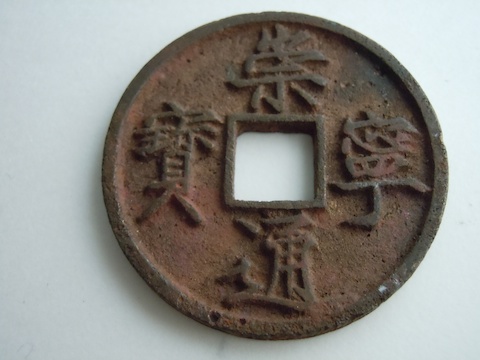
The smallest, orange-coloured one (bottom-centre of first pic) is from the Song dynasty, a "slender gold style" 10 cash of emperor Hui Zong during his Chong Ning period (1102-1106 AD). A beautiful yet common coin; there are four whole pages of them on zeno.ru.
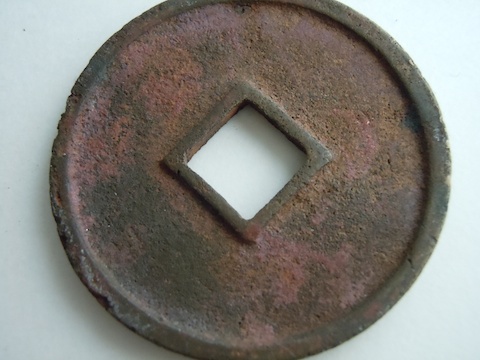
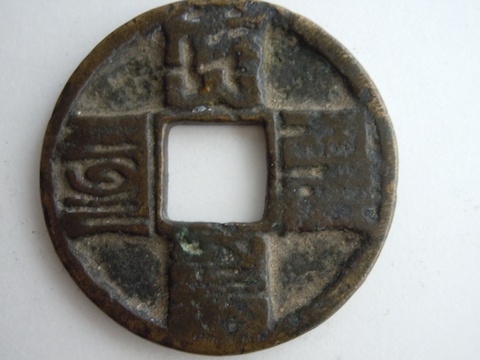
The next largest, top left of first pic, is one of the few cheap and common coins obtainable from the Yuan Dynasty (Mongol Empire of Kublai Khan and successors). We know from the historical records that large numbers of these 10-cash coins were made in 1310 AD. Unlike most Chinese coins, these are written in the Mongolian "Phagsba" script. There are eight pages of these on zeno.ru.
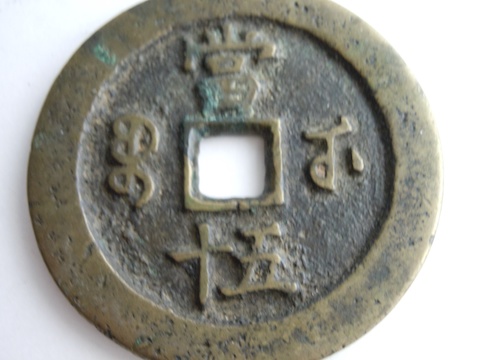
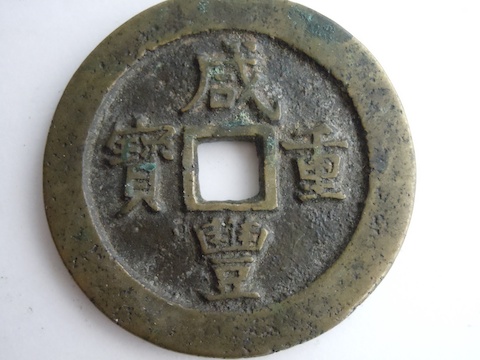
The largest, bottom left of first pic, is more modern, a large 50 cash of the Xian Feng emperor of the Qing dynasty (1850-1861), made in the Wuhan mint.
The smallest, orange-coloured one (bottom-centre of first pic) is from the Song dynasty, a "slender gold style" 10 cash of emperor Hui Zong during his Chong Ning period (1102-1106 AD). A beautiful yet common coin; there are four whole pages of them on zeno.ru.
The next largest, top left of first pic, is one of the few cheap and common coins obtainable from the Yuan Dynasty (Mongol Empire of Kublai Khan and successors). We know from the historical records that large numbers of these 10-cash coins were made in 1310 AD. Unlike most Chinese coins, these are written in the Mongolian "Phagsba" script. There are eight pages of these on zeno.ru.
The largest, bottom left of first pic, is more modern, a large 50 cash of the Xian Feng emperor of the Qing dynasty (1850-1861), made in the Wuhan mint.
Don't say "infinitely" when you mean "very"; otherwise, you'll have no word left when you want to talk about something really infinite. - C. S. Lewis


