| Author |
 Replies: 10 / Views: 2,168 Replies: 10 / Views: 2,168 |
|
|
Valued Member
United States
139 Posts |
|
|
|
|
Pillar of the Community
 United States
5953 Posts |
|
|
Valued Member
 United States
139 Posts |
That's interesting, TY... I never researched it! I deal with mostly the modern variety types so this one caught me by surprise...
|
|
Bedrock of the Community
United States
17884 Posts |
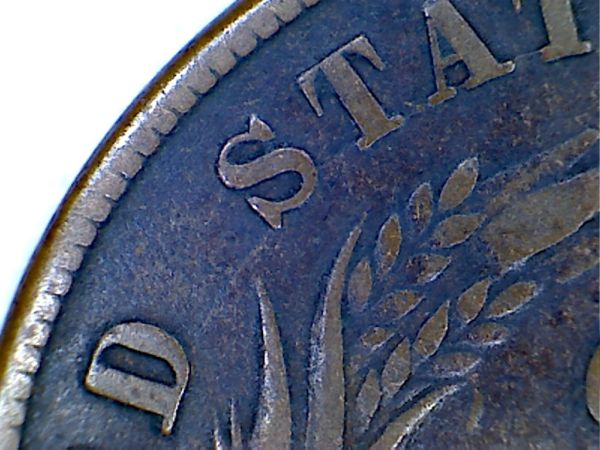
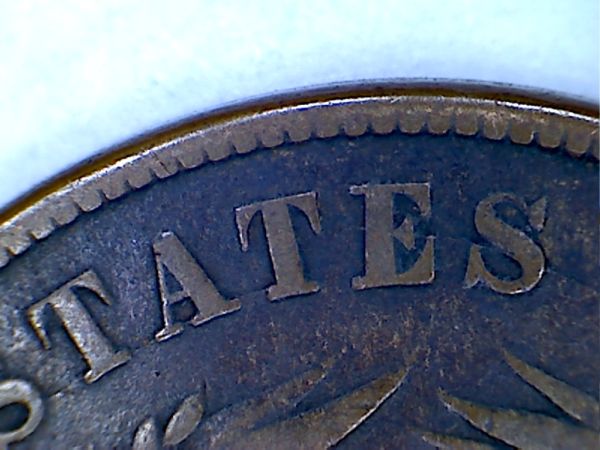
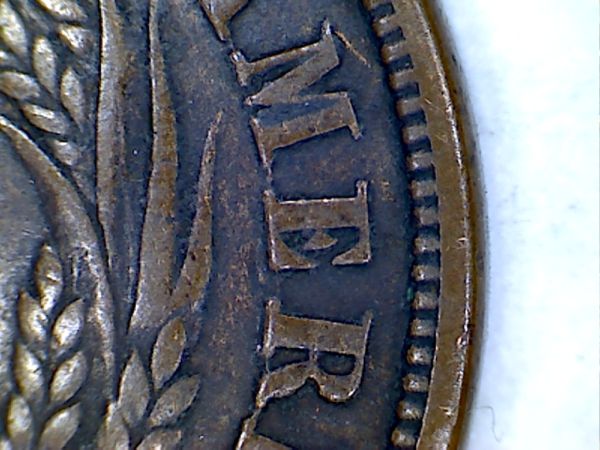
I don't see a die break on the OP coin just some heavy cracks. On the other hand did you notice the hub break on the D in UNITED? It's a very common hub break on this series but still interesting.
Edited by Conder101
08/27/2011 10:09 am
|
|
Valued Member
United States
139 Posts |
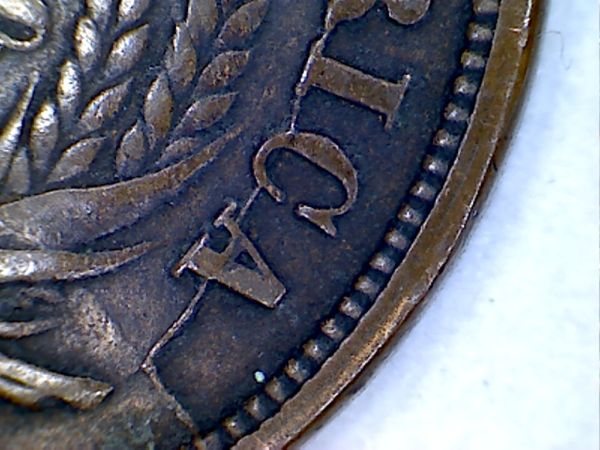
Yes I did notice thanks! But now I am confused since you mentioned crack... When I find stuff like this I try to compare what I have to known eroors obviously. If my thinking is right, a die crack would still maintain the coin details itself but the cracks would appear on the coin as they are on the die. A die break however would alter the coin some especially if the break is very loose... if you notice on this pic, where the break goes to the rim, there is a wider than normal gap between the denticles.... let me know if my thinking is wrong... lol... 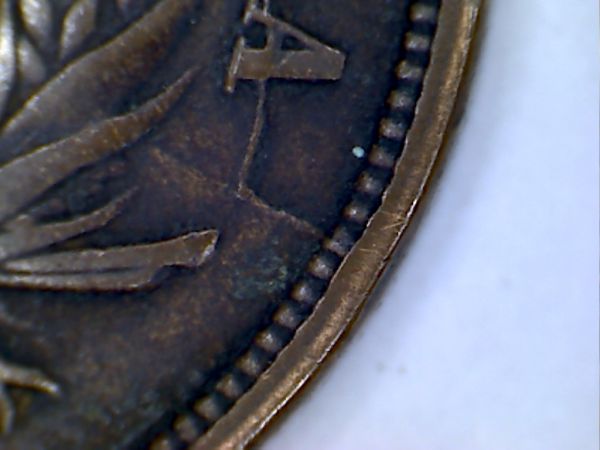 Edited by DaWolfster
08/27/2011 3:47 pm
|
|
Bedrock of the Community
United States
17884 Posts |
A die crack is exactly that, a crack in the die. On a die break a piece of the die has completely broken off. If that piece has broken off at the edge of the die and fallen away it creates a raised featureless lump called a Cud. If it has broken off but hasn't fallen away, say just slipped down and is being held in place by the collar, it will form a raised area that still shows some of the details. This is a Retained Cud. If a chunk breaks off and falls away but it doesn't involve the edge then it is just a die break or an internal die break. Very small internal die breaks are called die chips. What the dividing line is between a die chip and an internal die break is just a matter of personal judgement. |
|
Valued Member
United States
139 Posts |
Alrighty... Since Irene displaced e for awhile, lol... So what I have here is a coin with a large die crack and a small die crack with a hub break on the D... does that sum it up?
|
|
Pillar of the Community
United States
5953 Posts |
Quote:
So what I have here is a coin with a large die crack and a small die crack the hub break was from one of my pics.. Your D is missing the serif which places the die pairs used. There are three serif stages associated with the 2 Cent series Full serif partial serif and no serif |
|
Valued Member
United States
139 Posts |
gotcha... I am learning...  |
|
Bedrock of the Community
United States
17884 Posts |
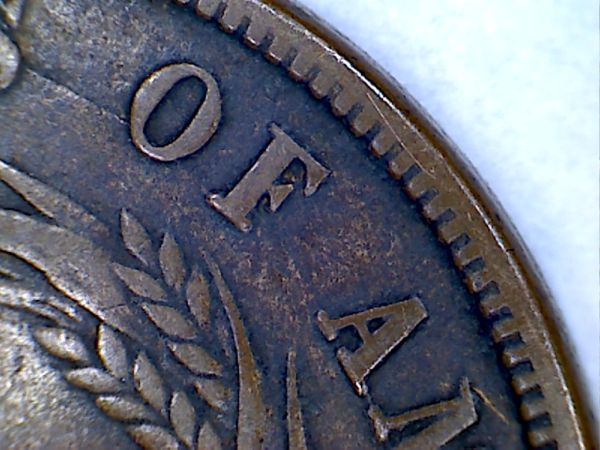
But the missing serif is caused by a hub break. There are actually two cracks there after the final A in AMERICA. The crack through the A seems to extend to the stem of the wreath and the other crack runs from the rim crosses the other crack and on through the leaves of the wreath.
|
|
Pillar of the Community
United States
1551 Posts |
My understanding of " Retained Cud" is where the die break or breaks run from edge to edge for the most part 1st and shows sighs of a "displaced fields" |
| |
Replies: 10 / Views: 2,168 |
|









 Posted 08/26/2011 2:54 pm





