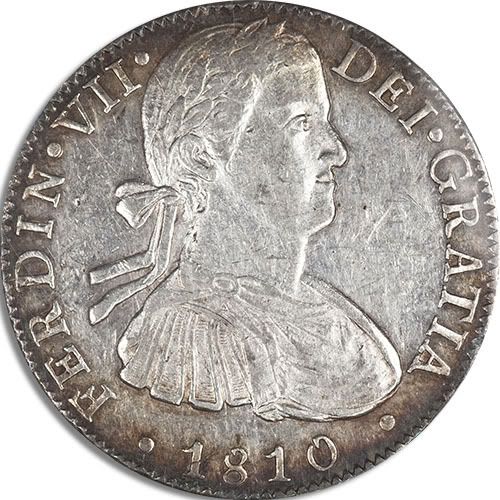
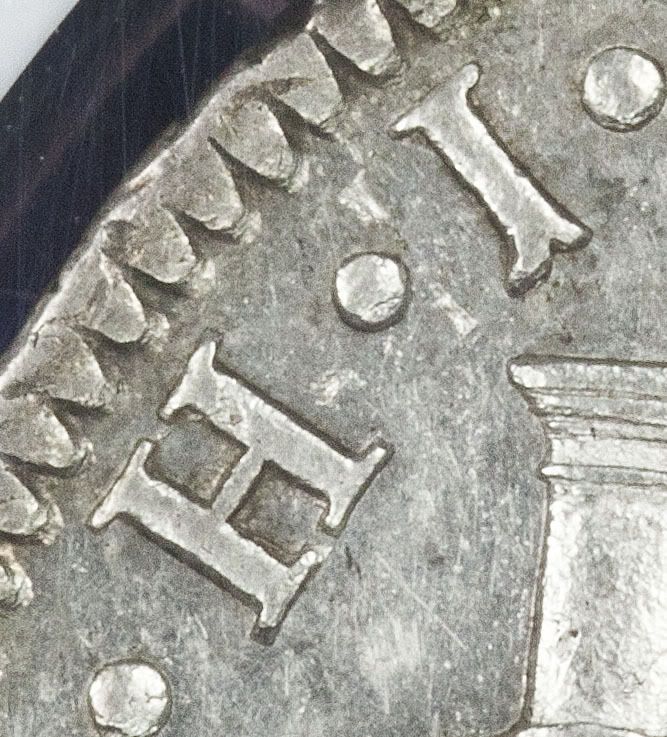
Picked this 1810 HJ at NEN and noticed what looks like an overassayer HJ/TH. Coins with both assayer initials were used in 1809 and 1810 and I owned a very clear example of HJ/TH on an 1809 issue (pictured below).
Looks like just a piece of slag on the surface, like the two on either side of the H. That bit has the general shape of a J, but it's much too small to be of the font struck on these coins.
There is a known variety 1810 Mo HJ/TH. Your coin looks to be one, all the ones I have seen, including my own copy are very faint overassayer. Usually just the extremes of the H show.
Thanks, guys. I will send it to NGC as misattributed and see what they come back with.
This makes me wonder about the process of reworking the dies in a situation like this. Would they fill-in the old assayer with a softer metal, polish off the surface, and punch the new initials in? If this was the case, it could explain why the undertype is just a thin outline. Softer metal during strike would give-in slightly under the pressure of the strike, resulting in a faint raised surface.
Disclaimer: While a tremendous amount of effort goes into ensuring the accuracy of the information contained in this site, Coin Community assumes no liability for errors. Copyright 2005 - 2026 Coin Community Family- all rights reserved worldwide. Use of any images or content on this website without prior written permission of Coin Community or the original lender is strictly prohibited. Contact Us | Advertise Here | Privacy Policy / Terms of Use













 Posted 09/16/2011 11:11 pm


