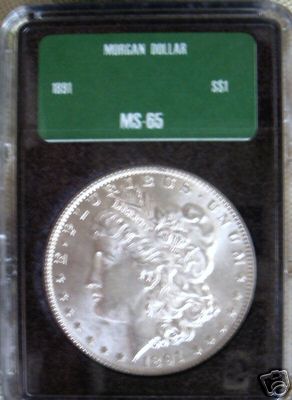
A tough question. More than anything, it depends upon the coin one is selling and the reserve (or starting) price. If it's a popular series and the reserve is below current market prices, the reserve will probably be met. If it's in a slab from a top
TPG, it's more likely it will be met. If it's raw with poor images, it most likely will not be met. Good example are all the raw 1889-CC Morgans listed on
ebay; almost every one has a problem (cleaned most commonly or damaged [rim dings most often]) yet the sellers have unrealistic expectations, so if they have a too-high reserve or start price, the auctions are just gonna sit there. Example:
http://cgi.ebay.com/ws/eBayISAPI.dl...170063084849 . Saul isn't a bad dealer, but the rim bruises on this 89CC are gonna get it bodybagged at a top
TPG. (Far, far too many sellers rely upon the coin's image to sell rather than writing a decent description. This may be reflective of US society's trend toward illiteracy. </editorializing>.)
I sell almost exclusively slabbed coins from top TPGs. In most instances (but not always), I set a reserve which at least approaches my investment but also is below and sometimes well below current market as measured by recent sales on
ebay. Most of the time (80%?), the auctions meet my reserve. But not always. It depends on the relative uncommonness of the coin, the number of other similar coins being offered at the same time, and time of the year (Nov - Dec seems to be the best time), among many other factors.
It also depends upon the quality of the coin's description and image. Far too many times, the auction itself will be flawed with a description that states, "Judge the grade for yourself.", then have a fuzzy or tiny image. And no return policy. Or lousy feedback. Or other red flags which keep bidders from bidding up to a reserve. Here's an example of high expectations which are not likely to be met:
http://cgi.ebay.com/ws/eBayISAPI.dl...320063147239 He's trying to sell a raw coin which appears to have been cleaned for an EF price when it probably wouldn't grade higher than VF even if it proves not to have been cleaned.
Here's another example that I'm surprised sold at all:
http://cgi.ebay.com/ws/eBayISAPI.dl...180063934597He listed a start at $395 which was almost my maximum ($400) I would bid on a raw 90CC Morgan which is book value plus taking into consideration grading cost, shipping, etc, and sell it at a profit. For a coin with such lousy images, ain't no way I'm gonna bid above MS-60 value and ain't no way I'm gonna believe it's gonna grade above MS-60, even if it proves not to be a problem coin. I didn't bother bidding on it at all and those who did bid seemed to have agreed with my assessment and approach, bidding up to the book value for the lowest mint state.
Given all the variables in any particular coin auction, it's tough to generalize on reserve and high start price auctions. Too many factors need to come together before the bidding will meet a seller's reserve/start price.
One detail I learned long ago: list a coin's start price at a very low figure (I start at 99¢ or $9.99) to get the bids going, even if a reserve has been set. It's a waste of bandwidth to have a very high start price. Get 'em bidding and maybe a bidding frenzy will start.
Fred








 There are so many of them, I feel sorry for new collectors.

 Posted 12/16/2006 09:14 am


 Thank goodness he has very few bids on his coins.Its a wonder why people don't trust ebay coin sellers after getting burned by thieves like this.