| Author |
 Replies: 8 / Views: 1,008 Replies: 8 / Views: 1,008 |
|
|
Valued Member
United States
121 Posts |
I recently bought this 1799 draped bust dollar,and I'm wondering if it is worth sending to PCGS for a recert? It was given a "details" grade due to "damage", but unless I'm blind, the only things that could be considered "damage" are 2 small dings on the obverse; one just below the bust toward the front, and one directly under the last 9 in the date, Granted, the marks are unusual, and don't look like the sort of thing that would occur from carrying the coin around in a purse or pants pocket. It looks like someone tapped it lightly in each spot with a center punch or something. On the other hand, I've seen some pretty nasty gouges on coins, that while they certainly lowered the grade, didn't cause it to receive a "details" grade. I'll see how many replies I get and go with the consensus. Should I send it in or live with it? 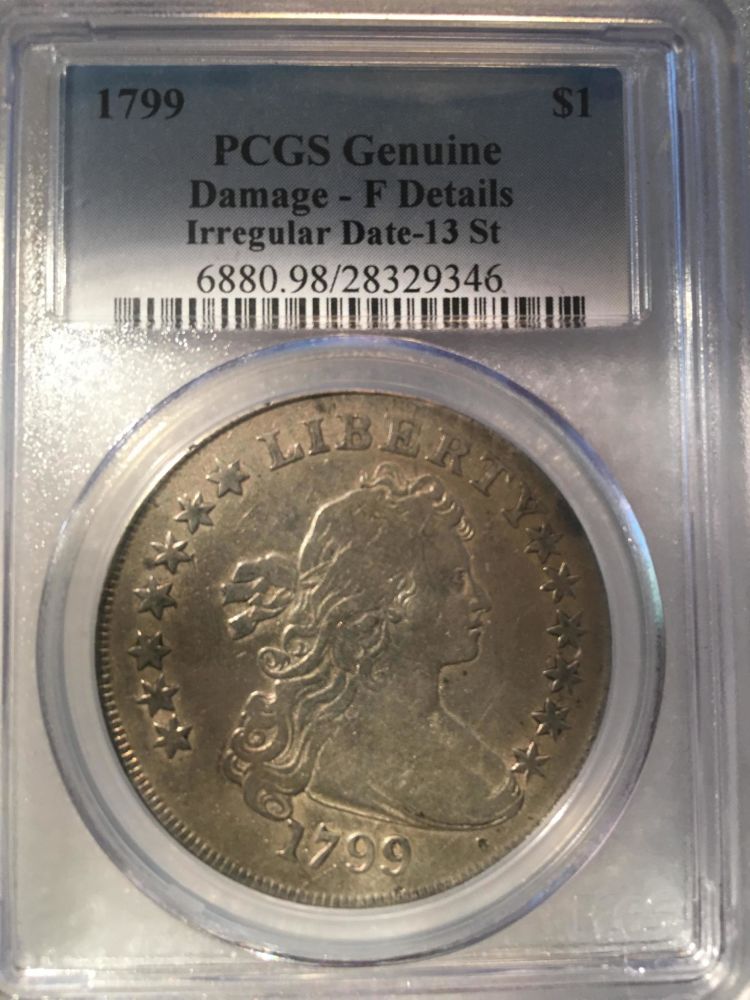 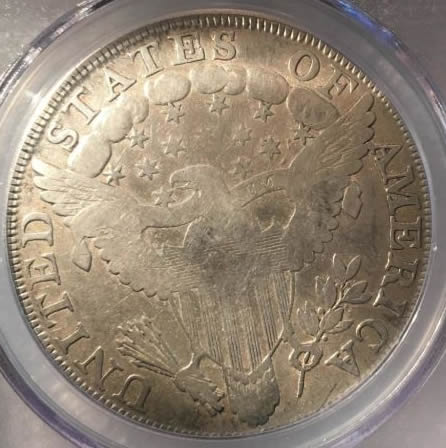 Edited by Biker Coin Guy
03/25/2017 10:08 pm
|
|
|
|
Pillar of the Community
United States
1215 Posts |
Say you were offered this coin as an F12 and you buy it sight unseen.
If you end up getting this coin in hand, what would YOU feel when you find out it has those dings on it, knowing you bought it as if it were an F12?
|
|
Valued Member
 United States
121 Posts |
Fair question, but hard to answer, because I would never buy a coin sight unseen. I guess I would have to say that I would rather have that coin with the dings, than one that was certified F12, sans dings, but covered with mold and grime, or one that had a big gouge that occurred during a die stamp. I have seen worse marks on coins that weren't disqualified; I'm not really sure where they draw the line. Thanks for the reply!
|
|
Valued Member
United States
121 Posts |
Here is an example of what I am talking about. This is a Seated Liberty dime, given a full F12 grade by PCGS. Note the marks above the bow. They don't look like normal wear and tear or something that happened during the minting process, and yet it passed. 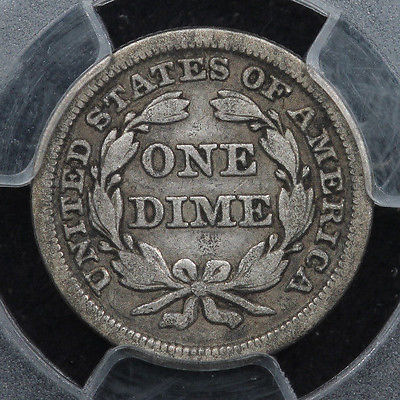 |
|
Rest in Peace
United States
17900 Posts |
It does appear that the details grade is warranted.
I wouldn't try myself.
|
|
Bedrock of the Community
United States
12057 Posts |
The damage is the reverse eagle's top of shield area. It is similar to what is seen when a solder mount is removed or on plugged/smoothed coins. The obverse might show signs of this about halfway down, in the area of hair that is located in line due left of the chin.
Member ANA - EAC - TNA - SSDC - CCT #890 "Most of the things worth doing in the world had been declared impossible before they were done." -- Louis D. Brandeis |
|
Pillar of the Community
United States
1499 Posts |
Yes, the area in the middle of the shield on the reverse is post mint damage. That alone is enough to warrant a "details" grade.
The marks by the date might not be enough to keep the coin from grading, but location is a problem. given where they are, they are in a place that will be obvious to anyone who examines that coin in any significant detail.
|
|
Bedrock of the Community
United States
94367 Posts |
Agree with the grade on the holder.
|
|
Valued Member
United States
121 Posts |
The marks you are seeing on the reverse are actually on the case and not the coin. I thought the same thing, and it looks like that in any picture you take, but when you see it "in the flesh" so to speak, you can see that the marks are on the case. I bought it online and thought the same thing, and the seller said it wasn't solder, and he would take it back no questions asked if I wasn't happy with it. I was very surprised when I opened the package. I had expected I would probably be returning it right away. So...long story short, reverse is fine; it's the dings on the front. I almost didn't post pics of the reverse, but I know that will never fly here. It doesn't matter that the alligator is chewing the guy's leg off, we want to see what kind of shoes he's wearing.
|
| |
Replies: 8 / Views: 1,008 |
|










 Posted 03/25/2017 10:27 pm


