| Author |
 Replies: 11 / Views: 1,692 Replies: 11 / Views: 1,692 |
|
|
Pillar of the Community
United States
522 Posts |
Have you seen copper separate? I found this while CRH. Under a 10x loupe the copper colored areas do not appear raised from the surface. Whatever it is, it looks really cool. Sorry about the pic quality. Reverse appears normal. 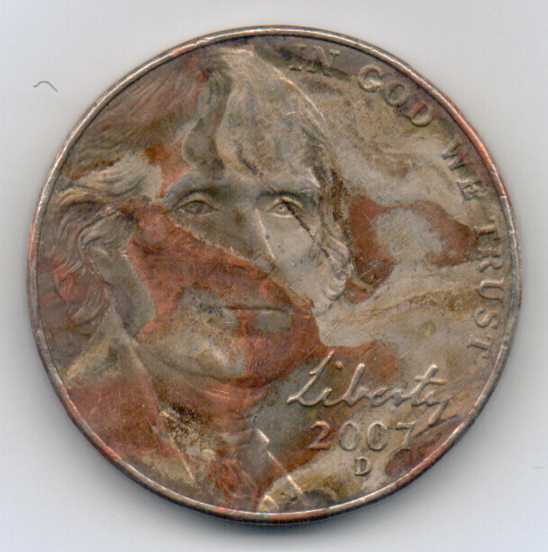 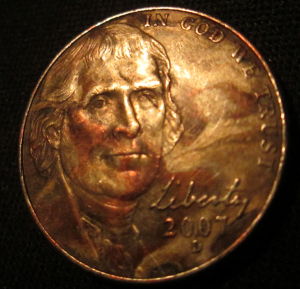 |
|
|
|
Pillar of the Community
United Arab Emirates
557 Posts |
I agree, it is really cool.
|
|
Moderator
 United States
56855 Posts |
Looks cool.I am no pro but my first thought is environmental damage. John1  |
|
Pillar of the Community
United States
4212 Posts |
I've got one just like that somewhere. It's much darker, dubbed the "halloween nickel".
As John suggested, maybe enviro; but I dont know how it would pattern like that.
|
|
Valued Member
United States
377 Posts |
Looks like marble, a cool effect, environmental damage I would guess.
|
|
Bedrock of the Community
United States
12437 Posts |
A nickel is struck on an alloy planchet, there is nothing to separate that would reveal copper. Your coin has suffered from environmental damage.
|
|
Pillar of the Community
United States
1915 Posts |
 100%. All this scientific jive talking means nothing on a coin that is not clad. |
|
Pillar of the Community
United States
1699 Posts |
Quote:
A nickel is struck on an alloy planchet, there is nothing to separate that would reveal copper. Your coin has suffered from environmental damage. I was reading an article about "improperly annealed planchets" a long while ago, and I believe the author stated that dark grey and red copper, "improperly annealed" nickel planchets were the result of copper atom migration to the surface of the planchet during prolonged exposure to heat. I just thought it was interesting. I agree with your assesment though, as even an improperly annealed planchet wouldn't have this type of pattern and color combination. |
|
Moderator
Canada
10477 Posts |
I would love to have an example of this coin... I found a Canadian error quite similar to it (1982 Cu-Ni planchet), and I intend to test it with the SEM. Are these common with US-5cent coins?
"Discovery follows discovery, each both raising and answering questions, each ending a long search, and each providing the new instruments for a new search." -- J. Robert OppenheimerContent of this post is licensed under a Creative Commons Attribution-NonCommercial 3.0 Unported License. See: http://creativecommons.org/licenses...0/deed.en_USMy eBay store
|
|
Moderator
United States
56855 Posts |
How does the XRF differ from the SEM? John1 |
|
Moderator
Canada
10477 Posts |
Quote:
How does the XRF differ from the SEM? If you have the digital prowess to be here, then you already know how to use Google (or Google Scholar)... "Discovery follows discovery, each both raising and answering questions, each ending a long search, and each providing the new instruments for a new search." -- J. Robert OppenheimerContent of this post is licensed under a Creative Commons Attribution-NonCommercial 3.0 Unported License. See: http://creativecommons.org/licenses...0/deed.en_USMy eBay store
|
|
Pillar of the Community
United States
3640 Posts |
I think this topic is  The only effect that I know of due to an improper alloy mix is a black beauty jefferson. A true one. Even if a nickel looked like copper and was caused by an annealing process deviation I do not see any out there in slabs etc. or selling for some insane value. Slabbed beauties do exist though and they sell. |
| |
Replies: 11 / Views: 1,692 |
|







 Posted 01/25/2013 08:26 am





