| Author |
 Replies: 12 / Views: 2,333 Replies: 12 / Views: 2,333 |
|
|
Valued Member
United States
467 Posts |
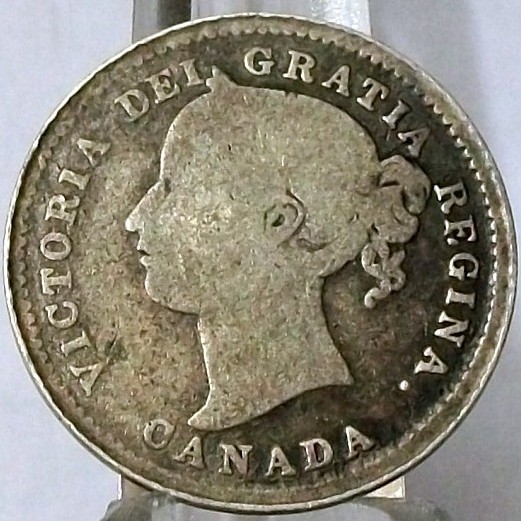
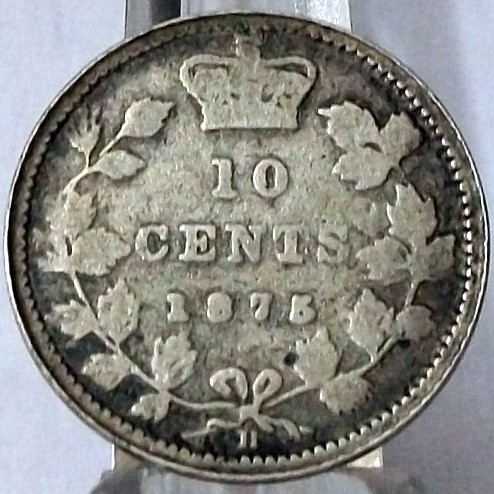
Hi everyone, I've been looking at my low-grade 1875-H ten cent piece which I recently purchased on ebay and I have some concerns as to its authenticity. Specifically I just noticed that the rim edge is rather high compared to some of my other lower-graded Victorian ten cent pieces. I have not seen any dimes graded Good that have this same characteristic. The coin is pictured on page 57 of the recent Canadian coin purchases thread. Would anyone care to weigh in with an opinion? I don't own a scale so I can't tell if the weight is within specifications. Nothing else about the piece leaps out as being out of the ordinary. Thanks in advance to anyone who takes a look for me. The RCMP website relating to Canadian counterfeit coins does not shed any light on the matter. |
|
|
|
Pillar of the Community
Canada
1192 Posts |
Post some pictures. And definitely invest in a scale if you're buying rare coins.
|
|
Pillar of the Community
Canada
2303 Posts |
Does not have the markers of the Chinese versions. Looks ok to me.
|
|
Valued Member
 United States
467 Posts |
|
|
Pillar of the Community
1844 Posts |
coin is authentic for sure....I have no doubts
|
|
Pillar of the Community
Canada
1192 Posts |
Rim does look a little bit strange, but it doesn't appear to be a counterfeit. Knowing the weight would be advisable. If you are concerned about authenticity, maybe you should stick to certified pieces. As it was an ebay purchase, returning it is always an option even if a seller states no returns. eBay/Paypal ensure that a buyer is pleased with their purchase. |
|
Bedrock of the Community
Canada
10743 Posts |
|
|
Valued Member
Canada
371 Posts |
|
|
Valued Member
United States
467 Posts |
OK, thanks everyone for your assistance.
|
|
Valued Member
United States
467 Posts |
Hi everyone, I wanted to revisit this topic a little more, in that I took a really, really close look at it to see why the rim on this piece is higher than the average Victorian-era ten cents.
Much to my surprise I observed that the reeding on this piece appears to be almost non-existent, and not from being worn away. It is almost as if there was no reeding in the collar in the first place and the rim expanded upward and downward as a result, as if there was extra metal with no place to go. There is a faint hint of some reeding but with an appearance of barely being struck.
I looked at a coin in comparable grade and the reeding stands out clearly, even though it is a worn coin. The denticles appear normal as well.
As a matter of idle speculation I'm wondering if perhaps this coin was used in some sort of a mechanical device of the day that might have applied some post-mint "squeezing" to the coin but I am only guessing, as I have no idea what sort of mechanical devices, such as slot machines, vending machines, etc. might have existed in the 1870's and 1880's when this coin was in circulation.
The only other thing I can think of is "spooning" wherein someone might have tapped away at the rim with a spoon, but I am inclined to discount this due to the uniformity of the raised rim around the entire circumference of the piece. I've seen photos of spooned coins but they have been larger pieces such as quarters or half-dollars.
Anyone else care to contribute their ten cents to the discussion? Thanks a bunch.
|
|
Pillar of the Community
 Canada
9904 Posts |
Looks like "spooning" alright.
"Dipping" is not considered cleaning...
-from PCGS website
|
|
Pillar of the Community
 Canada
5420 Posts |
Appears to be a real 1875H, but does look like someone was rolling it out, that is why the rims and dentils look odd. Still a keeper until a better one comes along.
|
|
Pillar of the Community
Canada
937 Posts |
I've known about "spooning" for a while now, but one thing has always puzzled me. Just WHY would anyone do it? Was it a bit of a nervous hobby like popping bubble-wrap is today, or something else?
|
| |
Replies: 12 / Views: 2,333 |
|







 Posted 10/01/2013 5:11 pm