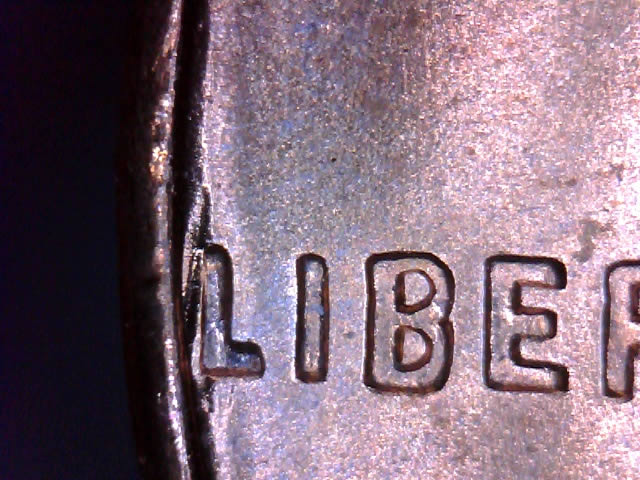
I have been trying to think more about this. I am not convinced that this is a rim burr caused by Feeder Finger Damage. One of the reasons for this is that I have 3 of these coins which are identical to each other. This could not be a rim burr on my coin, since the burr is shaved off the rim and becomes a unique event which should not be identically repeatable.
I also do not see how the gouges could be tool marks. I do not see how an engraving tool could slip twice and cause identical marks in shape and angle to the rim.
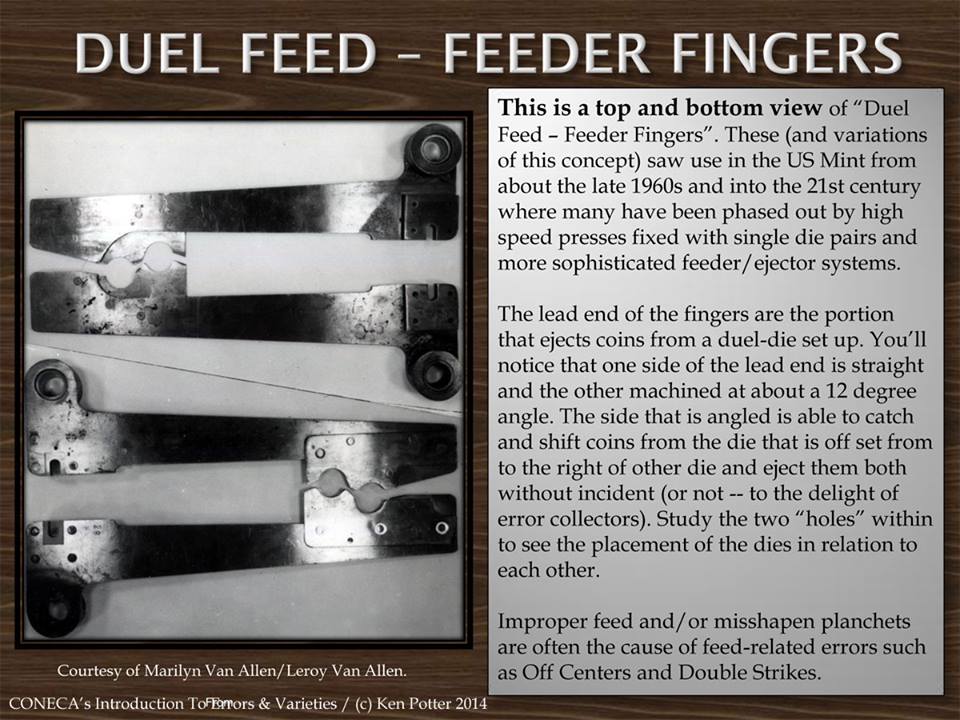
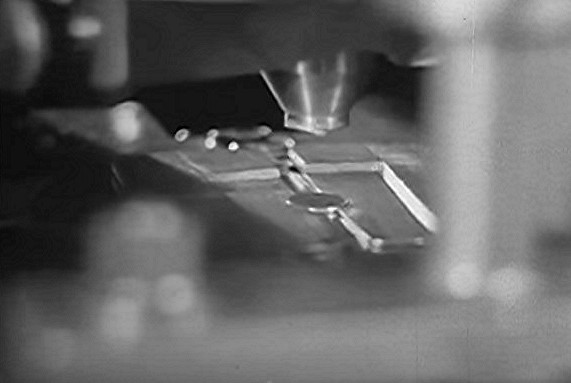
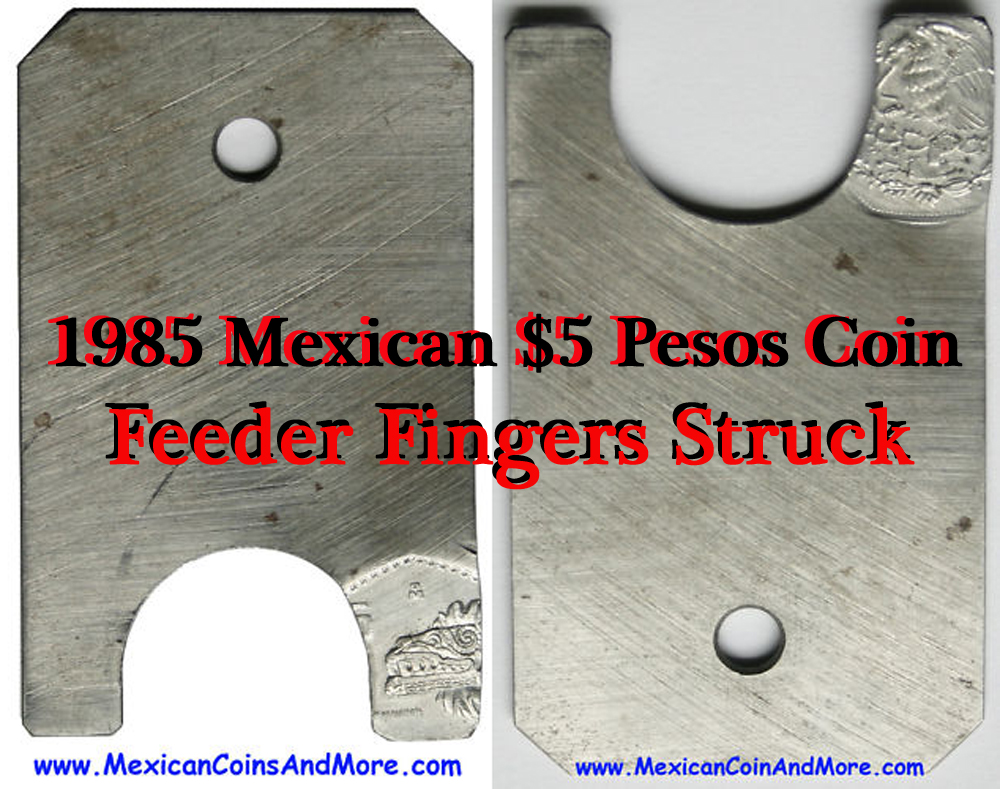
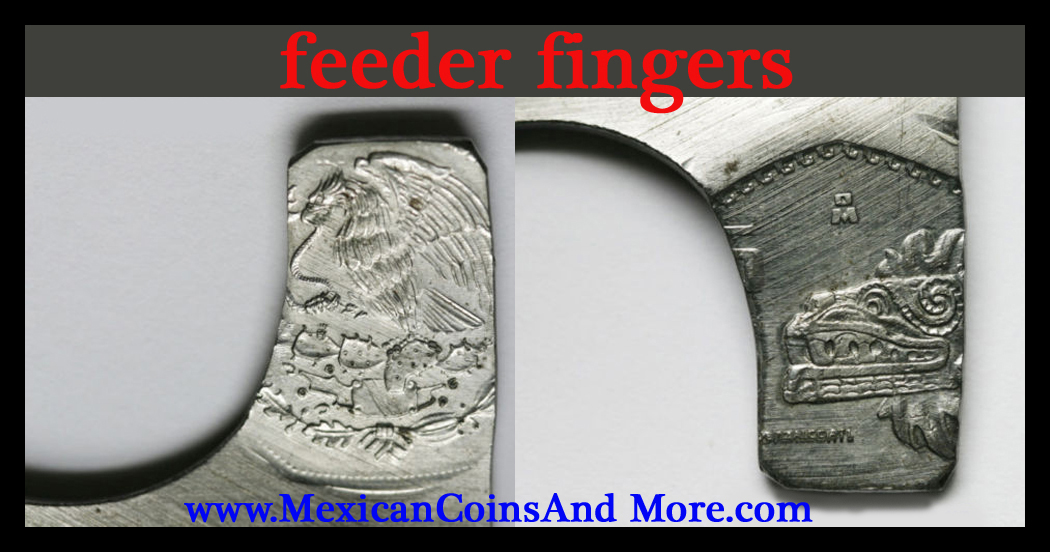
This does not mean that the gouges on this coin are not caused by feeder fingers. I am enclosing a couple of photos of feeder fingers. One of them is the frame out of a video showing feeder finger action. Since these marks are on the obverse, which was the hammer die, the only way for contact with a feeder finger to happen would be that the insertion sequence would necessarily have been interrupted and contact made with the hammer die as it was descending - and for it to happen twice! So it is possible! But it is also a bit far-fetched!
So I think that I may be back to square 1 in understanding these marks! Any other ideas about how these "dents" came to be would be welcome!
By the way, I continue to be convinced that they are not from a random accidental contact with another die or something else. I am convinced they are there from the application of some tool during die creation and polishing or some process during the striking setup or execution. Their morphology (if I can call it that!) is too identical and their angles to the rim are too similar to be accidental or random!
Here is the video this frame was lifted from:
mBjD9N1APsw
*** Edited by Staff to add YouTube tags. [youtube][/youtube] Please use them in the future. We prefer embedded video. ***
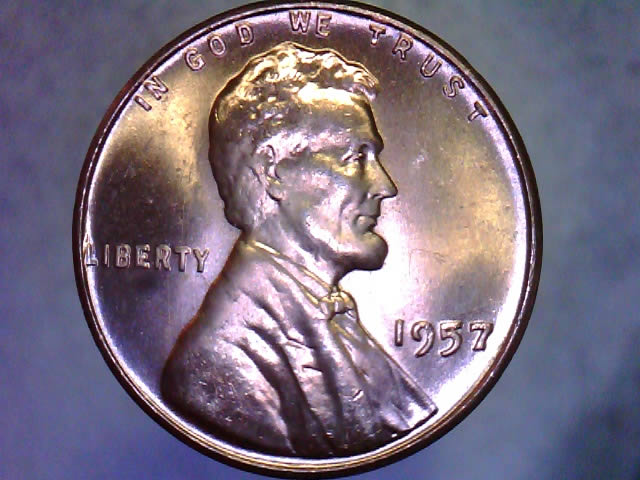
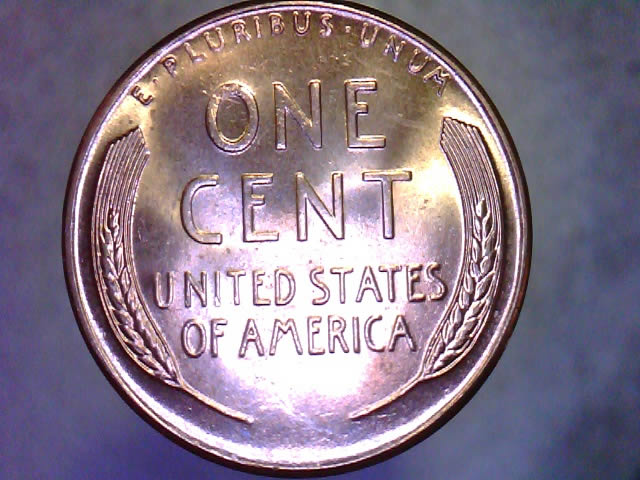
Quote: Here is another one of those things on a "57".
It looks like there are 2 of them on your coin also!
I am not convinced that we have the correct explanation on this one yet! I can easily believe that it is a die dent, but their shape, angle, and regularity demand some explanation of their cause.
I can visualize a die set on end could easily be dented, Would think the edge would be extremely vulnerable to bump marks or denting if not set down or picked up gentle enough and or exactly flush.
In my mind a die is just one piece of many that make up for the tooling or toolset process. Remember the mint is a manufacturing or production plant that just happens to manufacture dies to produce the end product coins. The die itself after creation I'm sure is handled more times than we might think. Can go from creation to QC, then to production, then to the tool setter, then to the machine operator.
Not to mention any reprocessing as needed can start it all over again back at QC. Note, this is similar to the way it worked at the manufacturing plant I worked at. The mints procedure(s) may differ.
I'm sure anyone involved in the process can have a mishap or incidental contact with something else and send it back through the process if not satisfied it will perform to standards. But if in the process a small dent or dents goes unnoticed or is still deemed production worthy then we the consumer get what we get. Thanks, Doug
The two marks on the rim seem to coincide with the marks in the field. In my opinion, what you are saying Halo1st is a very logical explanation. I don't know a whole lot about the minting process, but could it be caused when the die is set inside the collar. (i.e the edge of the rim of the collar) ? Guess not...wrong end.
Quote: anyone involved in the process can have a mishap or incidental contact with something else and send it back through the process if not satisfied it will perform to standards. But if in the process a small dent or dents goes unnoticed or is still deemed production worthy then we the consumer get what we get
These marks have the same shape and angle to the rim on various coins in different years. I am sorry, but that does not appear to be "incidental contact" to me.
Maybe it is coming from a tool that we are unaware of. Like a tool that isn't always used. Here is a theroy of mine. (just one). So the wire brush or whatever brush has a handle. So, is it possible that while polishing the die with the brush. Maybe a part of the handle hit the die. And that is the same brand and design used in the years. That could explain the same shape and size
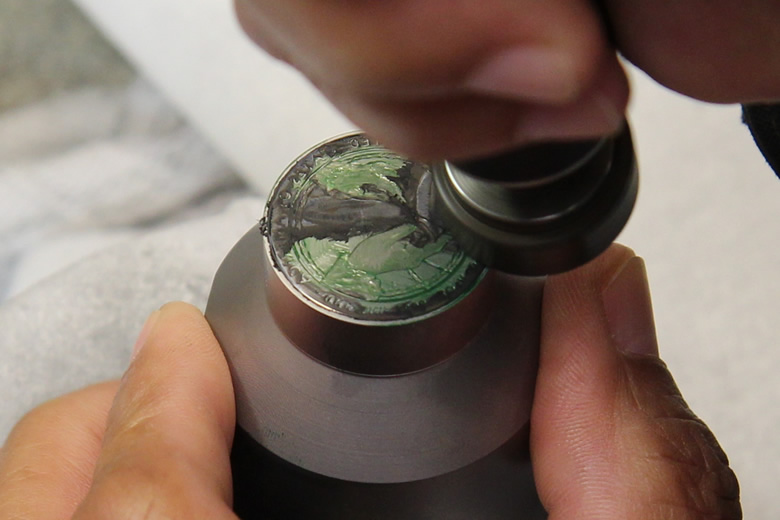
Here is an image of a die being polished with a rotary tool. I suppose that I could imagine it slipping and causing the dents we are discussing. Many of these are in pairs, however, which makes it more difficult of a proposition.
Right but this is more modern, I would think that the mint wouldn't be using this tool at the time when the coins that we are seeing were minted. Like the wire brush that causes the sharp die polishing lines that almost look like die cracks. Maybe the handle, or the object that acts as the transition of the wire to the handle, could be hitting the edge of the die causing these marks. This could be why we are only seeing these marks on the edges, and not towards the middle. What I would like to see is images of tools used to polish the dies that were absolutely positively known to have been used in the years that we are seeing this on. This way, we can see what they look like , and see if some part of the design looks like the marks. And if it is not, then we can rule that out
Disclaimer: While a tremendous amount of effort goes into ensuring the accuracy of the information contained in this site, Coin Community assumes no liability for errors. Copyright 2005 - 2026 Coin Community Family- all rights reserved worldwide. Use of any images or content on this website without prior written permission of Coin Community or the original lender is strictly prohibited. Contact Us | Advertise Here | Privacy Policy / Terms of Use






 First Page
 Previous Page




 Posted 12/18/2016 4:36 pm







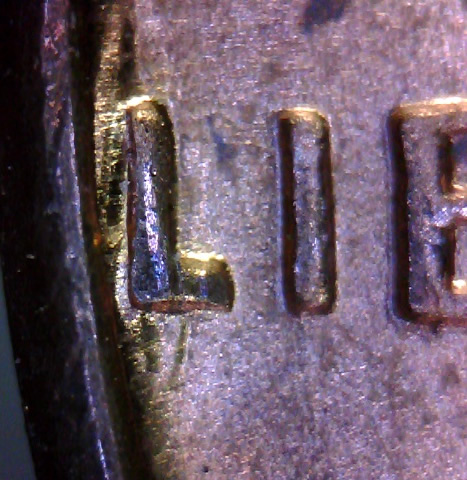

 I can visualize a die set on end could easily be dented, Would think the edge would be extremely vulnerable to bump marks or denting if not set down or picked up gentle enough and or exactly flush.
 Thanks, Doug