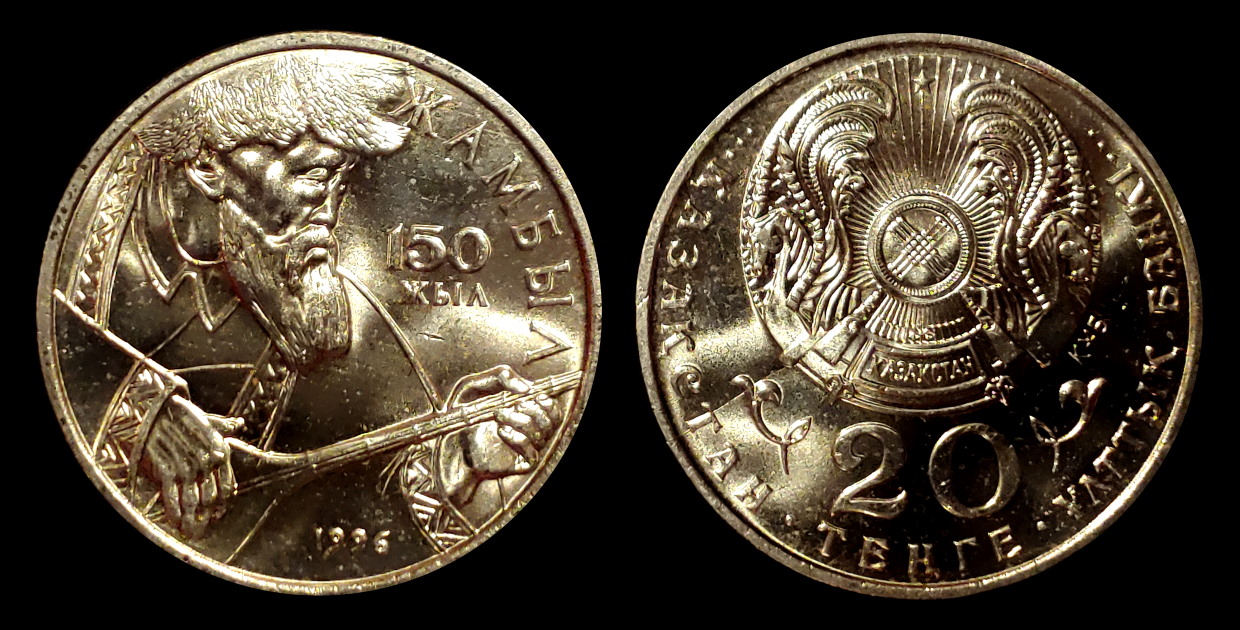
Quote: My first coin from Kazakhstan, commemorating Zhambyl Zhabayuly (1846-1945) who was a Kazakh poet, traditional folk music composer and performer.
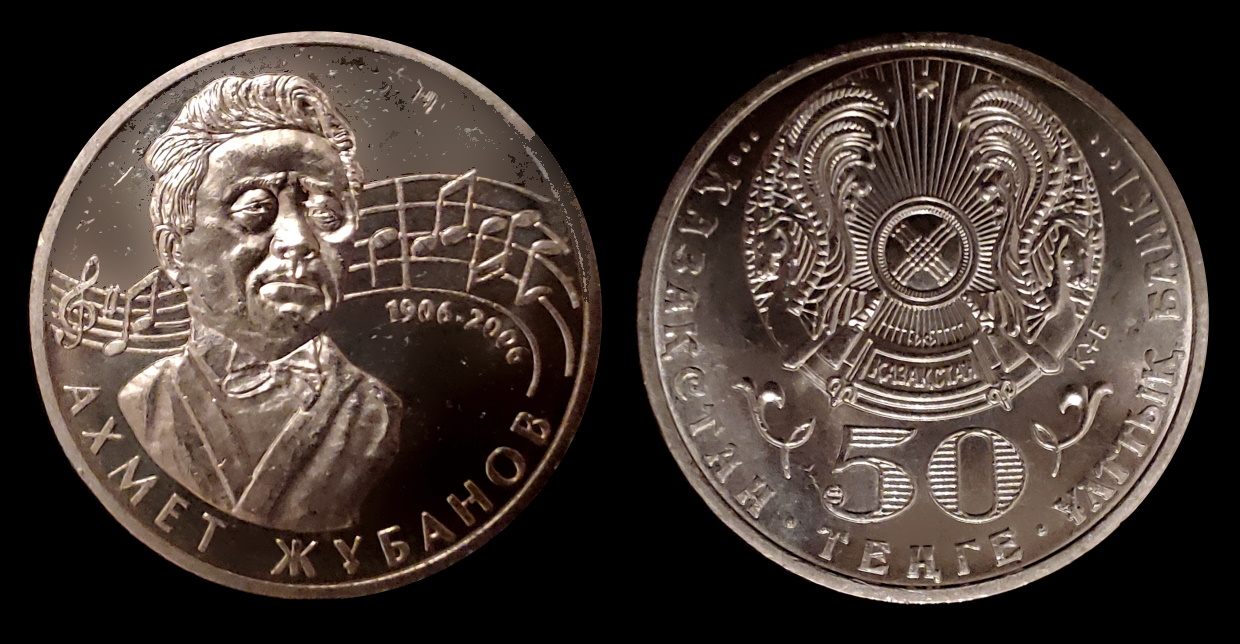
Another coin from Kazakhstan, this time commemorating the composer Ahmet Zhubanov (1906-1968). His compositions are heavily influenced by folk melodies and the music performed with the Kuy, a two-stringed, pear-shaped instrument with a long neck (a photograph of which was shown in the previous video).
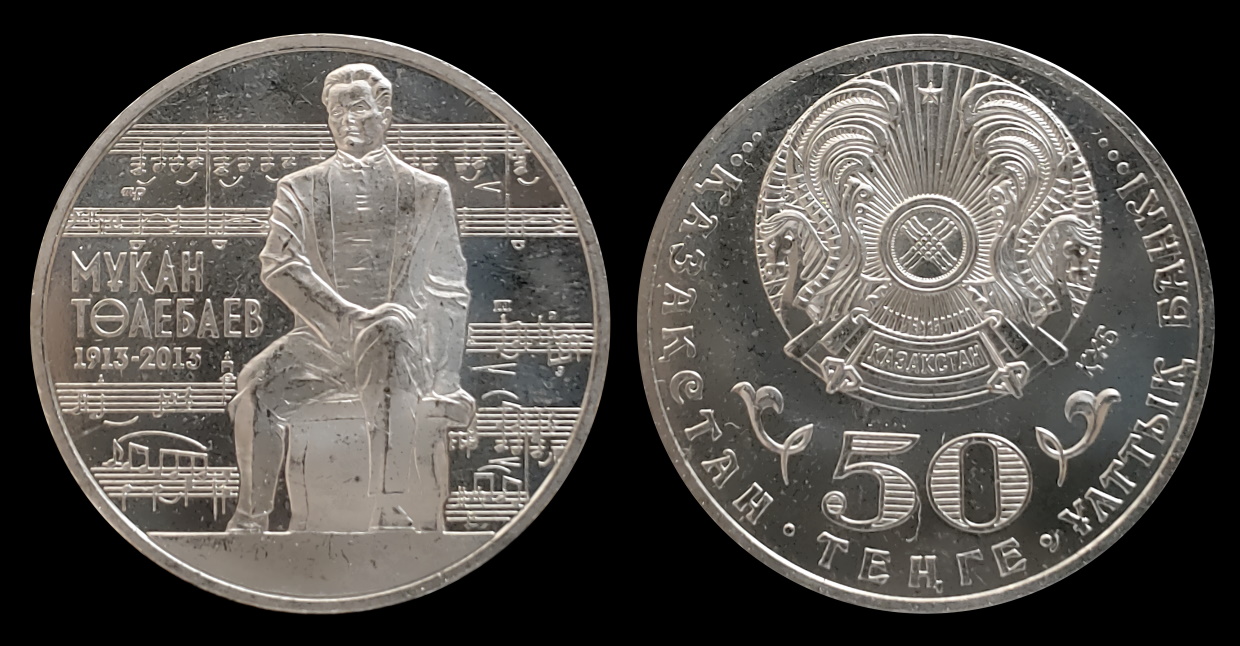
My third coin from Kazakhstan, a 2013 50 Tenge, commemorates the 100th birthyear of composer Mukan Tulebaev (1913-1960). Mukan was born in a very musical family. His mother Tazhibala was an accomplished poet, composed music and sang songs while his grandfather was known as an expert on folk music. In his short life he composed numerous patriotic songs for the USSR army, but is most famous for this opera "Birzhan and Sara".
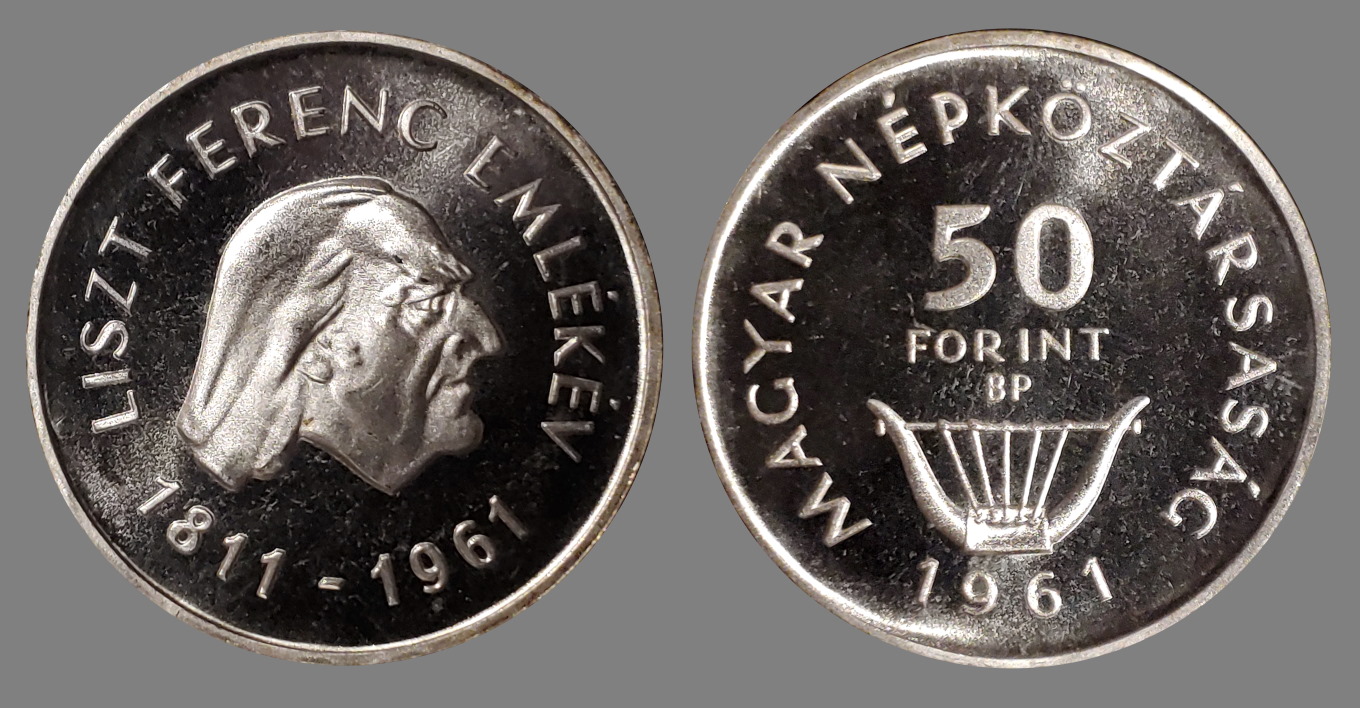
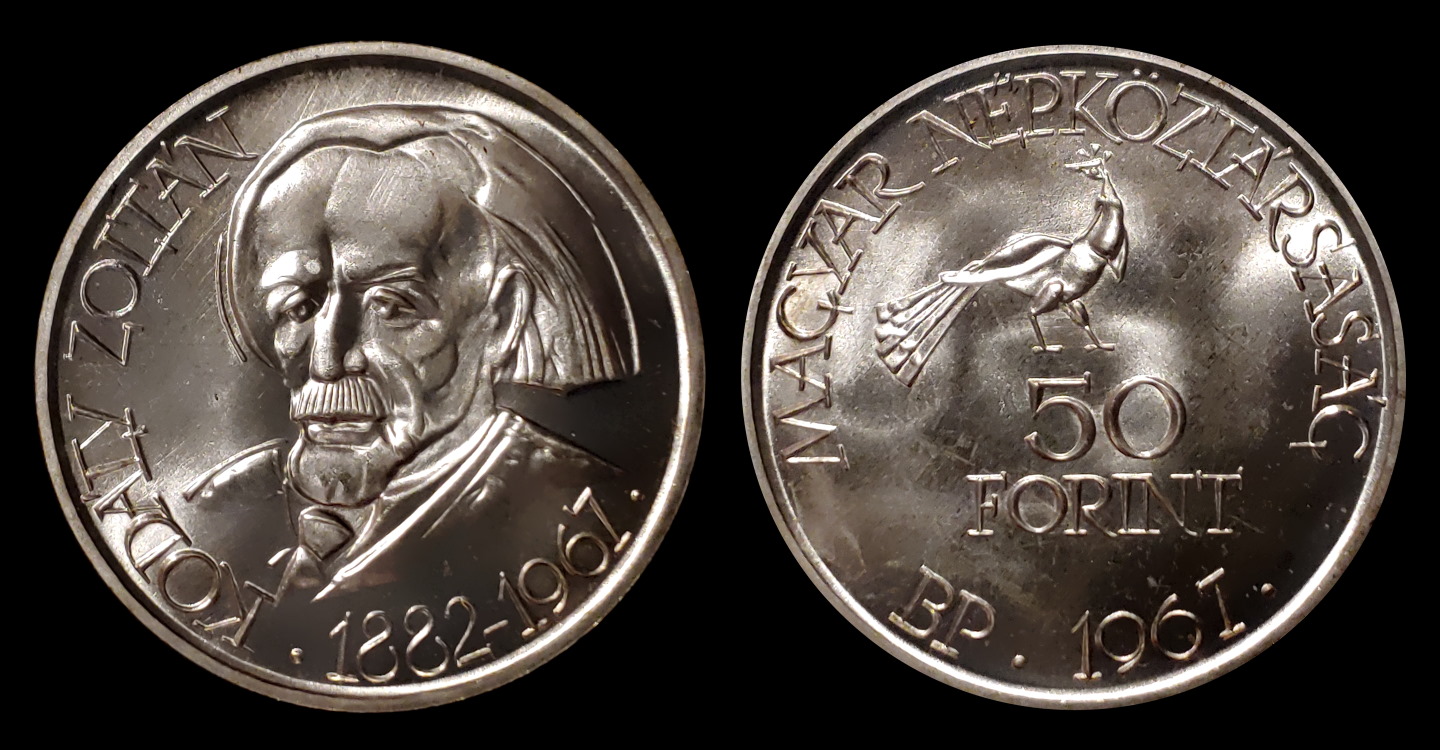
Moving on to another country, these are my first three coins from Hungary: a 1961 50 Forint commemorating Ferenc Liszt (1811-1886), a 1961 50 Forint commemorating Bela Bartók (1881-1945), and a 1961 50 Forint commemorating Zoltan Kodaly (1882-1967). Liszt was a very diverse composer and pianist virtuoso who is regarded as one of the greatest pianists of all time. He is most popular for his modern concert piano repertoire. One of his pieces I like is the Notturno #3 (which I play myself).
Y4XEPdYO5mM
Just like Liszt, Bartok was a composer and pianist. In contrast to Listz however (who was more of a romantic composer), Bartok experimented with a-diatonic styles and was strongly influenced by folk music. One example is his "Night Music" which incorporates many dissonances and attempts to imitate natural sounds such as those from nocturnal animals.
13AfuAIYU6o
Although Zoltan Kodaly was a contemporary of Bartok and a composer as well, he was not necessarily a performer. Instead, his main contribution to the Hungarian music scene was the development of a methodology to teach music to lower and middle school children. For that, he created a curriculum based on a logical and sequencial manner of teaching music whereby listening and singing was central (before learning notation, etc.).
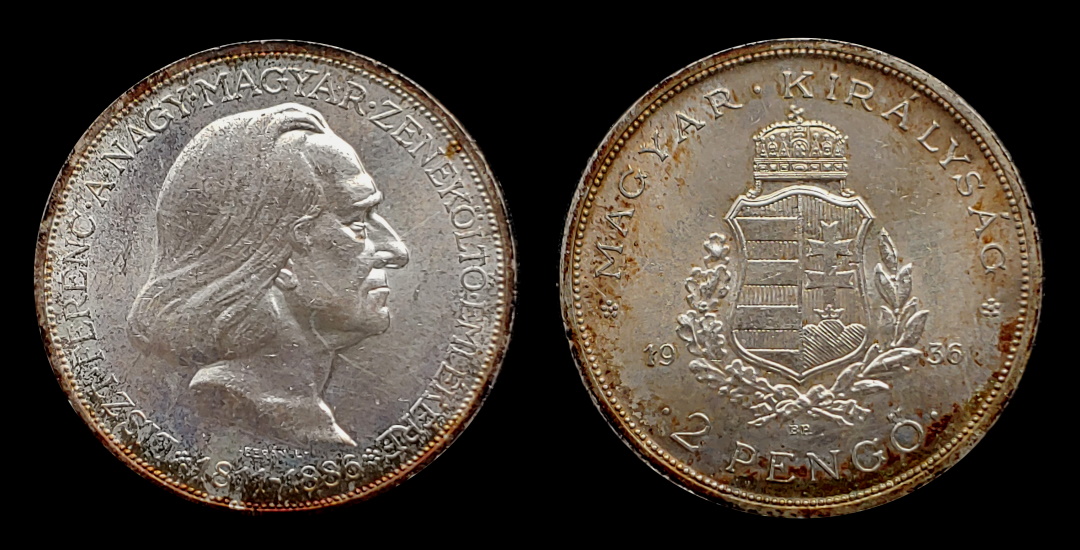
Quote: A new addition to the set, commemorating Ferenc Liszt once again, but this time with a 1936 2 Pengö commemorating Ferenc (Franz) Liszt (1811-1886).
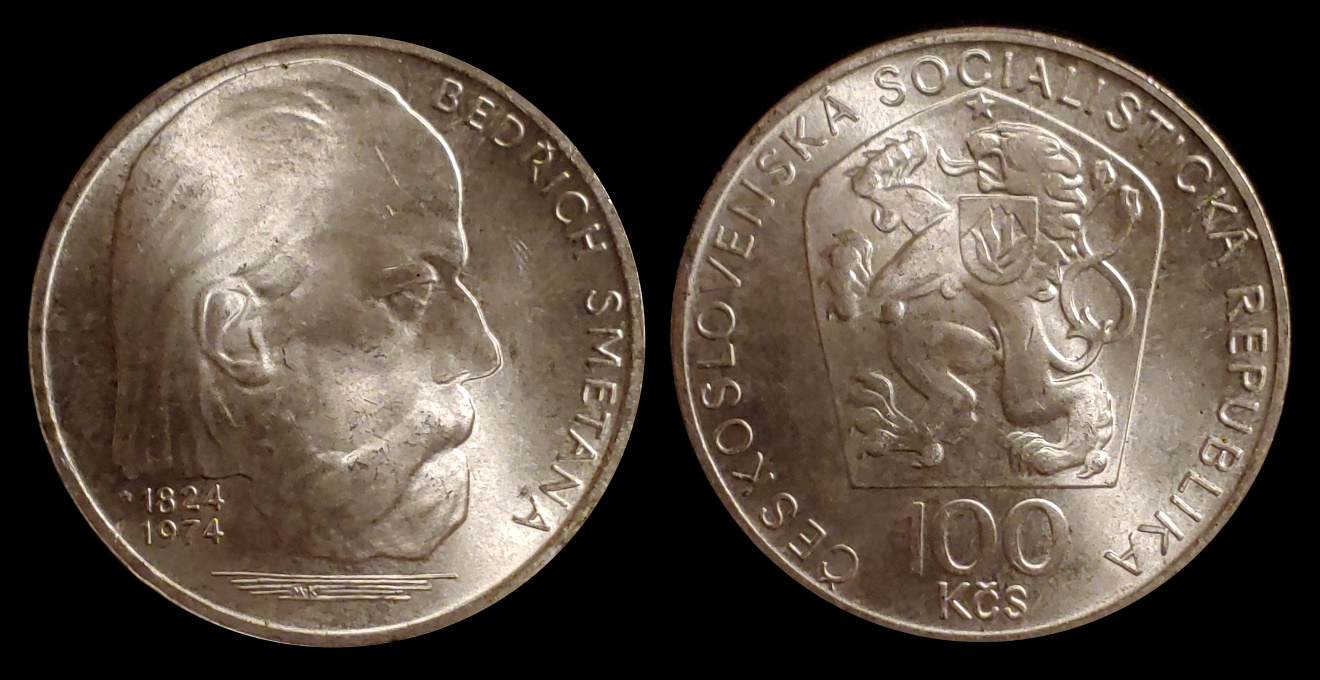
In the mail from Europe today, a coin (100 Korun, 1974) from the former Czechoslovakia commemorating the 150th Anniversary of composer Bedrich Smetana (1824-1884).
Bedrich Smetana was a Bohemian composer (currently the Czech Republic) who pioneered the development of a style that incorporated melodies and music from his native countryside. Due to this and his popularity at large, he is regarded as the father of Czech music. He is known for composing symphonic poems, such as "Ma Vlast" (My Fatherlands), which contains the epic "Vltava" (The Moldau river).
3G4NKzmfC-Q
And for those that are familiar with the Israel National Anthem ("Hatikvah"), the theme therein has some similarities to what was used for The Moldau.
eR-xRwPvU6I
The story goes that both themes are based on a Sefardi prayer for dew, Birkat Ha'tal. After the Inquisition, as Jews scattered through Europe, the melody found its way to Italy, where it became a popular love song, "Fugi, Fugi, Amore Mio" (Flee, flee, my love!). It evolved into a Romanian gypsy folk song, "Cart and Oxen;" then, a 17-year-old immigrant to Palestine from Romania, Shmuel Cohen, used the "Cart and Oxen" tune for the poem, Hatikvah. At the same time, Mozart heard the folk tune in Italy and incorporated it into one of his compositions. Mozart then took the music to Vienna, then to Prague. There, Smetana picked it up.
Quote: In the mail from Europe today, a coin (100 Korun, 1974) from the former Czechoslovakia commemorating the 150th Anniversary of composer Bedrich Smetana (1824-1884).
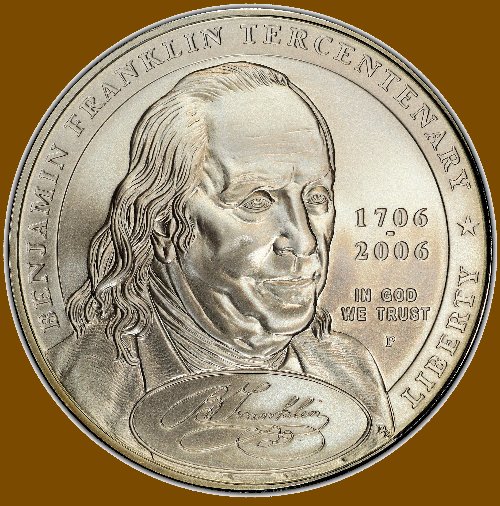
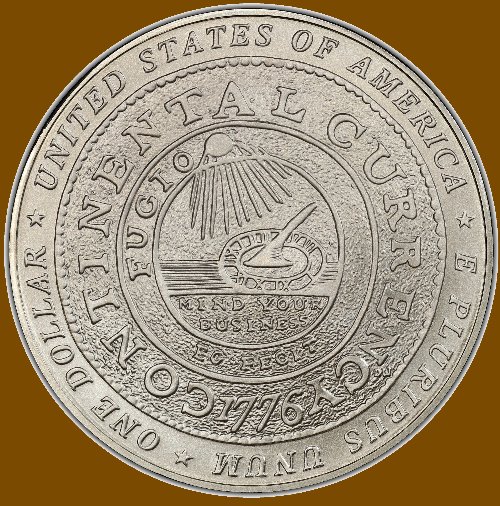
American Founding Father and political leader Benjamin Franklin is not often thought of as a musician, but he played multiple instruments - including the harp, guitar, and violin - composed two songs - one as a boy (new lyrics for an existing song), one as an adult (for a string quartet) - and even invented an instrument - the glass armonica. Though not an acclaimed musical artist, he was certainly more of a musician than many!
2006 Benjamin Franklin - Founding Father Silver Dollar
Collecting history one coin or medal at a time! (c) commems. All rights reserved.
Disclaimer: While a tremendous amount of effort goes into ensuring the accuracy of the information contained in this site, Coin Community assumes no liability for errors. Copyright 2005 - 2026 Coin Community Family- all rights reserved worldwide. Use of any images or content on this website without prior written permission of Coin Community or the original lender is strictly prohibited. Contact Us | Advertise Here | Privacy Policy / Terms of Use




 First Page
 Previous Page


 Posted 11/03/2022 6:05 pm