| Author |
 Replies: 69 / Views: 14,312 Replies: 69 / Views: 14,312 |
|
|
|
Pillar of the Community
United States
3281 Posts |
Foxfire, I agree with Bats. We should've provided more in depth answers. I mistakenly took your "pushing for the truth" as denial, rather than actually being interested in how a fake is a fake, and such. We have quite a few individuals that come here and try to make money off of coins that they think are errors, rather than wishing to know more about the hobby. So in that sense, I apologize for my misunderstanding.
Tropicalbats is one of our top members on the forum. His explanation is one worthy of an audience, so I hope you find it insightful. My knowledge is very limited compared to his, so I myself would not be able to provide such an impressive analysis.
|
|
New Member
 United States
23 Posts |
Thanks tropicalbats. I appreciate the thoughtfulness that went into your response and the willingness to teach. I'll get it checked out by a friend and take a look into those Serbian dies.
|
|
New Member
United States
23 Posts |
Thanks so much Silvercents. I might have not been as clear in my wording as I could have but I really am here to learn. I'll let you all know what the verdict is once I get it looked at next week.
|
|
Pillar of the Community
United States
3281 Posts |
No no it's perfectly fine. It was my fault. I'm glad to hear that you're here for the hobby! Sounds good, I'm looking forward to the results. Even if it is a fake, fakes are still cool in their own right, and this is a decent one too. So either way, you've got a nice coin on your hands!  |
|
Pillar of the Community
United States
7323 Posts |
Firefox...I would rank Tropicalbats as darn close to #1 as far as knowledge goes on errors/varieties and overall Lincoln cents.
|
|
New Member
United States
48 Posts |
I tried finding the photos of transfer die counterfeit for you Firefox, but couldn't locate them. This coin has alot of markers you see with those. The Obverse rim changes depth and thickness multiple times, and Lincoln is lacking so much detail. As one contributer pointed out, this planchet being struck in place of a steel one should have resulted in very strong details. However, there are many spots that are very soft and flat. It really feels and looks like the design was transferred from a coin with some wear. Since there are some genuine concerns, maybe make your purchase of the coin contingent on it being authenticated by a TPG. |
|
Pillar of the Community
 United States
2385 Posts |
Quote:
Price was right I'll ask...how much did you pay? Quote:
I have a week to get a refund At least you have that going for you...which is nice  smat |
|
New Member
United States
23 Posts |
I'd rather not say what I paid, but compared to my research on known fakes and the refund policy, it certainly looked worth a small gamble. There weren't any serious red flags with the seller ie. they weren't trying to sell a known counterfeit. They were given the coin as a gift by an elderly neighbor who said it was worth "a lot of money." Value being totally subjective and most pennies worth about $.02, the seller probably googled "1943 penny" and seeing $10,000 steelies, figured it'd be worth considerably less as a copper one. I've asked for more info from where the neighbor got it.
|
|
New Member
United States
23 Posts |
Here's another photo that isn't as detailed but might show that it actually is a fairly deep relief. Working on getting better photos soon. 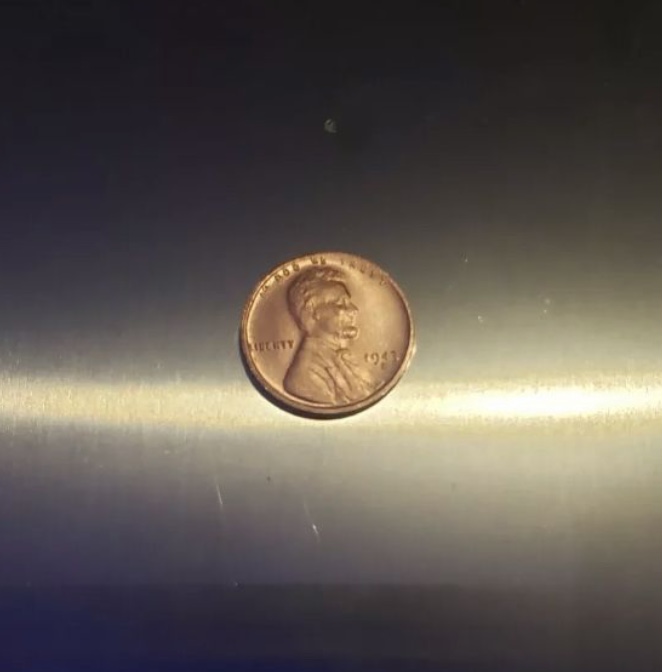 |
|
Bedrock of the Community
United States
94367 Posts |
Can you crop and enlarge that photo?
|
|
Pillar of the Community
United States
8946 Posts |
Well I'll chime in.
Nearing 3 years ago, I had the distinct pleasure of handling a genuine 1943-D Copper Cent at Whitman Baltimore. The coin has never been offered to market and was owned by a private individual. The provenance lead back to the 1940s where that person's grandfather had been an employee at the Denver Mint. As it was implied, the owner's grandfather deliberately struck the coin for himself. This coin, very similar to the MS-64BN example certified by PCGS had prooflike reflectivity to the fields and a crisp die state, slightly earlier than that of the PCGS example. The coin however, was not struck with the same die pairing as the MS-64 example, which leads me to believe it was either truly an accidently production, or another employee produced the coin. As such, authentication from die marriage is impossible.
Provenance aside, authenticating the coin in question was very difficult. When authenticating the coin, we had it XRF tested to check the metal composition was correct, and had it examined by a few other dealers. We considered the fact that the coin we examined had many die scratches a single minor die break extending from the rim to the left wheat stalk. Due to the stresses of striking steel planchets, many dies in 1943 showed extensive cracks at much earlier die states than usual. Given that the example we handled had an EDS obverse die, and a EMDS reverse die, a single die crack would be expected, and given the location of the die break being towards the bottom of the left stalk, a common failure point on dies at that time, that gave us additional confidence in the authenticity of the coin.
In addition, as previously mentioned, the coin showed evidence of extensive early die polishing evidenced by the many die scratches visible on the surfaces of the coin. I don't know exactly why, but many dies were extensively polished prior to striking coins in 1943, resulting in many coins displaying prooflike finishes. The best example of this is San Francisco produced steel cents. Many examples can be found with near cameo contrast due to heavy polishing of the dies. As such, the prooflike surfaces of the coin we handled, and the extensive die scratches gave us further confidence in the authenticity of the coin in question.
Of course after considering these factors in conjunction with the provenance we have little doubt on the authenticity of the coin. The owner of the coin has both wished to be kept anonymous, and has no wish to bring the coin to market for at least the next few decades.
So, why do I tell you all this? Understanding the process we went through authenticating, or at least trying to, should give some guide to authenticating any potential example.
|
|
New Member
United States
23 Posts |
Thank you very much GrapeCollects. Your input is tremendously insightful. What a story. How many collectors, let alone people, can confidently say they've seen and contributed to authenticating such a rare coin not currently in the registry? I had considered that with relatively many known 43p and s examples, surely more employees at Denver had thought to do the same.
I'd say the current input in just a day regarding this piece has already been very encouraging and an amazing crash course in authentication.
Thank you all. I'll continue to keep this thread informed with updates and please continue to share additional revelations as they arise.
|
|
Bedrock of the Community
United States
10284 Posts |
Little can be confirmed by this image. Even if cropped, sharpened and enlarged. (which I tried here) 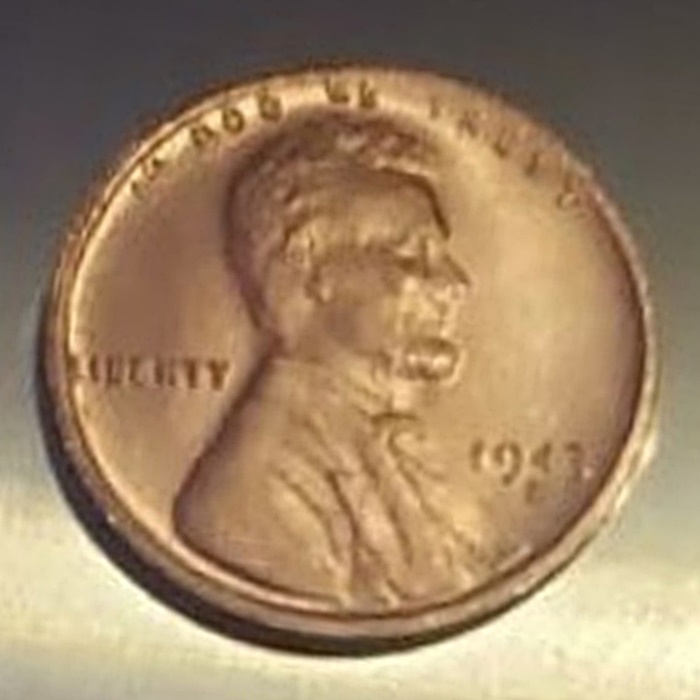 |
|
Pillar of the Community
United States
8946 Posts |
Quote:
Your input is tremendously insightful. What a story. How many collectors, let alone people, can confidently say they've seen and contributed to authenticating such a rare coin not currently in the registry? As for a 43-D Copper Cent? Only 6 people actually have seen it and know who owns it. Though there are other rarities out there that exist, 33 $20s in private hands, and similar coins are out there. Of course provenance is paramount when such coins are traded, that and a very trustworthy circle. Quote:
I had considered that with relatively many known 43p and s examples, surely more employees at Denver had thought to do the same. The entirety of the Philadelphia and San Francisco population, in my opinion, was done by accident, I have no reason to believe that those coins were coined purposefully. The big tell is condition, there are very, very few UNCs and most are very low end, arguably mishandled UNCs. The two Denver examples however are both choice UNCs and are remarkably well preserved. The example I handled I would grade MS-65 perhaps MS-66, either way it falls into the Gem Uncirculated territory. The Philadelphia mint had poor quality control, and as such it's so surprise to me that a few leftover copper blanks ended up in the hoppers in 1943. The San Francisco mint had much better quality control and generally coined much higher quality coins, however during the war years quality control lapsed, that lapse extended until 1947. They drove their dies to the ends of their lives, from working dies to working hubs resulting in poor strikes and extremely late die state coins. The best example as far as I am concerned is the 1946-S Lincoln Cent. Many working dies were produced from a worn or poorly produced working hub, and as such many examples showed what appeared to be extreme die wear around the date and Mint Mark area. The Denver mint however has generally had extremely good quality control and produced much fewer major errors than its two counterparts. As such it is no surprise to me that of the 3 mints that produced steel cents, the Denver mint has the lowest pop of off metal errors. The incentive was surely there, though as far as I'm concerned the only workers who actually went through with it were those at the Denver mint. More importantly, your coin. As previously indicated by tropicalbats, the weakness around Trust is typical, though not present on all coins. I do not believe this to be a Chinese fake as those would be much lower quality, though I, at this time, do find the authenticity questionable. Frankly, the only way to be sure would be to examine it in hand myself, and even then I may differ, and likely would differ for council. I can see on your profile you are based in Colorado, you may consider taking to coin to Hallenbeck Coin as they are reliable, though my interactions with them have been extremely limited outside of a pair of brief conversations at shows. You are also in proximity to ANACS, a large grading service. If Hallenbeck don't give you what you deem as a satisfactory answer, or believe it may be genuine, you may consider submitting the coin to ANACS. The cost would be considerably lower than that of PCGS or NGC. All that said, I'm not comfortable saying it's fake, nor am I comfortable saying it could be real. Anything is possible, though my gut feeling is it's almost certainly not. As stated previously, if I personally was to give an opinion I'd really want to see the coin in hand. |
|
Pillar of the Community
United States
1534 Posts |
What caught my eye first of all on the original photo is the top of Abe's hairline seems "off.' My in-hand steelies have a sharper hairline definition. That's not much to go on, but you know what they say about first impressions. Look at the hairline on this well-worn steel 1943-D: 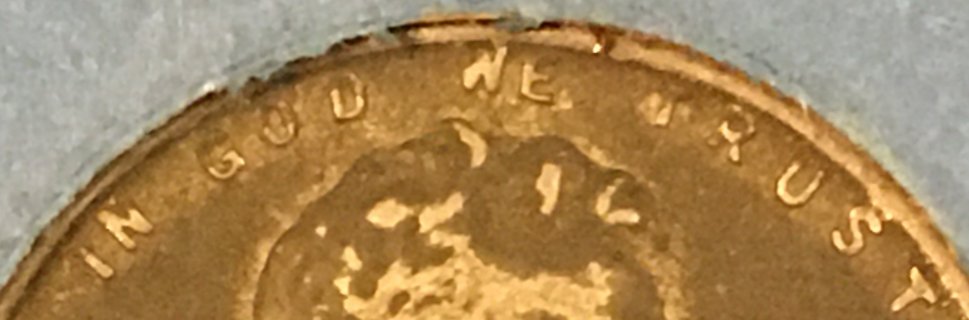 Edited by halfamind
07/08/2021 8:37 pm
|
| |
Replies: 69 / Views: 14,312 |





 First Page
 Previous Page


 Posted 07/08/2021 01:27 am





