







 First Page


 Posted 01/25/2009 05:11 am


I suspect it is the haze on the coin's surfaces you are talking about as smudges. Some may be due to detrimental and negligent handling, but most of it is a (toning/corrosion) take your choice ( process). On a business strike it might not even be visible, even though it would be there. It would eventually take on a yellow /gold coloration over time. There are ways to remove it, conservation companies can do it with minimum damage to the surface, but for this value coin it wouldn't be worth it. Some people have acquired the knowledge and ability to do it themselves, but they have had many "sacrificial" coin trials to know how and most importantly WHEN it can be done with minimal harm. They have usually suffered some financial loss of value.
At this point, you can (1) sell and replace, (2) let it go a few years if it doesn't continue to worsen, or (3) experiment with a very diluted dip with the possibility it will become a bullion coin due to damaged surfaces.
It is your coin! It certainly isn't like dipping a rare $$$$ coin. But if you use a dip, dilute it 1:10 to start. It takes longer but you have more working time before damage occurs. I am NOT suggesting you should do this, just that if your next step was going to be to try catsup, vinegar, Hydrochloric acid, brillo pad, biox,etc., a dilute dip is a better choice.
Jim

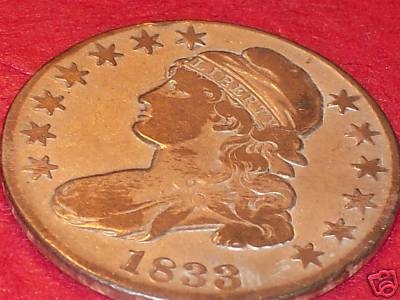 1833-1.jpg
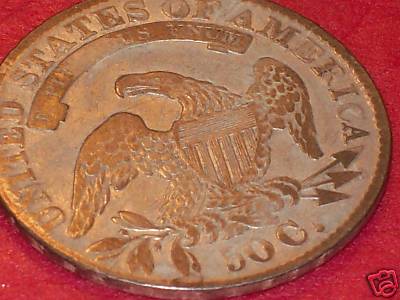 1833-2.jpg


