| Author |
 Replies: 12 / Views: 2,806 Replies: 12 / Views: 2,806 |
|
|
New Member
United States
43 Posts |
|
|
|
|
Moderator
 United States
34567 Posts |
@jim, can you please add the weight of this piece? Thx.
"If you climb a good tree, you get a push."
-----Ghanaian proverb
"The danger we all now face is distinguishing between what is authentic and what is performed."
-----King Adz
|
|
New Member
 United States
43 Posts |
It's in the initial post, it's 26.57 grams.
|
|
Moderator
United States
34567 Posts |
Ok yep sorry about that. I didn't notice when I first read your post.
"If you climb a good tree, you get a push."
-----Ghanaian proverb
"The danger we all now face is distinguishing between what is authentic and what is performed."
-----King Adz
|
|
New Member
United States
43 Posts |
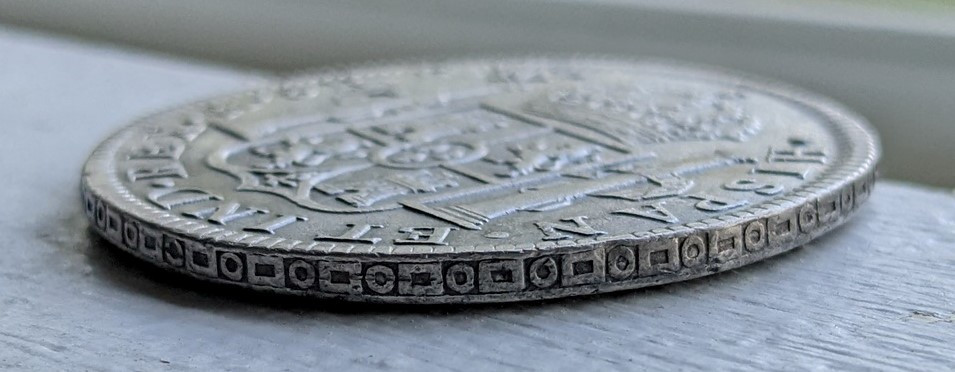
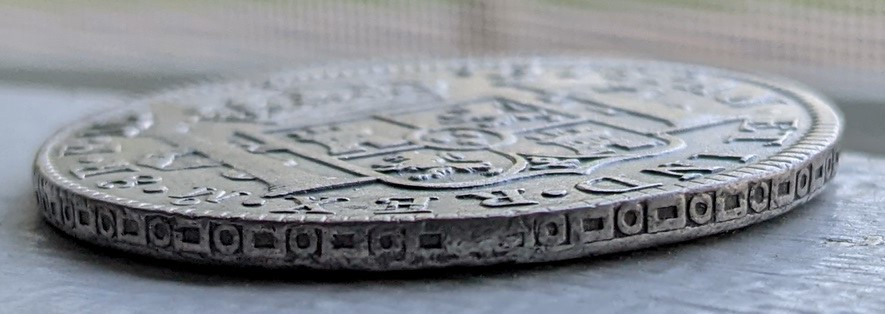
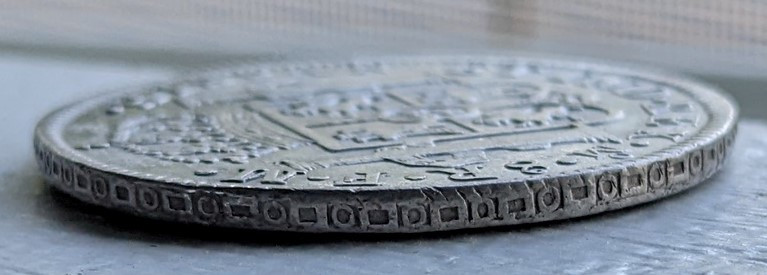
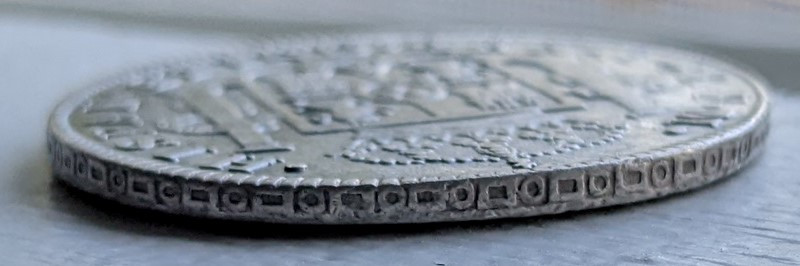
No problem, just looking for opinions on this because it's really odd. That second overlap may be there, but it must be extremely hard to see with my naked eye.
|
|
Pillar of the Community
United States
3364 Posts |
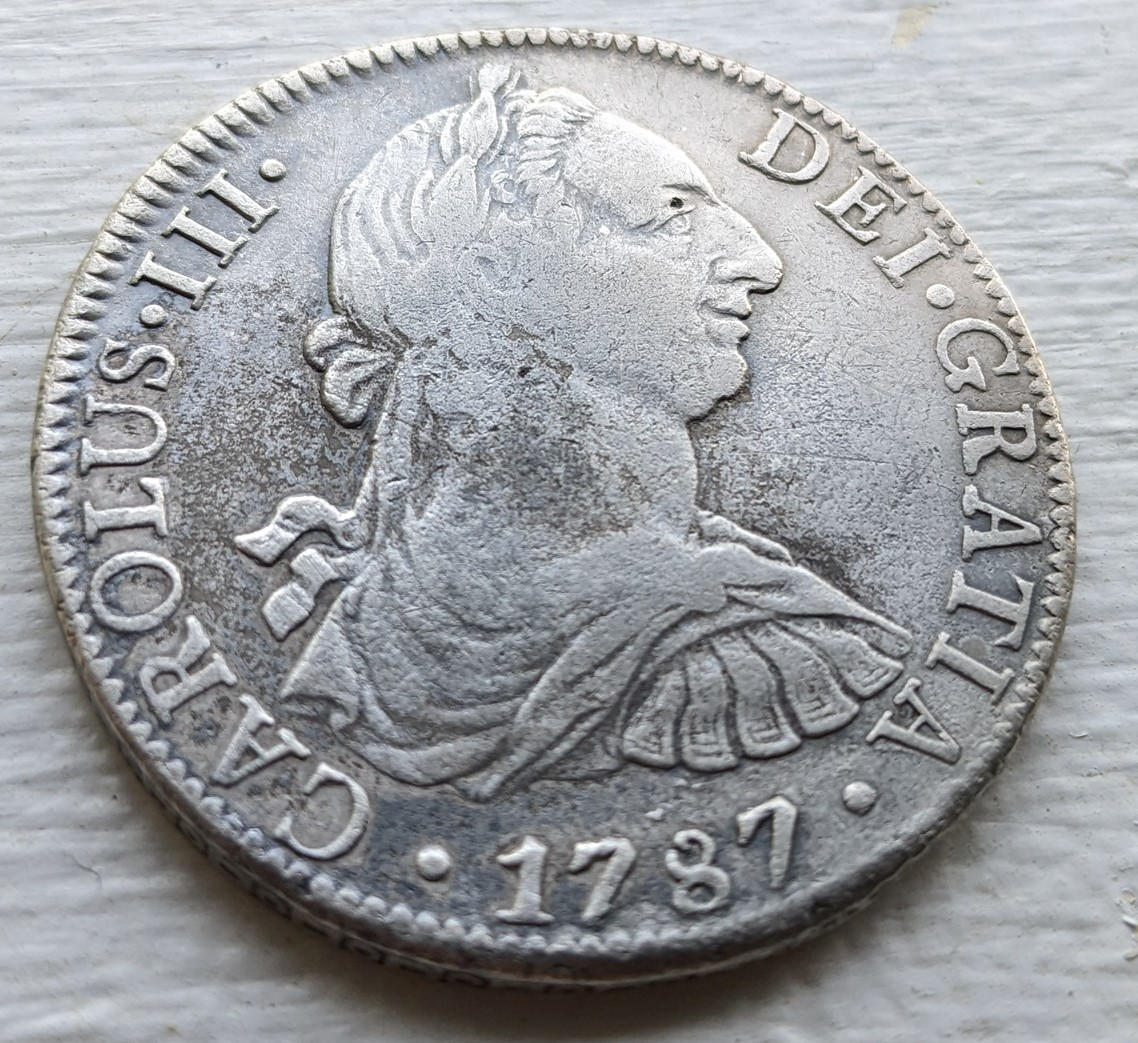
The granularity of the surfaces looks odd. At the very best this is a bullion grade piece due to the ugly damage.
"Two minutes ago I would have sold my chances for a tired dime." Fred Astaire
Edited by thq
04/26/2022 10:09 am
|
|
New Member
United States
43 Posts |
I don't think it's ugly, I quite like it actually. Got this to fill in a date for my year set on the Charles III portrait 8 Reales. Challenges are to get coins that are not chopmarked and not sea-salvage (and of course be genuine).
|
|
Pillar of the Community
United States
1777 Posts |
You made the statement the coin has no resonance and since the weight is near regal its probably German silver leaded issue of modern fabrication. A genuine 8R must have resonance on the RING TEST. JPL
|
|
New Member
United States
43 Posts |
Hm now that is interesting, you reckon it's a numismatic forgery? I did find the lack of resonance concerning, as all of my other 8 Reales from the same series have a high-pitched resonance and visible overlaps. That smudgy overlap in the second edge photo did concern me, as my contemporary counterfeit had a similar smudge overlap. If this is a modern production and the overlaps were executed correctly, then I would've never known prior to ping testing the coin that it would be a fake. The overall quality is much higher compared to other numismatic forgeries I've seen.
Do you think the "damage" on the obverse is revealing some of the base metal? It has an odd color to it and I was uncertain about that.
|
|
Pillar of the Community
United States
1777 Posts |
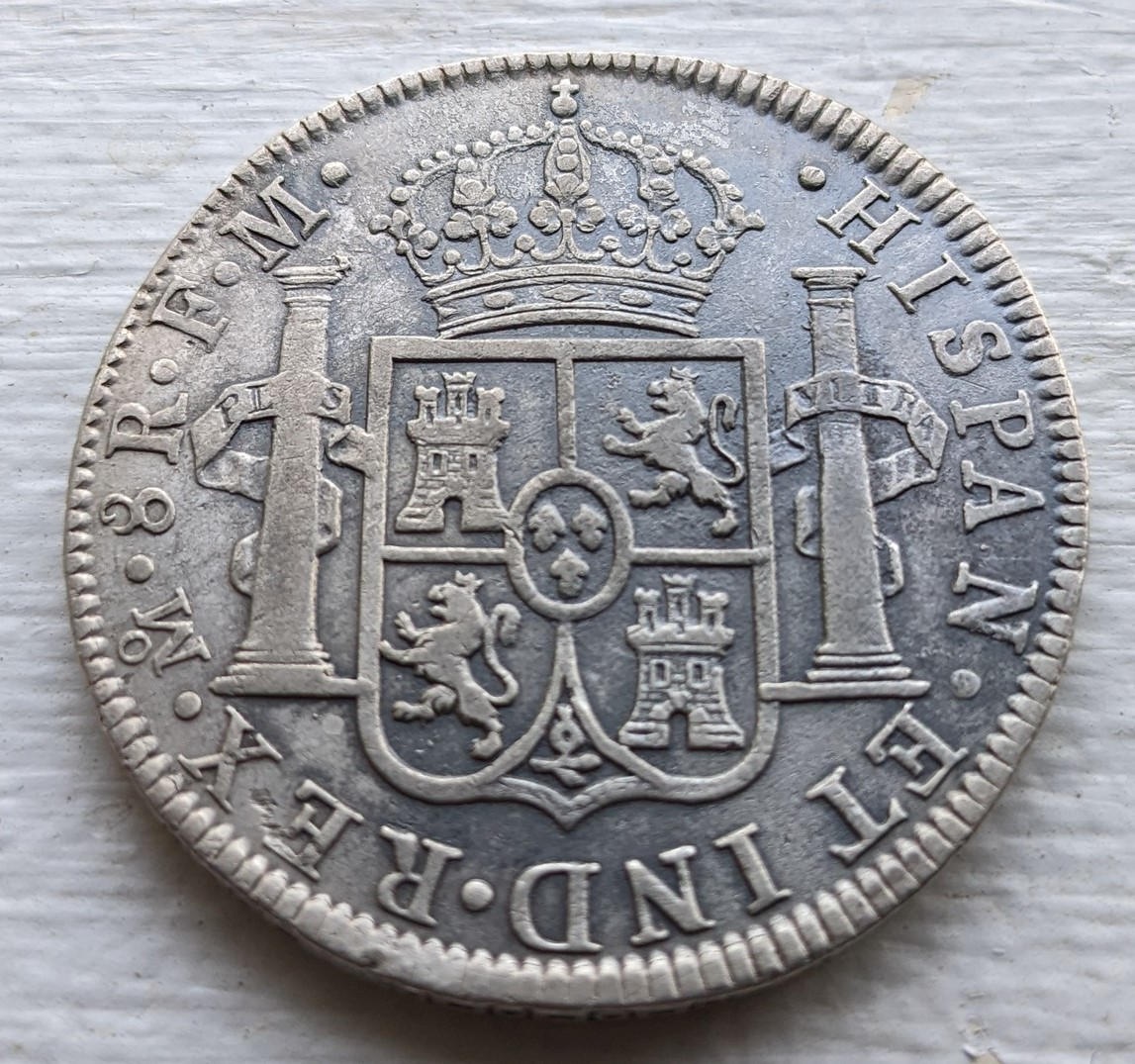
HMMM ... its an interesting piece. Not all legitimate pieces need to have overlaps on opposite ends. Then again can't recall seeing overlaps or an overlap on any Modern Chinese fakes which are normally German silver with lead or Fe/Ni alloys normally made to regal weight - but this piece does not appear to be Modern Chinese. Perhaps Robert Gurney has a take on this piece. From my perspective its an interesting alloy - has an overlap - no resonance ring (i.e., no ring test sound when tapped) - appears as a tin whitish example YET its weight is near regal and never seen a high tin/lead alloy piece that was not severely underweight (i.e., say less than 24 grams or more). An XRF analysis using some nearby jeweler or melter/refiner may be in order. If not successful after a month in performing/finding an XRF device and an analysis send me an E-Mail. A colleague of mind knows a precious metal melter who he bring gold to that can do a XRF scan. In the interim see if there any more comments on this interesting? piece. BTW that is not damage on the obverse IMO or the result of improper cleaning this is some peculiar oxidation formation based on the alloy composition of this piece. Its still possible its a German Silver/Lead alloy chemically treated to look old? I keep thinking lead since it has no resonance. John Lorenzo (Numismatist).
|
|
New Member
United States
43 Posts |
I'll call some more places around my area. The last time I tried it I had no luck at finding a place that had an XRF machine. The oxidation on the obverse almost looks like plating/silvering coming off, the metal color behind "CAROLUS" is a different color than the rest of the coin.
|
|
Pillar of the Community
United States
1777 Posts |
When you get the GNL book refer to page 140 which indicates that a number of small raised lumps on the coins surface which is clearly seen above "8" in 1787 is normally associated with casting. My guess is that this may be called a Class 2 Transfer die made from casting. Also notice that the lozenge shaped dentils at the edge of the coin stop at an arc that does not coincide with the edge of the coin as described in page 139 of GNL the far right picture on this page although not as extreme as 360* around. Part of the obverse from K-5 to K-9 demonstrates this trait where the forger may not have centered the die correctly and the edge of the die will appear as a false arc on the coin. Although Class 2 Transfer Dies even if cast that weigh 26.5 grams or so normally retain high silver - we see here again no resonance. So if unsuccessful in finding an XRF analysis for this coin you can mail it to me and after a month or so my friend does make trips to the melter locally who does have an XRF gun. This alloy does intrigue me ... JPL
|
|
New Member
United States
43 Posts |
Well, there might be issues with time constraints. I can refund this currently seeing as it's almost certain this alloy contains very little to no silver. Seeing as I paid the about the going rate for a genuine Charles III 8 Reales, I'm certain to begin the refund process. I do not feel good about snuffing an investigation short, since I understand this is what you enjoy doing. If you would like, I could tell you the name of the seller so that you could acquire it for a proper price from the seller (once returned). I don't think a forgery of this type would be worth the same as a genuine 8 Real, hence the refund.
As I mentioned in one of my comments, I'm just trying to put together a year set of genuine raw coins. Getting counterfeits/forgeries occasionally is pretty much expected with Spanish 8 Reales. Buying pre-graded is not infallible and generally incurs a premium I don't wish to pay (plus I just like holding my coins occasionally).
|
| |
Replies: 12 / Views: 2,806 |
|






 Posted 04/25/2022 9:04 pm





