| Author |
 Replies: 26 / Views: 4,845 Replies: 26 / Views: 4,845 |
|
Valued Member
Canada
201 Posts |
i sent a collection of 60 coins , many key dates, I bought which was accumulated many years ago, before counterfitting was as sophisticated as now, to PCGS through an auction house and all were graded authentic except 1, which was returned Counterfeit/False Dies. it seems strange all coins would be authentic except for one. do they ever make mistakes? weight and size were correct and it didnt look fake in any respect. I'm considering resubmitting with a new batch.
*** Moved by Staff to a more appropriate forum. ***
|
|
|
|
Moderator
 United States
56855 Posts |
TPG's are only human, so they do make mistakes. Post a few pics here. John1  |
|
Bedrock of the Community
Australia
21794 Posts |
We all make mistakes, and the most experienced collectors learn from them. That includes me. Same apples to TPG's, but their advantage is that they are true Third Party, and their reputation depends on their reliability and accuracy, but occasionally, they make mistakes as well. |
|
Pillar of the Community
United States
4618 Posts |
Yes, they make mistakes both big and small! This error dime has an error on the PCGS label. Sure this is just a spelling error, but why didn't they catch this before it went out? 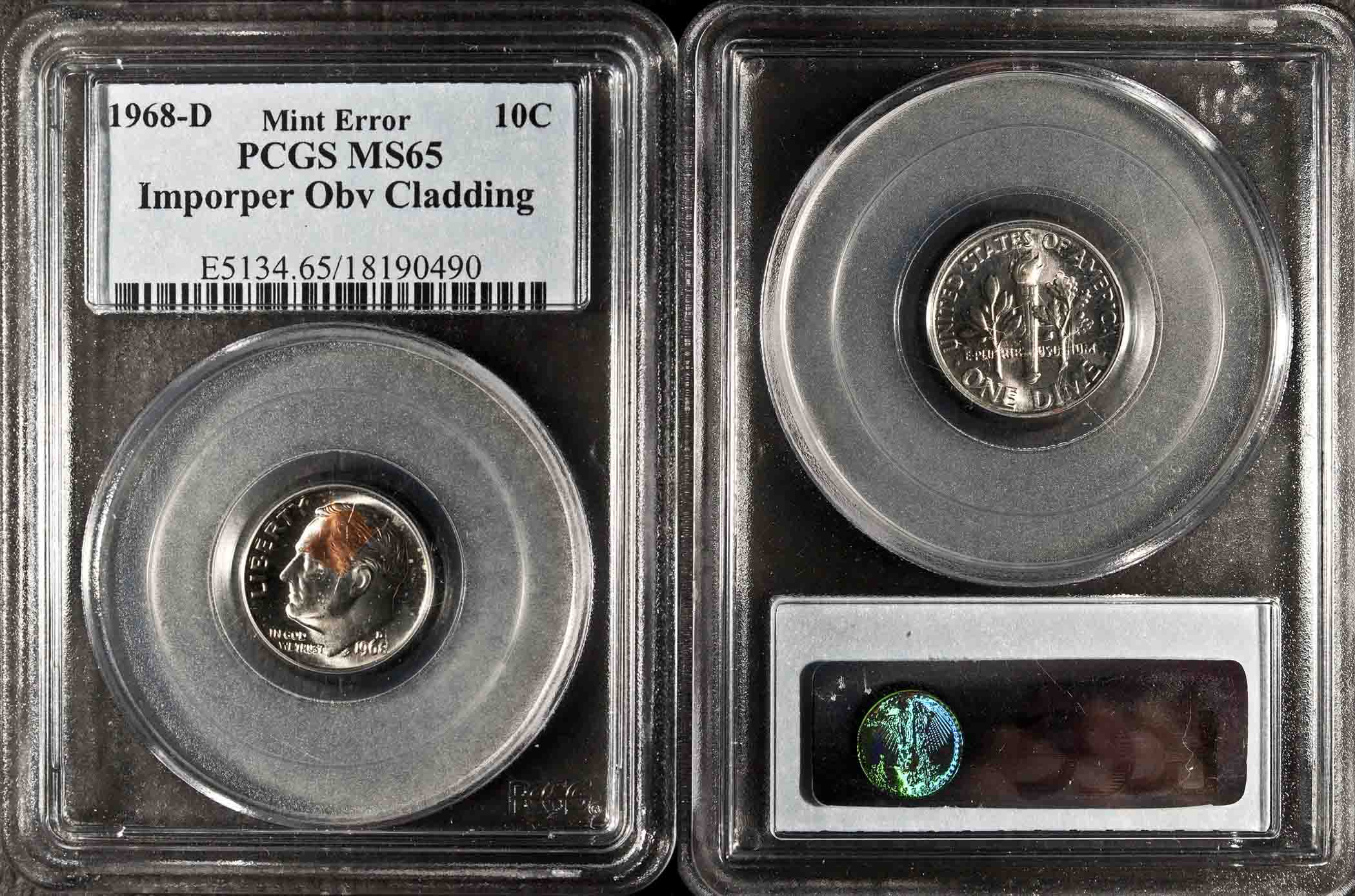 ANA ID: 3203813 - CONECA ID: N-5637 Clean a coin that may be worth collecting? Please DON'T! When in doubt, leave it dirty!! 
|
|
Pillar of the Community
United States
737 Posts |
Everyone makes mistakes, I've seen many label errors & I think ive heard of counterfeits making their way into slabs, Maybe post some photos here & we can give some opinions.
I've been collecting for a couple years... Favorite Coin's are Standing Liberty quarters, Working on my type set | Coffee, Corvettes, Coins & the CCF what could be better? |
|
Pillar of the Community
United States
1048 Posts |
Actually, no, not that kind of mistake. PCGS will NOT issue slabs with spelling errors. It's counterfeit.
|
|
Bedrock of the Community
United States
94367 Posts |
They make both printing and judgmental mistakes. |
|
Pillar of the Community
United States
4233 Posts |
@burfe23 has lots of counterfeits in authenticated TPG slabs, so yes they make mistakes, and it goes the other way too. What coin was it? Keep in mind their guarantee would make them pay out if they authenticated a fake, so they might be inclined to err on the side of caution. I recall that there's a thread somewhere about PCGS hanging a $50k mistake on the wall as a badge of shame. |
|
Pillar of the Community
United States
792 Posts |
They sometimes send back coins rotated 30 degrees, 90 degrees, or even 180 degrees in slabs. This is merely an aesthetic mistake, but it does undermine how we see their quality control as outsiders (with some major questions--they sent back my 1854 Half Cent rotated 90 degrees and took another 3-4 months just to fix that! The other Half Cents in my type collection were mourning the prolonged absence of their sister). I don't think this "aesthetic" mistake is what you were talking about, though. When answering your question, I want to challenge the premise a bit--do you mean "inconsistency" or "mistake?" In an ideal world, it would be nice to believe that all inconsistencies in coin grading are mistakes, and that the system itself and everyone's intentions are sound and pure. I don't think this is the case, though, given the gargantuan amounts of money that change hands based on seemingly minor differences in coins' grades. Sometimes they overgrade and undergrade coins. This can be a "mistake" or it can also reflect inconsistencies in who grades, what time of day/which day of the week the graders get to this particular coin, or even who sent the coins in (was it an auction house with a financial stake in the company? Was it a small time dealer or collector?). I remember a story of an early large cent sent in by one dealer in my hometown that come back as a "details" coins. The dealer then sold the coin to an auction house, and a few months later the dealer recognized that very coin in an auction catalogue looking pretty snazzy in an MS(64) holder and with a minimum bid that put the money he got for the coin to shame. Was this really a mistake? I saw a YouTube video once where a dealer talks about a Capped Bust half dollar he had in an MS(64) holder that he sold years before he bought a gorgeous coin of the same date and variety in an MS(66) holder. His friend pointed out that this was in fact the very coin he sold years before, returning to him in exactly the same state, but in new plastic and for a much higher price. Did PCGS make a mistake the first time? Did PCGS tacitly admit to "grade-flation" through this? Either way we look at it there is uncertainty in what happened and plausible deniability in the actions of the third party grading companies. I want to be clear that I am not attacking PCGS or making precise accusations--I'm not. I hope that much is clear from my tone. I love and am humbled by the strong and positive values that the members of this community demonstrate day after day (really, I learn so much from the people here, whether they are high school enthusiasts or dealers with over half a century of experience--this community rocks), and I want to channel those values in how I contribute to this discussion. I am merely trying to clarify what we mean by "mistake" and explore possible reasons for inconsistencies in grading. Either way, you raise a fascinating and important question. Edited by Adam590
08/09/2023 12:49 pm
|
|
Pillar of the Community
United States
2334 Posts |
Nope, PCGS is infallible.
You realize when you know how to think, it empowers you far beyond those who know only what to think.
-Neil deGrasse Tyson
|
|
Pillar of the Community
United States
6948 Posts |
|
|
Pillar of the Community
United States
1719 Posts |
|
|
Bedrock of the Community
United States
10065 Posts |
Of course they make mistakes. All kinds of them. Including putting the wrong label on slabs, labeling no errors as errors, I have even seen an obvious vise job coin labeled as legit. You really need to see the essay in my signature for an eye opener as to how prone to error the grading companies are as compared to the their reputation people just assume them to have. It shows an undeniable 30% error minimum in a rookie level designation of the No FG variety Kennedy half dollars. All the data is linked to their own website to be checked out for yourself. It even presents a fact about identifying actual 1982 No FG variety which the companies seem either not to know or never they never mention and mis-identify 1982 polished off initials (well..almost polished off) as being the legit no FG for this date. How about a slabbed vise coin by PCGS? The certification number does not work anymore...meaning they corrected the error. The original location of the PCGS linked webpage can still be found online at PCGS website where they link for closeup pictures: https://d1htnxwo4o0jhw.cloudfront.n...44923183.jpg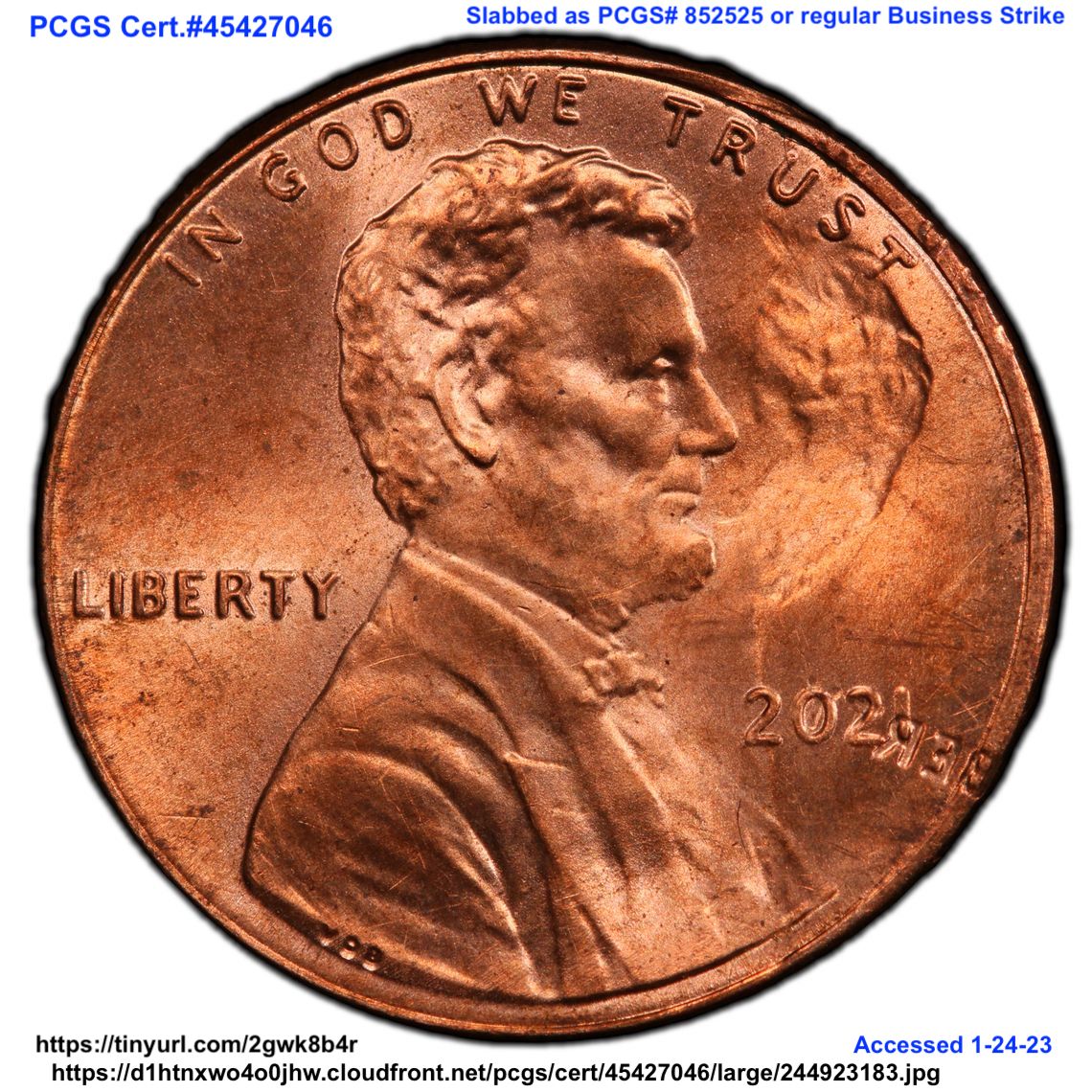 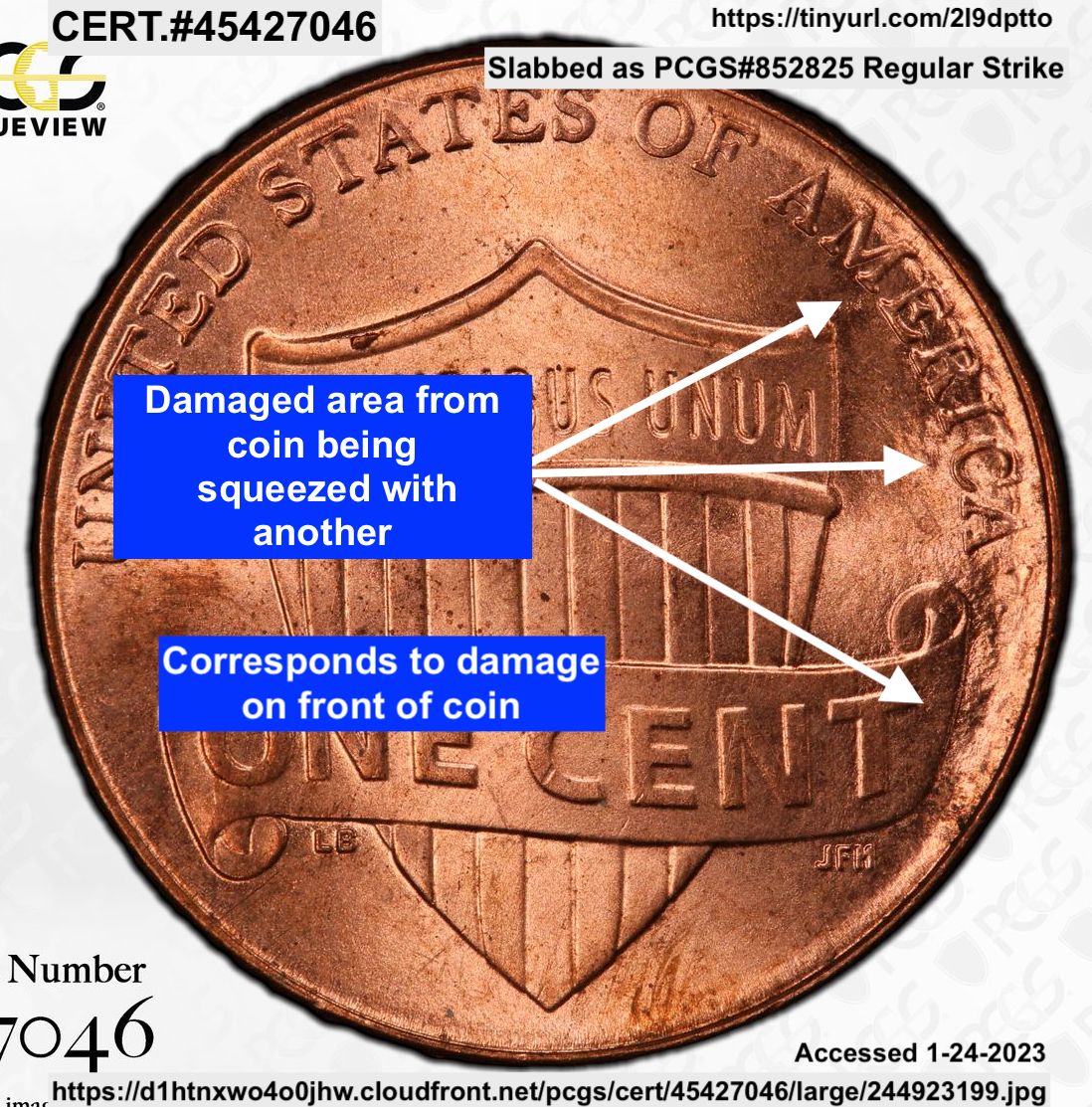 The fact still remains...two of their trained experts labeled an obviously damaged coin as being a mint error. The third grader passed it along as well. There is absolutely nothing right or wrong about liking slabbed coins (b/c hobbies are about what we LIKE) or in using these companies. But an education about the reality of them goes a long ways towards people being educated in how not to lose money when dealing with them. Too many people just assume b/c "well, everyone thinks..." that these companies are THE unquestionable experts of the hobby. This concept is a market driven fallacy. How much squash could a Sasquatch squash if a Sasquatch would squash squash? Download and read: Grading the graders Costly TPG ineptitude and No FG Kennedy halveshttps://ln5.sync.com/dl/7ca91bdd0/w...i3b-rbj9fir2Edited by Earle42
08/09/2023 2:32 pm
|
|
Pillar of the Community
United States
1048 Posts |
Yes, they're OFTEN wrong on assessing coins. But a big fat Chinglish typo on the label? Very unlikely.
Edited by pristine2
08/09/2023 2:16 pm
|
|
Pillar of the Community
United States
6948 Posts |
The essay on the PCGS wrongly confirming no-FG Kennedy halves is interesting. However, it seems to me that confirming a no-FG half by the 1 on the obverse has a major flaw. The assumption is that the no-FG reverse die was never paired with any other obverse dies. That seems like a shaky assumption. It doesn't undermine the overall point that PCGS clearly graded, slabbed, and attributed many coins that were obviously not the true variety coin. The fact that someone paid $625 for a slabbed coin just shows how sloppy some people can be, particularly when the FG on the no-FG half was clearly visible in images. |
|
Bedrock of the Community
United States
10065 Posts |
I updated the post I made after you made this last observation. And I admit I do agree with your assessment that the OBV and REV dies that appaear on all NO FG halves may have been interchanged to appear on other halves. So far there has been no official study on this by some authority, but I have bene a collector specializing in Kennedy halves for a ling time. I have yet to encounter a legit No FG 1982 without the same OBV die. I have yet t find one, or see one online, where these two dies are not mated. I also do not understand how in the word a No FG die could have been made to begin with b/c of how dies are made. But the OBV and REV both being different every time seems to indicate that there was some sort of anomaly at the mint this year for halves. The 1982 No FG is the only one that can be found where the details around the initial area can be strong and not polished off. So it seems as if there actually, somehow, was a wrong set of dies made and removed after it was found. None of it really makes sense in the typical way does are made, but the coins show something out of the ordinary happen. If only the FG was missing, then it might be theorized there was something in the way during the hubbing process, but to have this happen with the mated OBV and REV the halves all show is astronomically improbable. |
| |
Replies: 26 / Views: 4,845 |







 Posted 08/09/2023 11:03 am


