| Author |
 Replies: 9 / Views: 1,917 Replies: 9 / Views: 1,917 |
|
|
Valued Member
United States
59 Posts |
|
|
|
|
Pillar of the Community
United States
4883 Posts |
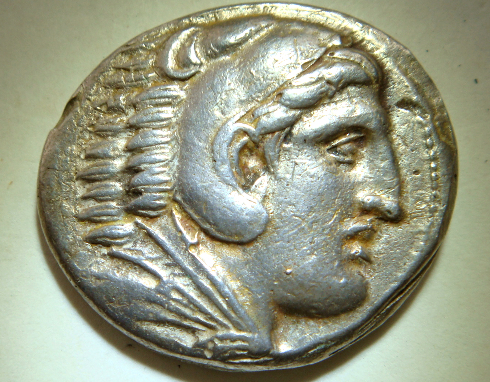
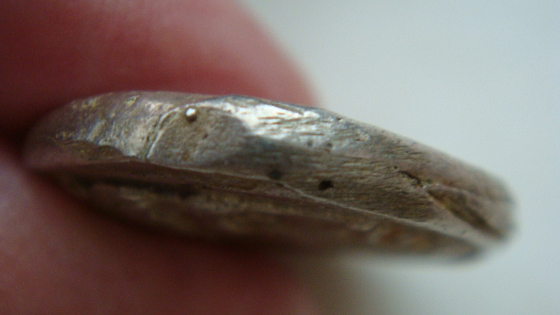
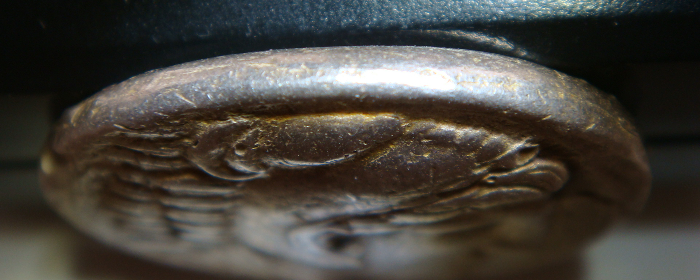
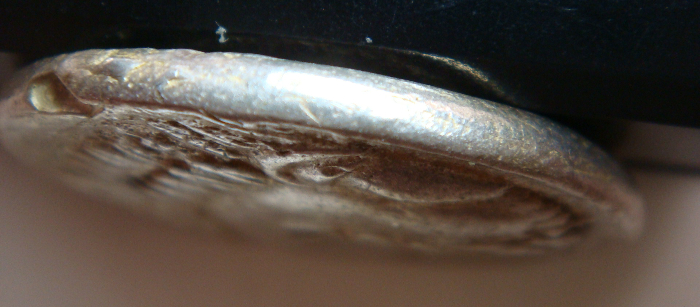
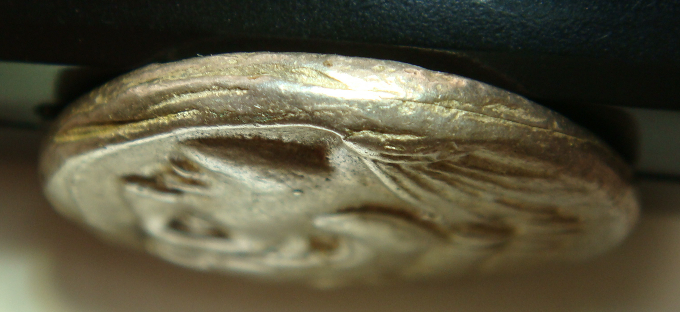
It doesn't present terribly, but your first photo of the edge looks to be the spot where a sprue might've been cut away. The little raised dot there would also be a bit of an anomaly for a struck coin. The test to run on it would be an analysis via xray fluorescence (XRF), with many jewelry or gold and silver buying establishments nowadays having the devices to accomplish this. The lack of any trace gold in its composition would be an indicator of more modern refining.
Colligo ergo sum
|
|
Moderator
 United States
34539 Posts |
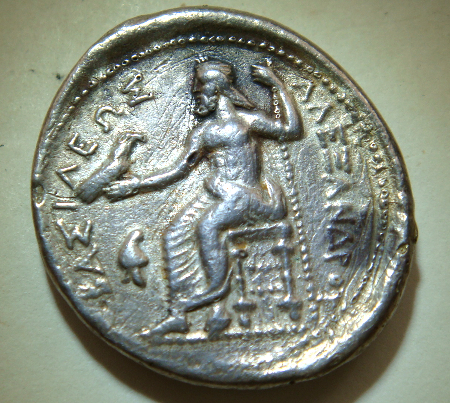
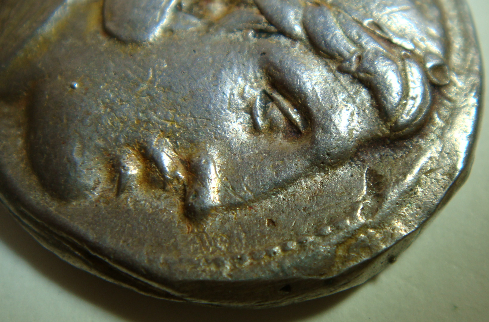
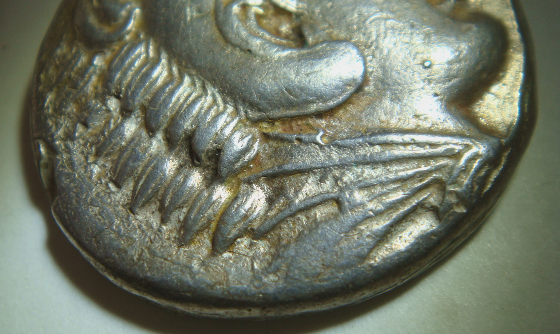
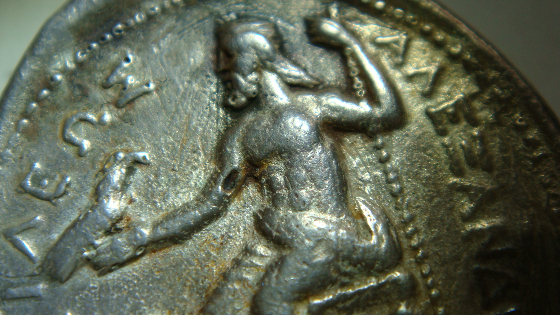
Hmm I'm not liking the bubbles on the reverse rim denticles and the pimple on Heracles' chin. What is the specific gravity of this piece?
"If you climb a good tree, you get a push."
-----Ghanaian proverb
"The danger we all now face is distinguishing between what is authentic and what is performed."
-----King Adz
|
|
Pillar of the Community
United States
7067 Posts |
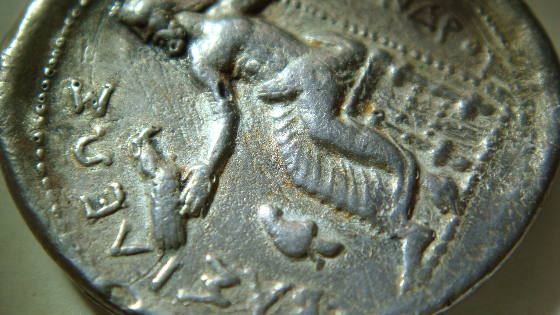
Not good...Evidence of filing away a sprue, some indications of a possible seam still visible, bubbles evident (as intaglio pits) on the upper part of the scepter and the final letter (sigma) of BAΣIΛEΩΣ, the anomaly on Zeus' bicep, etc.
Edited by Kamnaskires
08/29/2023 7:16 pm
|
|
Valued Member
 United States
59 Posts |
Oh dear - specific gravity....? I guess I'll have to explore how to find that out. Not sounding too encouraging toward being authentic, so maybe I'll just skip the science for now. If anybody else thinks it has a possible chance of any authenticity I'll bite the silver bullet and do it. Sort of a bummer but not a surprise. Thank you for your honesty and knowledge.
|
|
CCF Advertiser
United States
1318 Posts |
13 grams is pushing the lower weight by quite a bit of what is possible. Probably should look for a die match. So if that a helmet below the eagle? There was an Italian site that had a tool for those I recall years ago.
|
|
Pillar of the Community
United States
2332 Posts |
Yeah that looks like a Phrygian cap in field, I think these were struck at Amphipolis Macedon. There's a lot of fake Alexander coins but I'm not expert enough to say much about this example except most genuine ones don't have the pits/holes that could be cast bubbles.
A main reference is by Martin Price "Coinage in the name of Alexander the Great." A university or big city library may have a copy to check out. And as mentioned a coin store may have a XRF or gravity tester for the metal content.
Edited by livingwater
08/30/2023 07:30 am
|
|
Valued Member
United States
59 Posts |
I'll try to find a local establishment with sophisticated enough test equipment just to be completely sure. I'm wondering now if that file mark on the one edge is where a removed soldered on loop mount may have been for hanging on a chain? The file mark happens to be located on the direct point of hanging straight in the oblong position (I just noticed). I also need to test the accuracy of my scale.
As far as the bubble pops or pits are concerned if these are absolutely NEVER seen on struck ancient silver coins then I don't want to waste my time. This does make me wonder however, how perfect the smelted metal surfaces were? Completely smooth so when struck gaps, voids, divots, pits and the like are absent? Could the pressure of the strike open up any subsurface voids? Just being curious here!
The symbolism on the ancients are fascinating little pictorials. So, that's some kind of cap? LOL - thought it might be some sort of sacred mushroom!
Edited by canudigit
08/30/2023 10:04 am
|
|
Pillar of the Community
United States
2332 Posts |
Well "cap" may not be the best description, rather it's called a Phrygian style helmet. Other examples have a Macedonian style helmet. There are many monograms and symbols on ancient coins, some are not known what they mean, scholars disagree or are uncertain of their meaning. Scroll down on this link to see some examples: https://www.acsearch.info/search.ht...=1&es=1&ot=1¤cy=usd&order=0 Edited by livingwater
08/30/2023 10:31 am
|
|
Pillar of the Community
Portugal
717 Posts |
Measuring specific gravity can be improvised with a good scale, a small cup of water and some string. The volume corresponds to the weight of the water displaced. Use the correct density for water depending on temperature. Search on that. There should be good descriptions step by step.
I say it seems cast to me. And the edges are suspicious. But I cannot be sure.
|
| |
Replies: 9 / Views: 1,917 |
|












 Posted 08/29/2023 7:10 pm


