| Author |
 Replies: 421 / Views: 66,213 Replies: 421 / Views: 66,213 |
|
|
|
Bedrock of the Community
 United States
20050 Posts |
It should not be a problem. I've never soaked a BU coin that long, but I don't anticipate any issues.
|
|
Moderator
 United States
196100 Posts |
I just received my bottle of VERDI-CARE™ this morning!  Anticipating the delivery, I started sifting through my various nickel and cent hoards this weekend for some test candidates.  I hope to get my 'before' photos taken tonight. My son left for his vacation today, so I hope to have some free time for testing this week. |
|
Bedrock of the Community
United States
20050 Posts |
YES! I can't wait to see your results and hear your opinions.
|
|
Bedrock of the Community
United States
20050 Posts |
I found this Canadian cent tonight and decided to test it out. About a 3 minute conservation: soak one minute, a little toothpick rubbing on the residue, some towel rubbing, then a rinse with acetone: 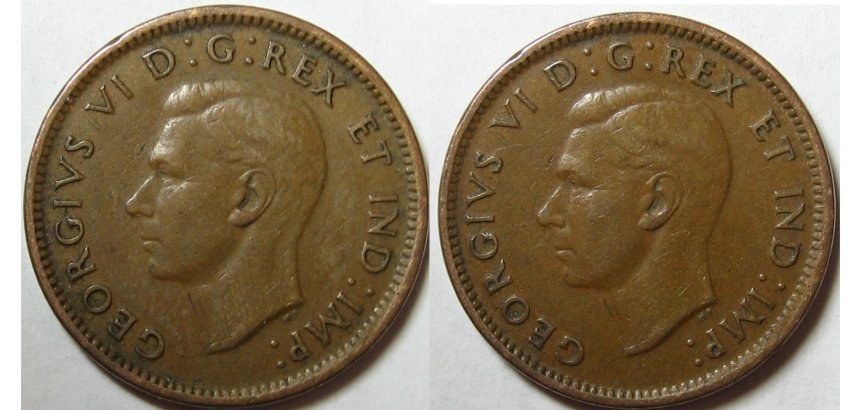 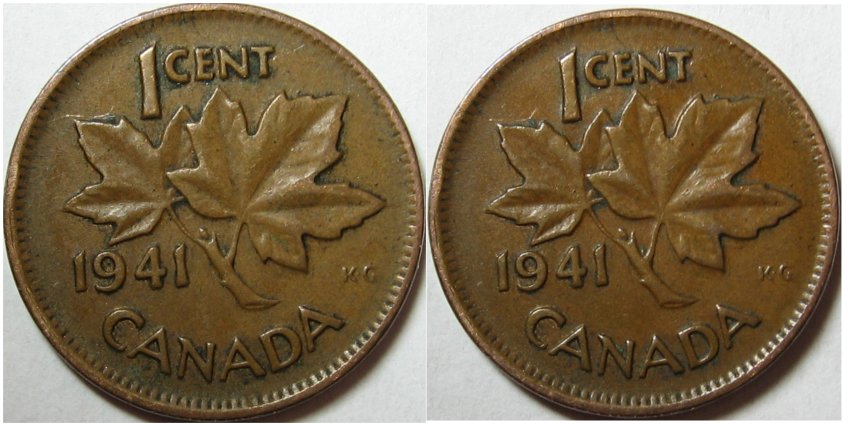 Lincoln Cent Lover!VERDI-CARE™ INVENTOR https://verdi.care/
Edited by BadThad
06/22/2010 9:57 pm
|
|
Bedrock of the Community
United States
20050 Posts |
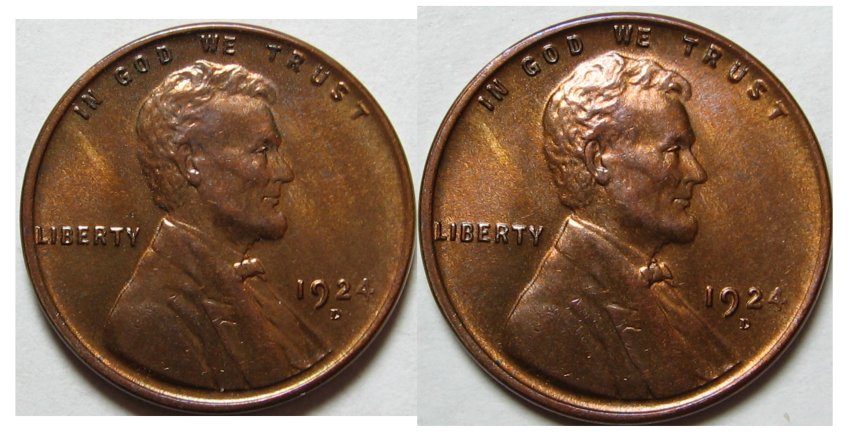
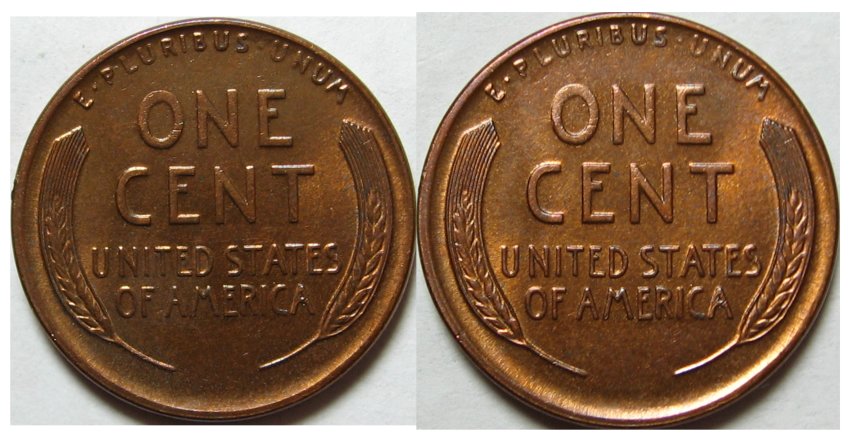
Customer supplied pictures of a 1988 RDV-006 conservation: 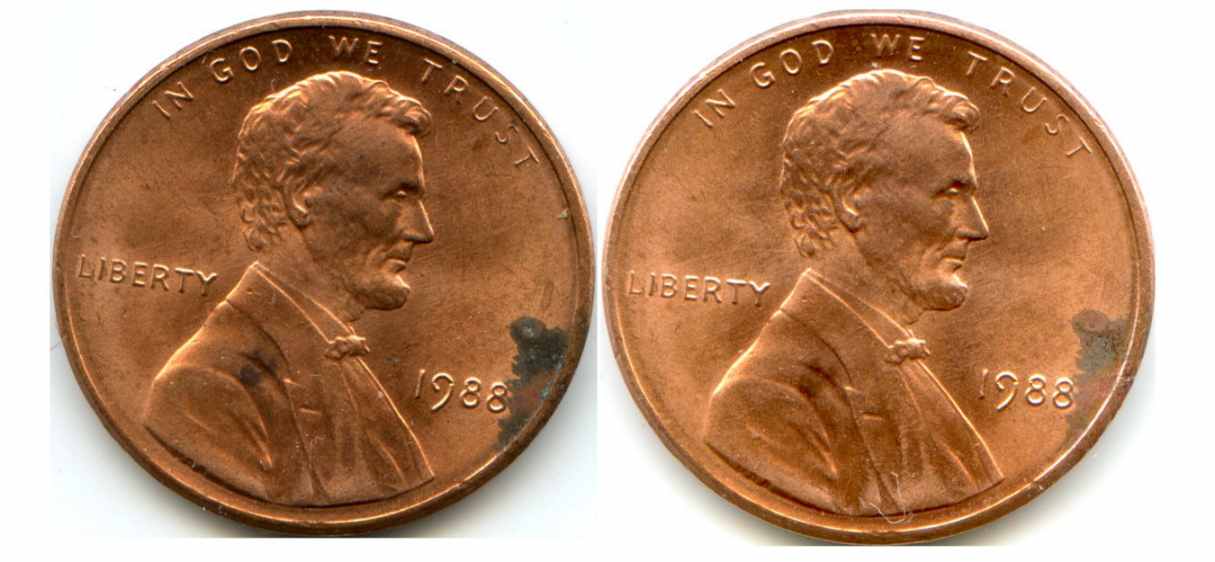 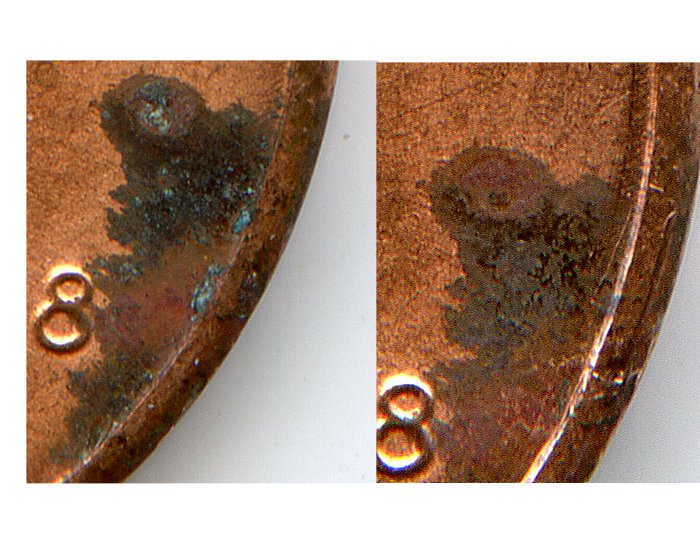 |
|
Bedrock of the Community
United States
20050 Posts |
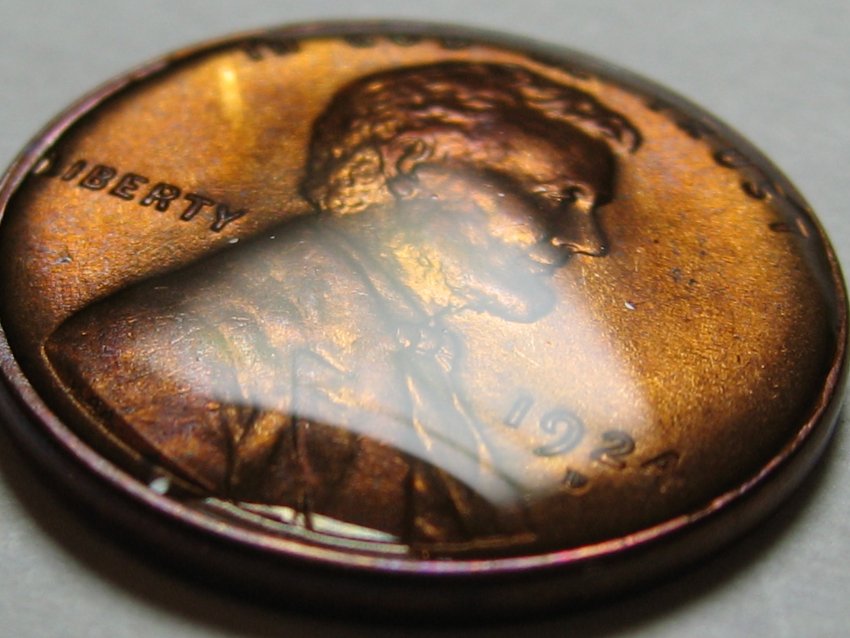
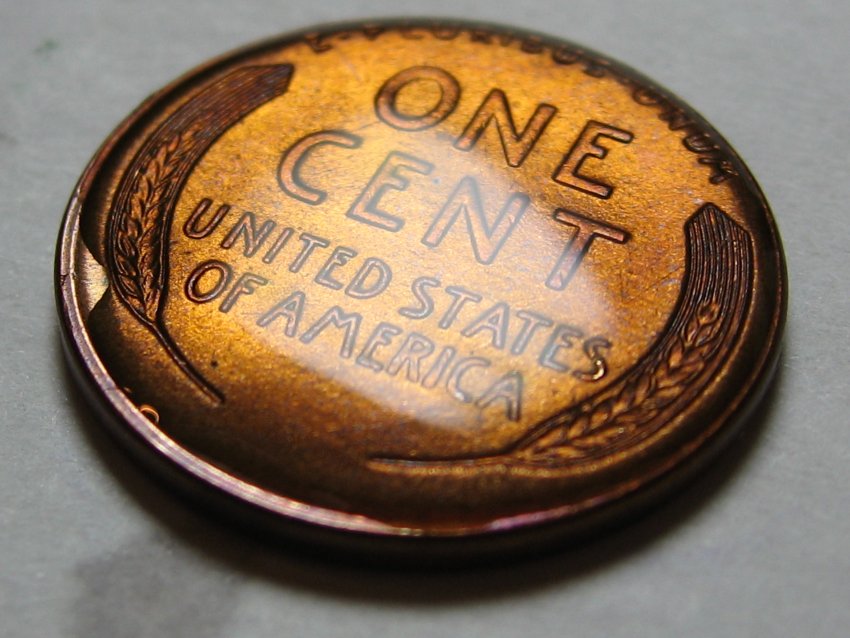
Here's a large cent I bought from a forum member and conserved with VERDI-CARE™. I soaked each side for about 5 minutes and did a little light rubbing with a toothpick. Total conservation time was about 10 minutes. I didn't allow the coin to fully dry, so it's a little glossy. The green stuff on the reverse was a gummy substance intermixed with verdigris. Whenever I've removed gummy substance using ANY chemical, some bare copper is exposed. There's nothing that can be done about that, it's part of the conservation game. The coin went from an artificial looking blackish to a nice brown color. IMO that was an improvement on itself. 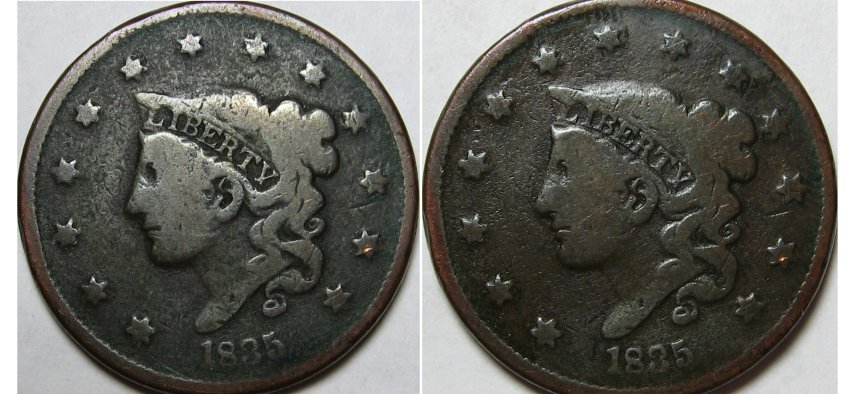 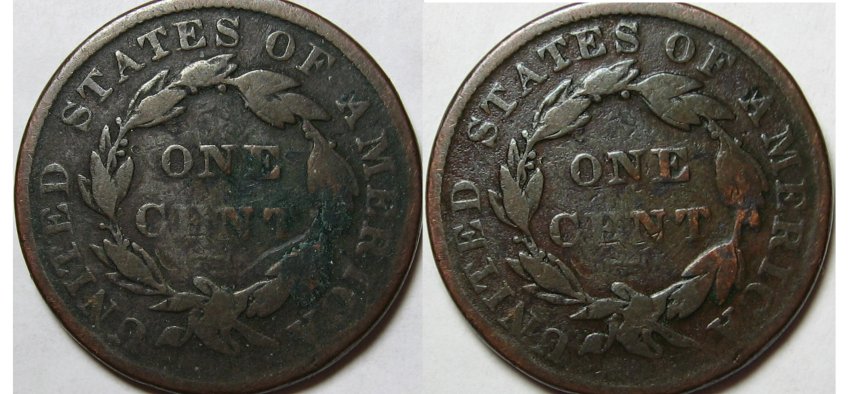 Here's the sellers picture and after conservation pic:  Lincoln Cent Lover!VERDI-CARE™ INVENTOR https://verdi.care/
Edited by BadThad
06/26/2010 02:46 am
|
|
Moderator
United States
196100 Posts |
Looks much better to me. As stated, there is a colour difference where some of the heavy junk was. Overall, improvement! |
|
Pillar of the Community
United States
4212 Posts |
Overall, nicely done. I like more of the ear.
|
|
Bedrock of the Community
United States
20050 Posts |
|
|
Pillar of the Community
United States
851 Posts |
Hey Thad I want to know if Verdi Care will deemed a coin as "Improperly Cleaned". I have a few nice Draped Bust Cents and Coronet Cents in high grades that have a little bit of crusty verdigris. If it doesn't then I would like a bottle.
|
|
Bedrock of the Community
United States
20050 Posts |
coins92 - That's the whole purpose of VERDI-CARE™. It's NOT a cleaner and coins that have been properly conserved with it should show no trace of "improper" cleaning. Now, every coin is different and when we're talking about removal of corrosion, there can be tell-tail signs left behind after conservation. There's nothing that can be done about that since corrosion itself involves the removal of metal from a surface. The question is "has the corrosion pitted the surface or altered the color so it is detectible". If you look through the hundreds of pictures I've taken, in some cases it's obvious and in other cases it's not so obvious. Show me picture of the coins you're thinking about and I'll tell you want is going to happen with VERDI-CARE™.
You can in the above test, it's not at all obvious....but the corrosion was very light. The real question is will PCGS notice the coin has been treated with VERDI-CARE™. My experience tells me they will not know....but nothing is certain in the world. They may catch that or they may see something else they don't like about the coin. We will see in a couple of months!
|
|
Pillar of the Community
United States
851 Posts |
|
|
Bedrock of the Community
United States
20050 Posts |
1803 - I don't see any verdigris. The blackish stuff on the obverse cannot be removed without chemical damage, i.e. a dip (VC won't touch it). The bumpy stuff on the reverse looks more like a generic, organic surface residue in the scan. Verdigris would have more of a green appearance. Acetone then xylene should be tried first, especially on the reverse.
1853 - Not much of a verdigris problem. The obverse looks like it has a touch of deep pit verdigris. Somebody has already attempted conservation on this coin, mostly likely with mineral oil (such as Coin Care). It was probably physically rubbed off. Since verdigris is largely insoluble in oil, it remains deep into the patina. VC would react with the deep pitted verdigris, removing some, but mainly darkening it. These types of verdigris are impossible to remove without causing more damage. The ReAcT2™ would halt the progression at least.
Some curpric oxide at about 2:00 shows the coin had some environmental exposure. VC usually will not do anything for that other than possibly darken it some. The reverse shows no corrosion but the surface looks extremely dry. Not sure if this is due to the photograhy? I see some pitting on the surface which shows the coin was corroded in some areas long ago...or perhaps the dies were rusty. I'm not sure. What I am sure of is that VC would slightly darken the surface and give it some richness. This coin is a decent candidate.
Both coins should be first soaked in xylene to remove any remaining oil. It's important to get that residual oil off of each of these prior to conservation.
|
|
Moderator
United States
196100 Posts |
I finally got started with my experimentation this weekend. I should know better than to underestimate my wife's agenda, especially when the kid is out of the house!
I put her camera on the tripod and took some before photos of several copper cents. I only got to treat two coins before my son came home yesterday. I left those two soaking and hope to do some more testing after he goes to bed tonight.
|
|
Pillar of the Community
United States
851 Posts |
Thanks Thad. So you think the 1803 doesn't need any treatment?
|
| |
Replies: 421 / Views: 66,213 |






 First Page
 Previous Page


 Posted 06/21/2010 11:51 am