Posted 12/02/2010 09:28 am


In A.D. 193, Severus marched east with his armies to subdue Pescennius Niger who had declared himself emperor in Antioch. Where Severus located his mints is unknown but numismatists have identified two distinct series of coins, one of which is allocated to a mint in Emesa and the second to Loodicea-ad-Mare in Syria. There is a third mint away from Rome based in Alexandria.
The Emesa series seems to have had a small production period running between A.D. 193 and A.D. 195. This series has it's own distinct chronology even during this short operating period.
The style of engraving is not as refined as that of the production of the Rome mint and the legends are rather more crudely produced and there are regular legend errors within the series.
The earliest obverse legend is "IMP CAE L SEP SEV PERT AVG", with some minor legend variations. This sub-series re-uses many of the reverse types that appear on the coinage of Niger with some reverse legends even using the title "IVST", which is a title used by Niger rather then Severus. There is a small number of obverse dies (5 known including the legend variations to date). These five obverse dies were used with a large number of reverse dies. This series is generally quite rare.
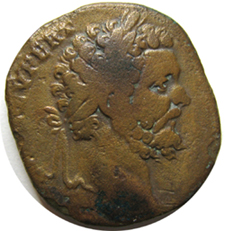
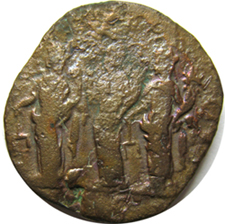
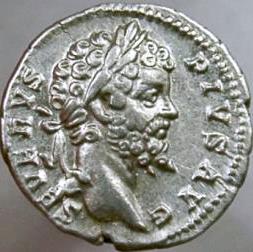
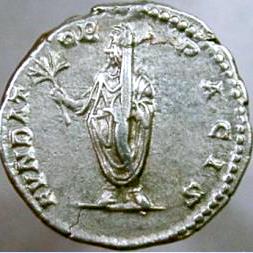
A typical example of the series is shown below:-
Obv:-- IMP CAE L SEP SEV PERT AVG, Laureate head right
Rev:-- BONI EVENTVS, Bonus Eventus standing left holding basket of fruits in right hand, grain ears in left.
Minted in Emesa. A.D. 194
Ref:-- RIC 352 (Scarce). RSC 66

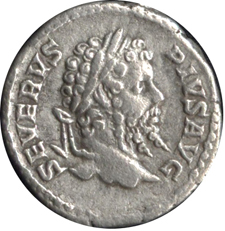
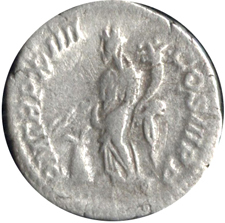
The following example is the obverse die with the legend variations and also has another unusual attribute of having a "II COS" ending to the reverse legend, which likely places these reverses just before the transition to the next series of obverse legends.
Obv:-- IMP CE L SEP SEV PEPT AVG, Laureate head right
Rev:-- MONETAE AVG II COS, Moneta standing left, holding scales in right hand, cornucopiae in left
Minted in Emesa. A.D. 193
Reference:-- BMCRE -. RIC IV -. RSC -.

Following this series come a rare set of obverse legends ending CO, II COS, II CO, or II C. These come from very small numbers of obverse dies. It is the use of these dies that are my main collecting focus in this series and are generally undocumented. There are reverse die links between these coins and those of the earlier AVG series.


These appear to have been followed by a curious, scarce series with the obverse legend ending COS I. These are not as rare as the AVG series, which in turn isn't as rare as the II CO etc. series. There is a small number of obverse dies and there do not appear to be any reverse die links with any of the earlier series but there are a few die links with the COS II series that follows.

Now comes the bulk of the production of the mint from A.D. 194-195. This is the COS II series, which has a very large variety of obverse dies combined with a large number of reverses. Legend variations abound and whilst the series is documented in RIC, RSC and BMCRE there are still many unlisted variations out there. Many errors are made when reading COS II coins since the placement of the Is varies leading to COS II, COS I-I and COS - II variations with the Is being placed under the bust and occasionally being quite small and indistinct.
The following is a typical (stylistically) example from the series though in better condition than many of the series appear.

Towards the end of production come dated reverses that place the coins into A.D. 195. It would appear that the production stopped at this point as Severus turned his focus to the west to deal with the troublesome Albinus.

Regards,
Martin
The Emesa series seems to have had a small production period running between A.D. 193 and A.D. 195. This series has it's own distinct chronology even during this short operating period.
The style of engraving is not as refined as that of the production of the Rome mint and the legends are rather more crudely produced and there are regular legend errors within the series.
The earliest obverse legend is "IMP CAE L SEP SEV PERT AVG", with some minor legend variations. This sub-series re-uses many of the reverse types that appear on the coinage of Niger with some reverse legends even using the title "IVST", which is a title used by Niger rather then Severus. There is a small number of obverse dies (5 known including the legend variations to date). These five obverse dies were used with a large number of reverse dies. This series is generally quite rare.
A typical example of the series is shown below:-
Obv:-- IMP CAE L SEP SEV PERT AVG, Laureate head right
Rev:-- BONI EVENTVS, Bonus Eventus standing left holding basket of fruits in right hand, grain ears in left.
Minted in Emesa. A.D. 194
Ref:-- RIC 352 (Scarce). RSC 66
The following example is the obverse die with the legend variations and also has another unusual attribute of having a "II COS" ending to the reverse legend, which likely places these reverses just before the transition to the next series of obverse legends.
Obv:-- IMP CE L SEP SEV PEPT AVG, Laureate head right
Rev:-- MONETAE AVG II COS, Moneta standing left, holding scales in right hand, cornucopiae in left
Minted in Emesa. A.D. 193
Reference:-- BMCRE -. RIC IV -. RSC -.
Following this series come a rare set of obverse legends ending CO, II COS, II CO, or II C. These come from very small numbers of obverse dies. It is the use of these dies that are my main collecting focus in this series and are generally undocumented. There are reverse die links between these coins and those of the earlier AVG series.
These appear to have been followed by a curious, scarce series with the obverse legend ending COS I. These are not as rare as the AVG series, which in turn isn't as rare as the II CO etc. series. There is a small number of obverse dies and there do not appear to be any reverse die links with any of the earlier series but there are a few die links with the COS II series that follows.
Now comes the bulk of the production of the mint from A.D. 194-195. This is the COS II series, which has a very large variety of obverse dies combined with a large number of reverses. Legend variations abound and whilst the series is documented in RIC, RSC and BMCRE there are still many unlisted variations out there. Many errors are made when reading COS II coins since the placement of the Is varies leading to COS II, COS I-I and COS - II variations with the Is being placed under the bust and occasionally being quite small and indistinct.
The following is a typical (stylistically) example from the series though in better condition than many of the series appear.
Towards the end of production come dated reverses that place the coins into A.D. 195. It would appear that the production stopped at this point as Severus turned his focus to the west to deal with the troublesome Albinus.
Regards,
Martin
Edited by maridvnvm
12/02/2010 3:21 pm
12/02/2010 3:21 pm