| Author |
 Replies: 1,299 / Views: 152,243 Replies: 1,299 / Views: 152,243 |
|
|
|
Pillar of the Community
Canada
842 Posts |
MOSTLYSILVER - Imagine you're back in the days when these tokens circulated. You're canoeing back to Georgian Bay after selling your trapped furs. A pouch ? ...300 pennies and half-pennies, heavy pouch, ha, might fall over if I tie it to my belt... if the canoe turns over in the rapids, byebye.... thieves might steal it, very noisy jingling going on there...I might lose it chopping wood, or while on a portage..one night it hits you...punch a hole, run a piece of rawhide, the original money belt, coins lay flat against the body, no one knows, it's "at hand", and you can string a lot. And if the canoe tips, swim like heck !
I've read that it was used by the earlier voyageurs, back to the early days of the French in North America, 1535-1760 which extended up to Hudson Bay (and down the Mississippi).
|
|
Valued Member
United States
179 Posts |
Really nice Breton 880 Tom! I have an affinity for Canadian tokens that are die linked with products from across the Atlantic (eg. Breton 996). VF seems pretty reasonable; for reference I post below the example from the recent Robins sale. 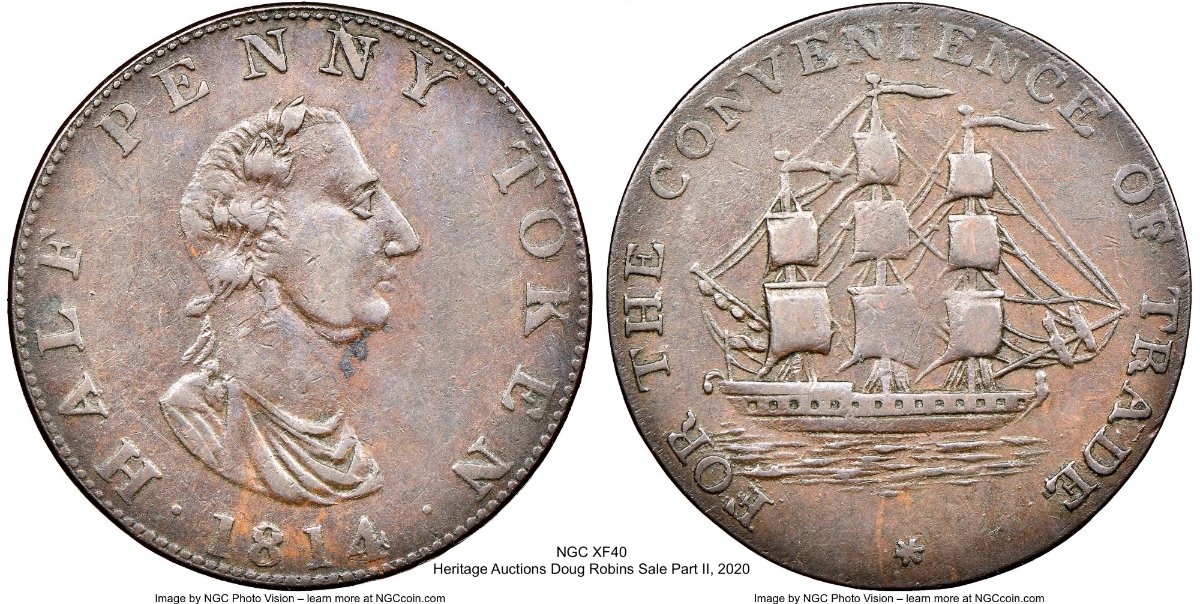 Mostlysilver Mostlysilver, looking at your 1850 Bank of Upper Canada Halfpenny that has "seen better days", I'm wondering if it is actually a contemporary cast counterfeit. Tough to gauge from the photo, but the pitted surface seems more aligned with that process rather than environmental damage, although I am far from an expert in the matter. Maybe someone more knowledgable can confirm this, since if it is cast counterfeit that would make it a very interesting piece! |
|
Pillar of the Community
United States
683 Posts |
A couple of weeks ago, Great Collections offered some certified tokens. There were some fairly nice / scarce examples available. I was able to acquire these two Nova Scotia pieces: NS-7A in AU55 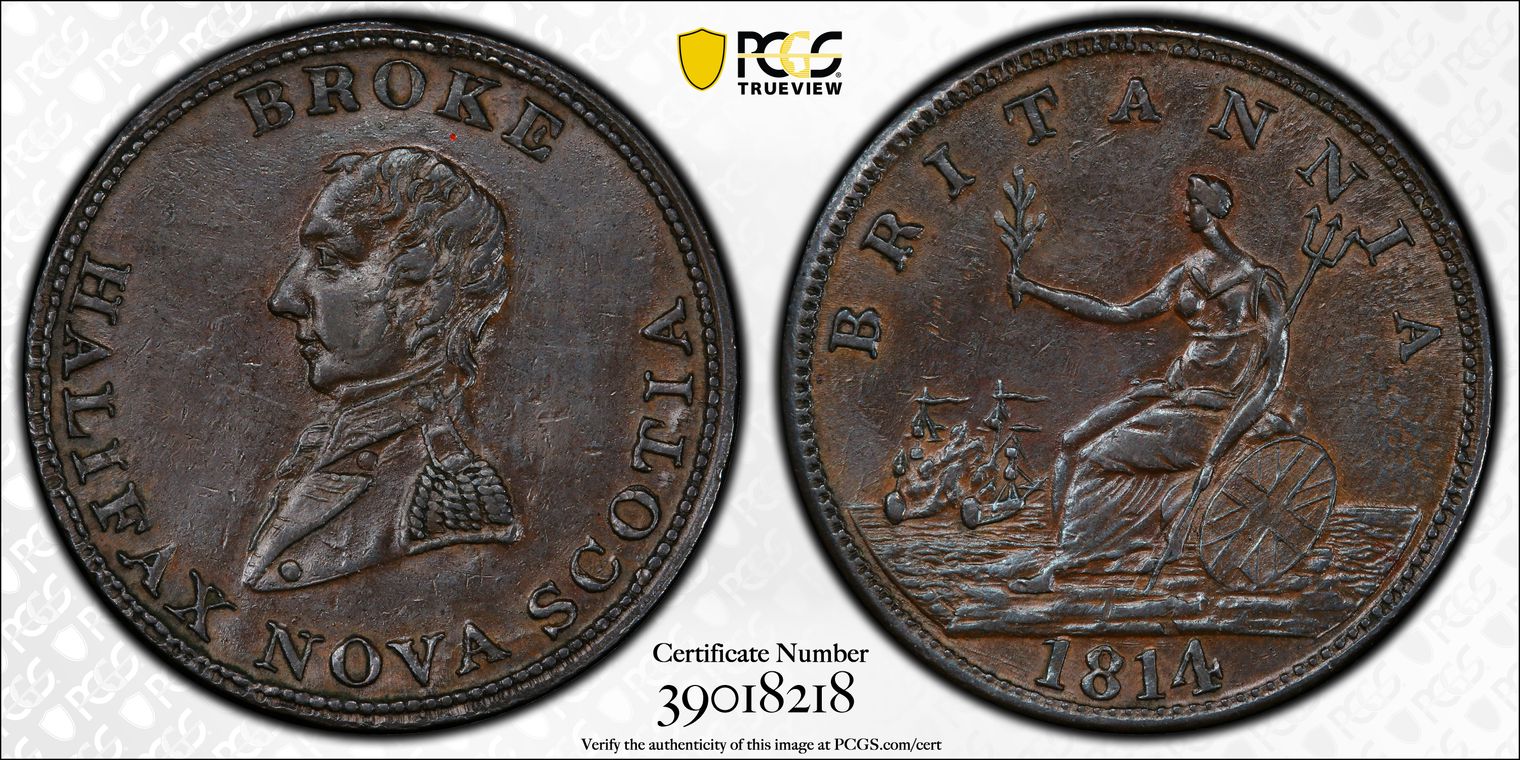 NS-23A2 in AU53 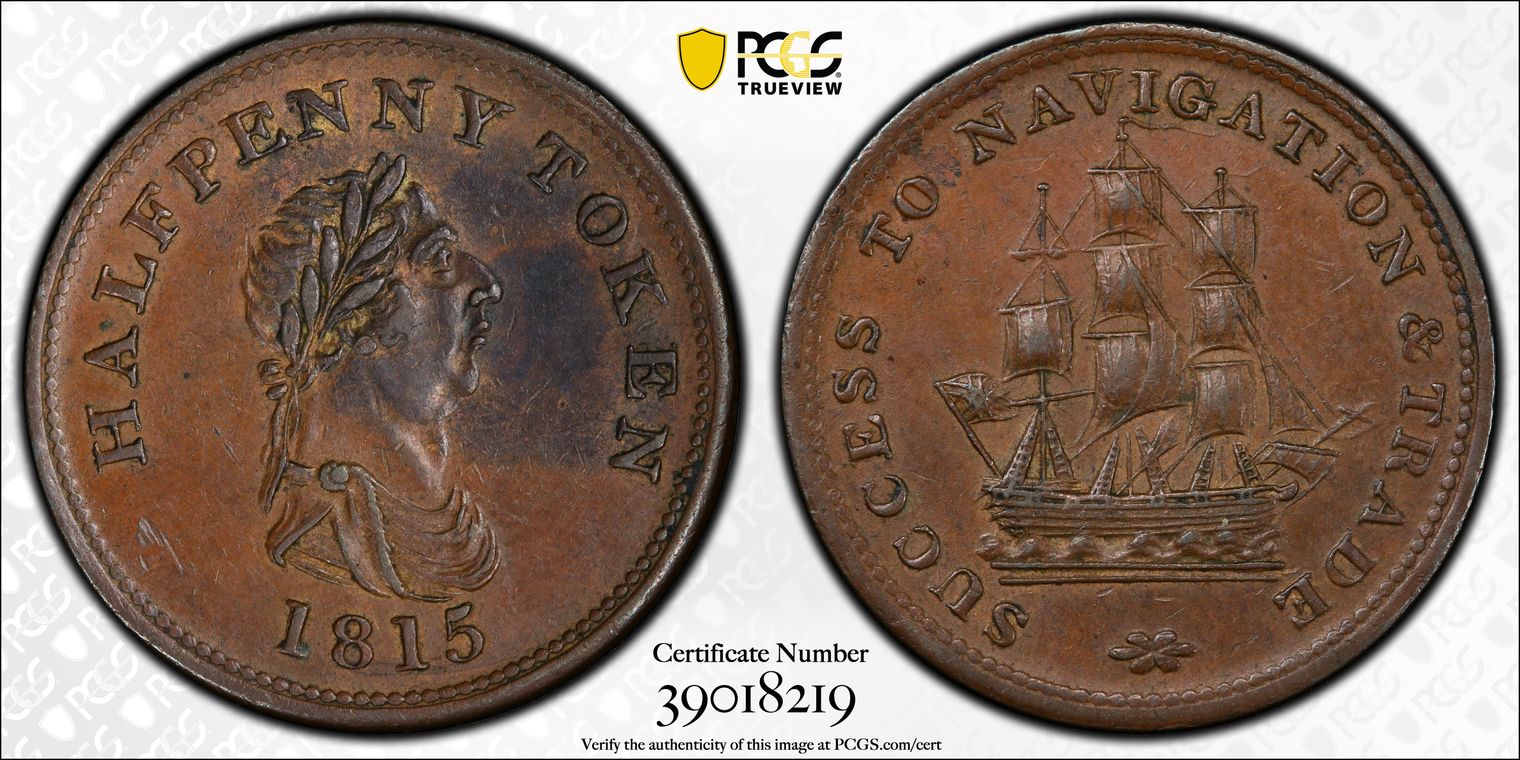 |
|
Pillar of the Community
United States
1077 Posts |
Whoa! Both are gorgeous pickups...and I'm only mildly envious, as that George III piece would be a nice upgrade for my Davis/Withers group.
"If everything seems to be under control, you're just not going fast enough."
--- Mario Andretti
|
|
Valued Member
United States
179 Posts |
Recently grabbed a few nice Ships Colonies & Commerce tokens, along with my first example of the Rebellion Sou! Breton 716 (LC-4A2) "Rebellion Sou" 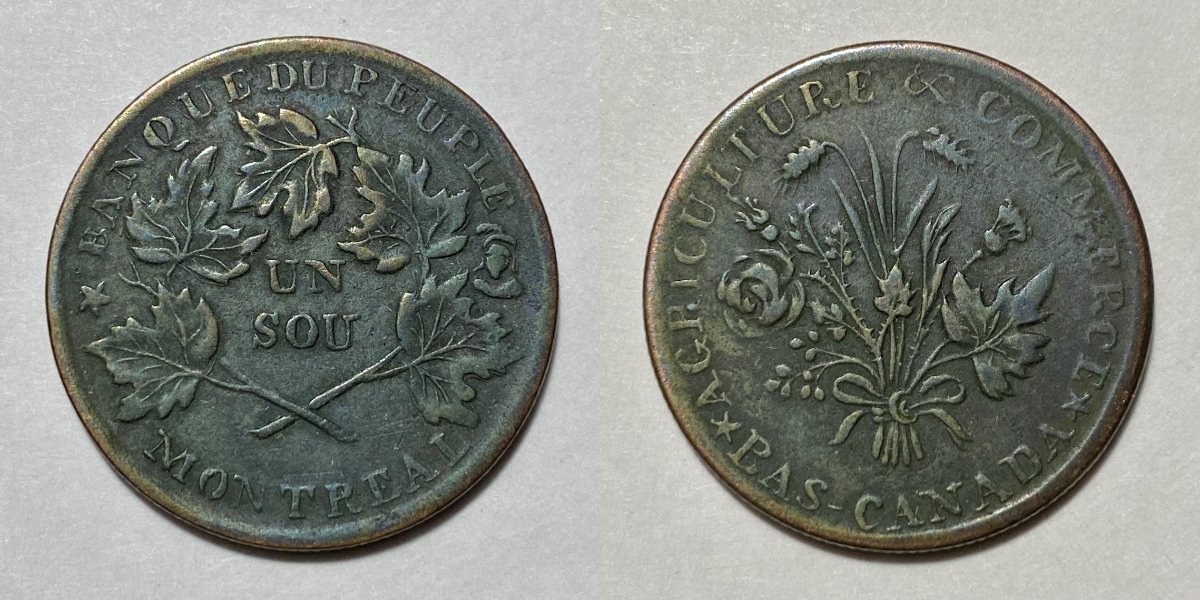 Lees 6 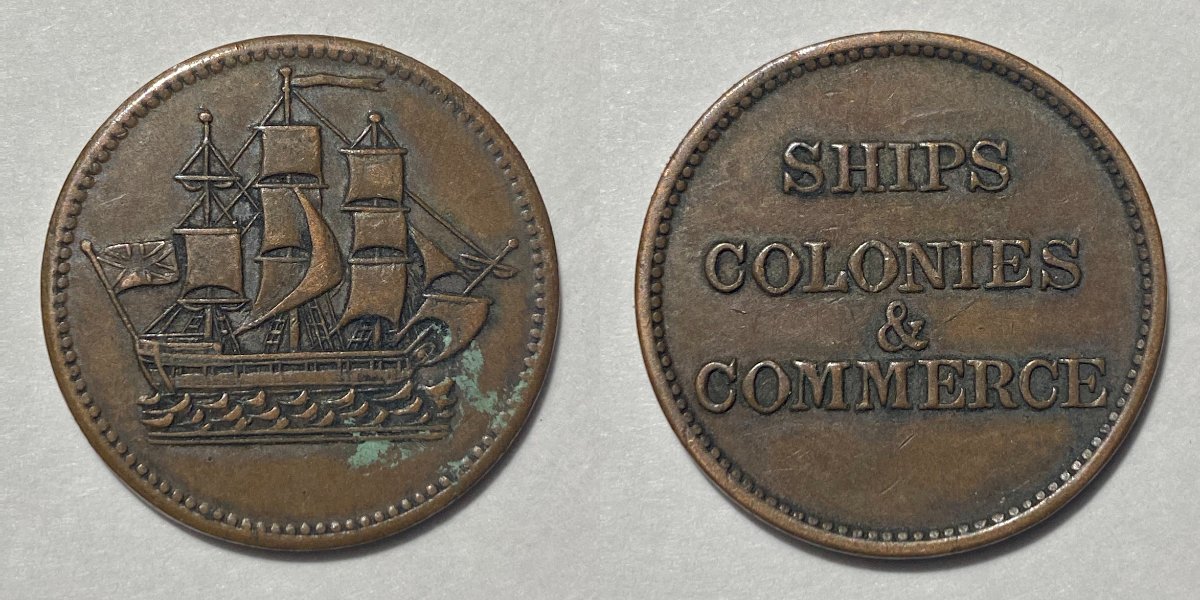 Lees 7 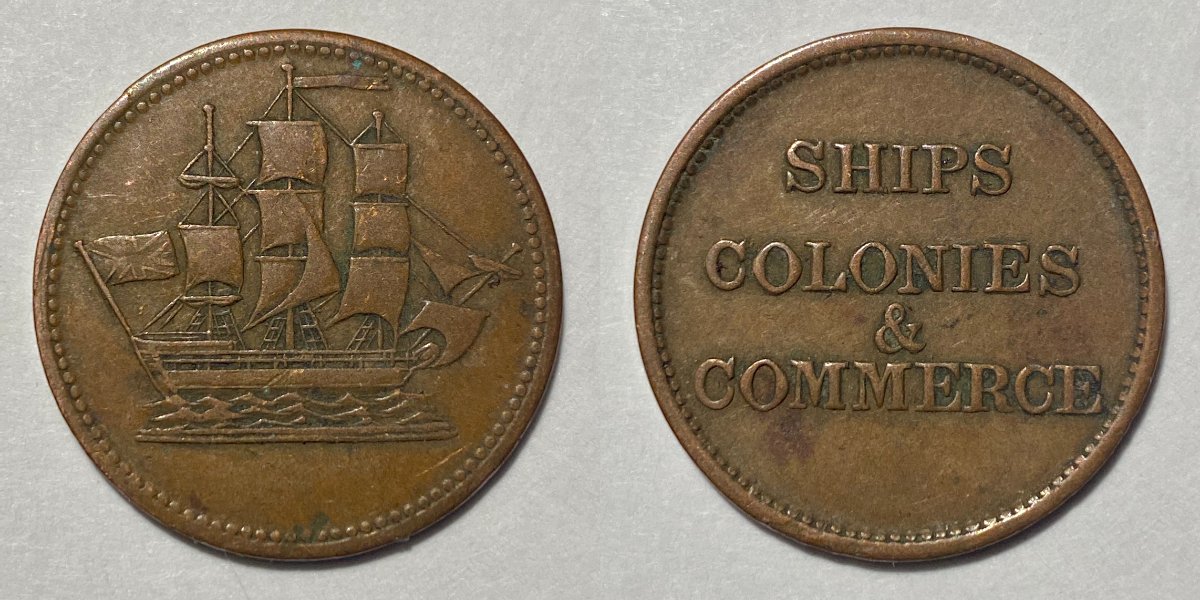 Lees 35 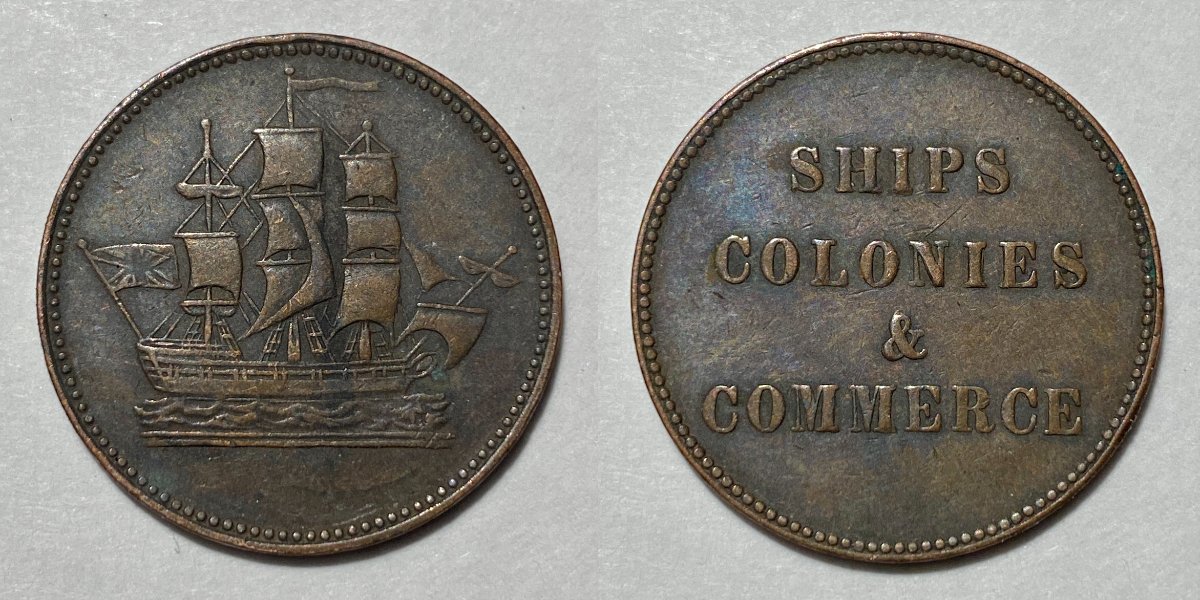 Lees 40 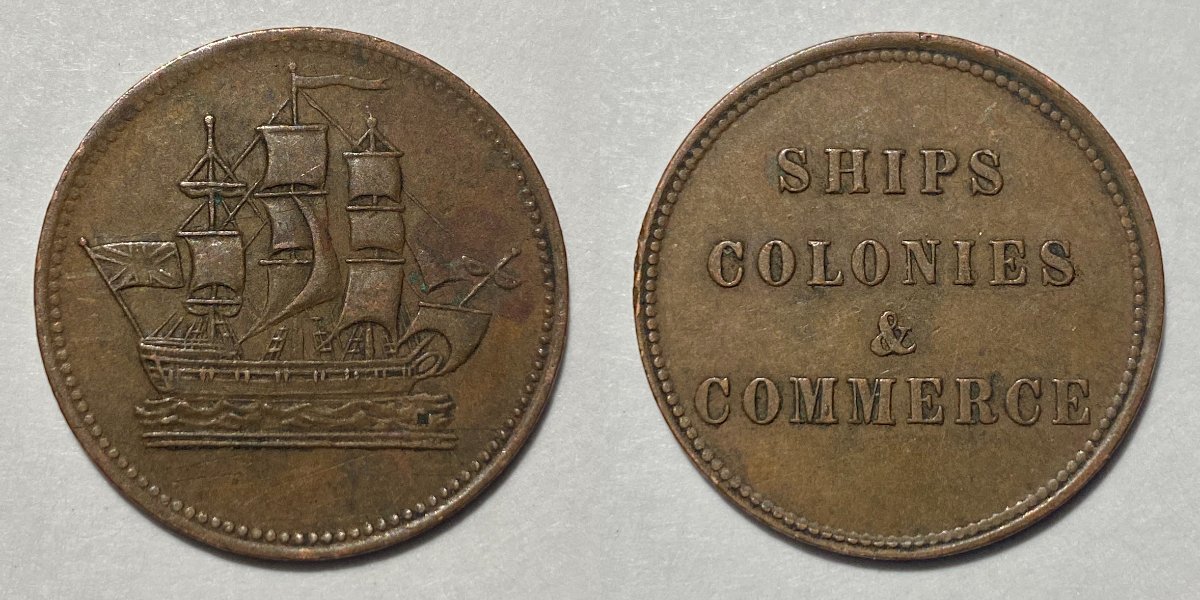 |
|
Moderator
 United States
195203 Posts |
Lovely adds.  |
|
Pillar of the Community
United States
1077 Posts |
 Not a series I'm familiar with, blargish, but it looks like it must be pretty difficult to tell the difference between the "normal" and the doubled mintmark, no? "If everything seems to be under control, you're just not going fast enough."
--- Mario Andretti
|
|
Pillar of the Community
United States
683 Posts |
Actually quite easy to tell the single vs. double H. If you see the the H that looks stamped into the bow waves as shown on Lees 35 + 40 pictured above then it will always be a double H variety with the other H in between the two parallel lines just below and to the right. On worn examples the H between the lines (this is actually the 1st H) tends to disappear.
|
|
Valued Member
United States
179 Posts |
As pointed out by 1960NYGiants it's pretty easy to spot the difference between the Single H and Double H groups (ie. Lees 22-33 and Lees 34-46 respectively). Both were issued by the Heaton Mint, who were responsible for Lees 9-46 as a whole. I post some close-up images below : Single H (in exergue lines) 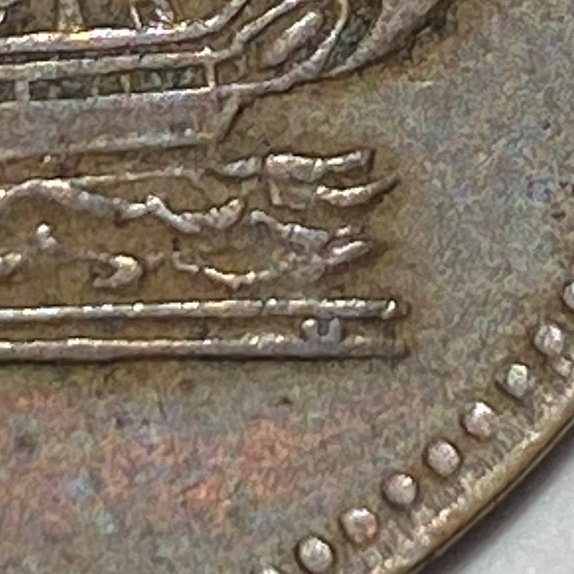 Double H (in waves and in exergue lines) 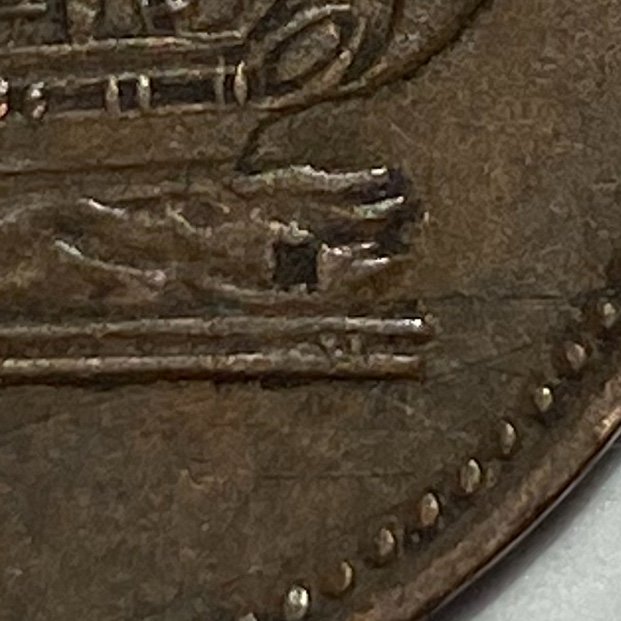 Individual varieties for these groups can be narrowed down with relative ease by variety of ampersand, border beads, font style, etc. The group that's a real nightmare to tell apart is the No H "Double Guy Group" (Lees 14 to 22) where you have a bunch of reverses that appear nearly identical and, in some instances, vary only by tiny differences in letter alignment! |
|
Pillar of the Community
United States
1077 Posts |
Okay, now I get it. I had to look at my Charlton (p. 33) to nail this down. My bad...you'll notice that in my first response to your tokens, blargish, I mentioned the normal mm and the "doubled" mm. That's "doubled" with a "d" on each end, so I wasn't looking for a double (i.e., duplicate) mintmark. Your comment, 1960NYGiants, began to clarify it for me.
Looks like it's not enough to just buy the book before the coin. You also have to read the book even when you don't collect the coin!
BTW, the flowcharts provided in Charlton for this series are fabulous. Something like that would be very helpful in distinguishing between and among "varieties" within some of the types of tokens I collect, as catalogued by Withers (1999) for the 1811-20 coppers, and by Dalton for the silver tokens.
"If everything seems to be under control, you're just not going fast enough."
--- Mario Andretti
|
|
Valued Member
United States
179 Posts |
Happy to finally get my hands on an original issue 1820 Bust and Harp. Likely the closest I will ever get to the 1825 or 1820/5 varieties! Courteau-23, LC-60-23 (previously LC-60B) 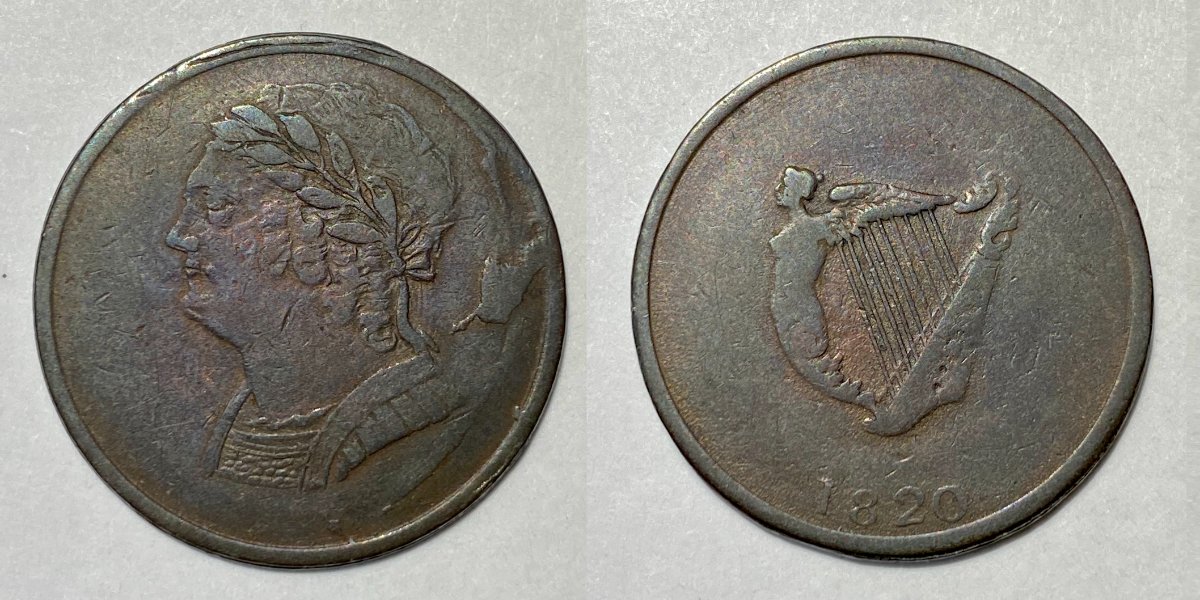 That obverse die sure had seen better days.. And regarding your comment on the flowchart Tom, a couple other series in the Charlton book could benefit from that treatment, namely the Bust and Harps and the Tiffins. Such a thing already exists for the Bust and Harps on coinsandcanada.com |
|
Moderator
United States
195203 Posts |
Quote:
Happy to finally get my hands on an original issue 1820 Bust and Harp. Very nice! |
|
Valued Member
United States
179 Posts |
And one more because why not? Breton 1012, Courteau 23, LC-60-23 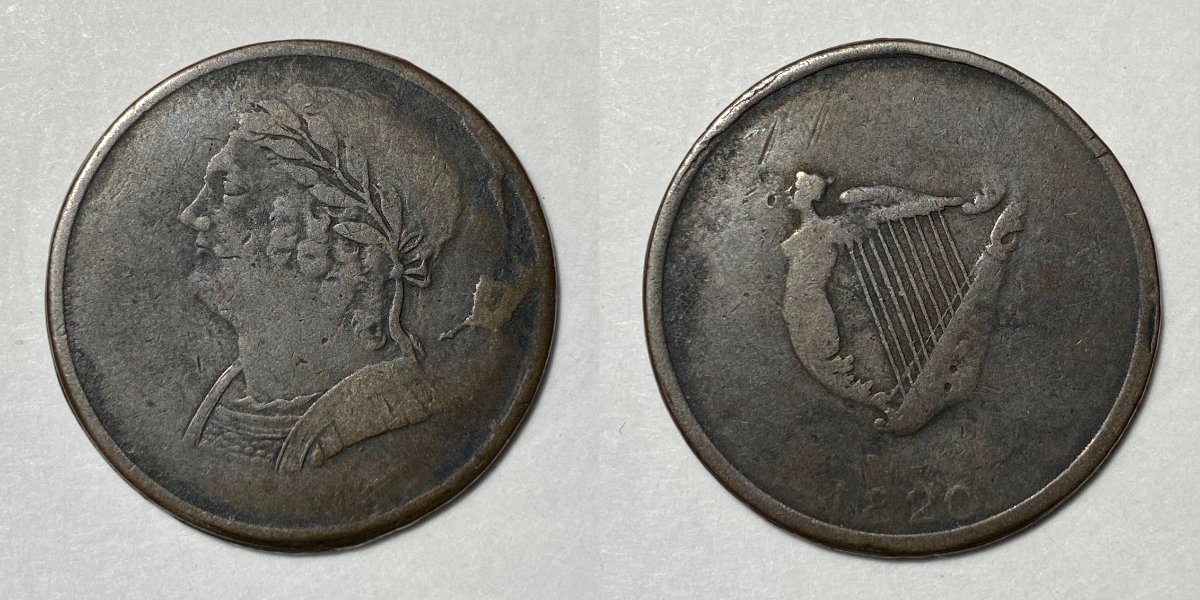 An earlier die state than the previous piece. |
|
Moderator
United States
195203 Posts |
Quote:
And one more because why not? Breton 1012, Courteau 23, LC-60-23 Excellent! |
|
Pillar of the Community
United States
683 Posts |
My latest addition: NS-17A1 PCGS MS63 finest graded by PCGS. 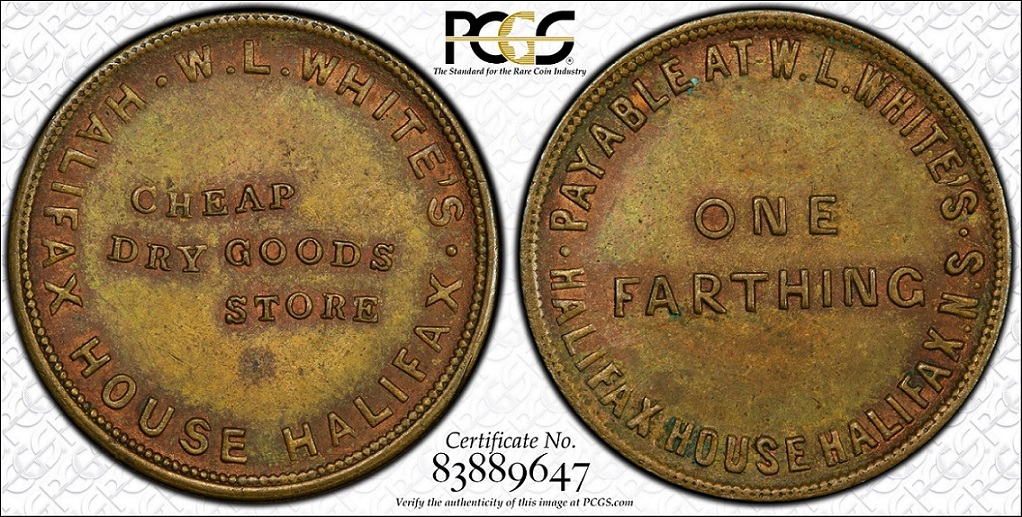 |
| |
Replies: 1,299 / Views: 152,243 |








 First Page
 Previous Page


 Posted 09/18/2020 10:39 am


