| Author |
 Replies: 1,087 / Views: 96,107 Replies: 1,087 / Views: 96,107 |
|
|
|
Valued Member
United Kingdom
150 Posts |
@walk2dwater That's a nice example of a Queen Medb £1 note. There are 67 dates for this note (1977-1989), 12,000,000 notes per date, except for a few which had lower printages. These were my favourite denomination of the Irish B Series. [sorry, I cannot work out how to do a Quote] Here is Lady Lavery on a £20 note, my favourite denomination of the Lavery series. [I expect Lady Lavery has been posted already in the topic, though I doubt on a 1943 £20 note]. 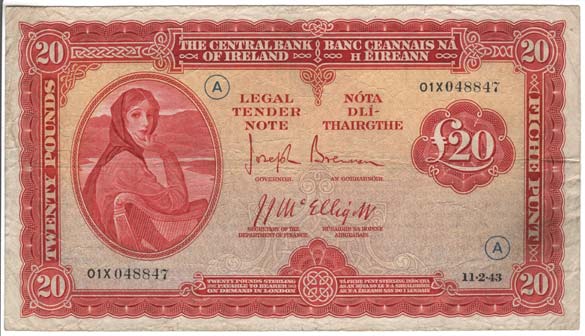 |
|
Moderator
 United States
198004 Posts |
Nice example!  |
|
Moderator
United States
198004 Posts |
Quote:
[sorry, I cannot work out how to do a Quote] How to QuoteIf you are using the Quick Reply box... 1. Type [qu
2. Paste the text you want to quote
3. Then type [/qu If you are using the Reply to Topic link... 1. Paste the text you want to quote 2. Highlight it 3. Then press the 'Insert Quote' button:  So this... [qu ote]Quoted Text[/qu ote] Looks like this... Quote:
Quoted Text |
|
Valued Member
United Kingdom
150 Posts |
@jbuck
Thank you for that - I knew it would be straightforward :)
It was the insert quote button I couldn't find.
|
|
Moderator
United States
198004 Posts |
You are most welcome!  |
|
Valued Member
United Kingdom
150 Posts |
Hibernia features as a portrait on many Irish notes. She appears in stereo on this classic design of Bank of Ireland banknote. 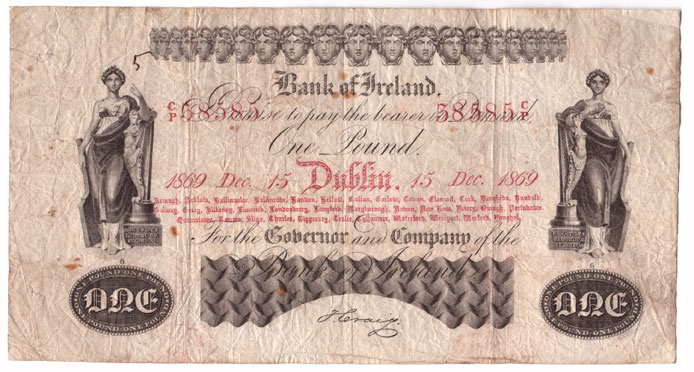 |
|
Moderator
United States
198004 Posts |
Quote:
Hibernia features as a portrait on many Irish notes. She appears in stereo on this classic design of Bank of Ireland banknote. Lovely example! |
|
Pillar of the Community
Canada
2657 Posts |
Quote:
Here is Lady Lavery on a £20 note, my favourite denomination of the Lavery series.
[I expect Lady Lavery has been posted already in the topic, though I doubt on a 1943 £20 note]. -that is one rare note! Can you please remind me what the circled A signifies? Here's a much newer £10 (P-66c) from the seventies: 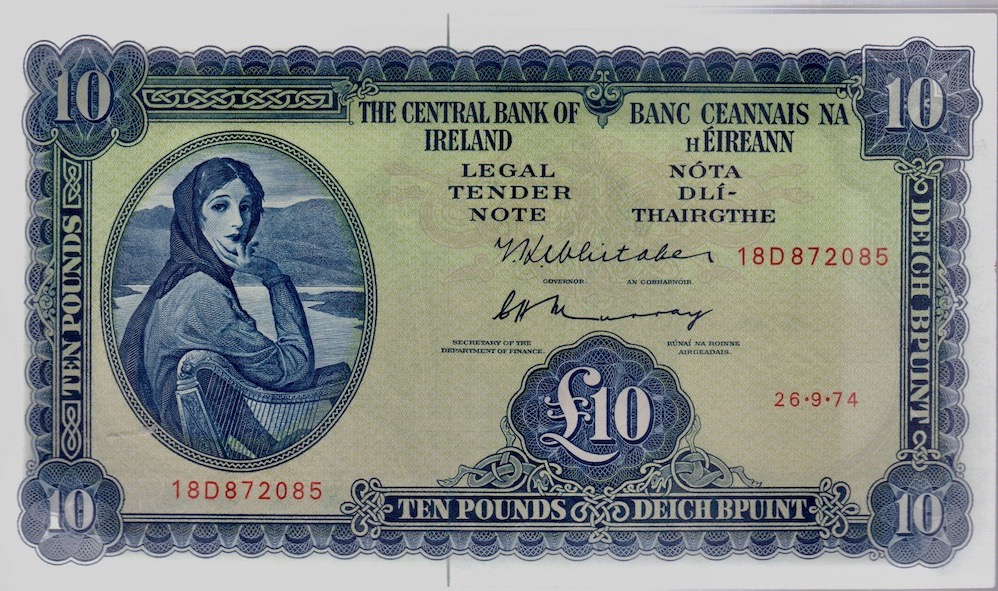 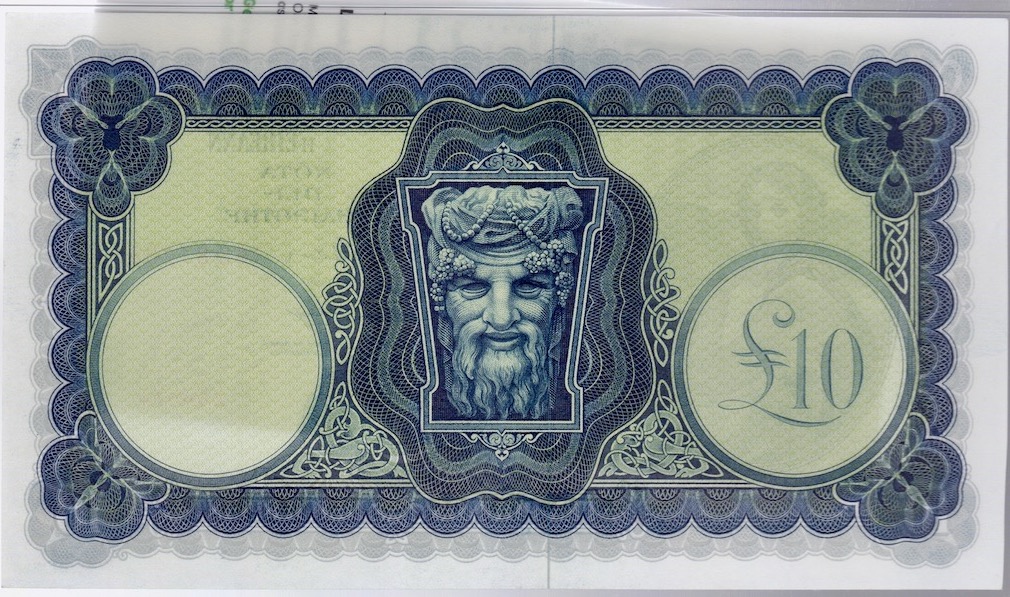 |
|
Valued Member
United Kingdom
150 Posts |
Quote:
Can you please remind me what the circled A signifies? The letter in a circle is a special marking used on the Irish Legal Tender Notes during World War 2 to track the production of the notes from printing in England (actively being bombed by Germany at the time) to Ireland. Every denomination in each print run was assigned a code letter. The idea was that all notes with a particular code could be cancelled if they were lost due to enemy activity. These war code notes occur with dates in the range 1940-1944. The full story on them is here: https://www.irishpapermoney.com/iri...e-notes.htmlThe £20 notes are rare, and lower denominations are tough to find in better than VF grade. Irish notes tended to get used up! I have seldom seen an example of any denomination in better grade than AU. I have never seen a strict UNC. Banknotes of Banque de Syrie et du Liban, Series 1939 printed by Bradbury Wilkinson also made use of special markings on their notes for the same reason. Here's a first date with Lady Lavery on it. 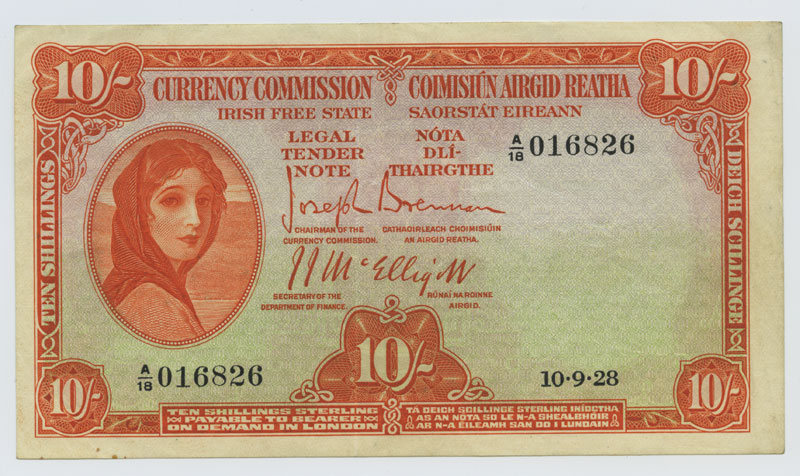 |
|
Moderator
United States
198004 Posts |
Quote:
The letter in a circle is a special marking used on the Irish Legal Tender Notes during World War 2... notes with a particular code could be cancelled if they were lost due to enemy activity. A very interesting it of history. Thank you for sharing this, and thank you both for your recent examples. |
|
Pillar of the Community
Canada
2657 Posts |
-Thanks for the explanation @Orac. I thought it had something to do with WW2 but just couldn't remember. I like that "Irish Paper Money" site too. Quote:
The £20 notes are rare, and lower denominations are tough to find in better than VF grade. Irish notes tended to get used up! I have seldom seen an example of any denomination in better grade than AU. -yes, I have rarely seen them in grades above VF myself. That first date 10 Shilling is in amazing condition. I've never seen such early Irish notes in such great shape until you started posting yours. The only reason that I don't pursue the large size £20 is that my £10 is large enough & I'm afraid it will sit idle (like my white fiver) on its own, & be further ignored rather than in my personal album where I can enjoy it. I know that's a rather lame excuse but I'm sticking to it, & since my recent foray into Irish notes, a lot of other notes I've wanted are no longer in the picture. My Irish notes just keep blowing my budget. Perhaps if I win the Lotto... Here's another Lady Lavery £5 which I picked up & posted earlier in the year: 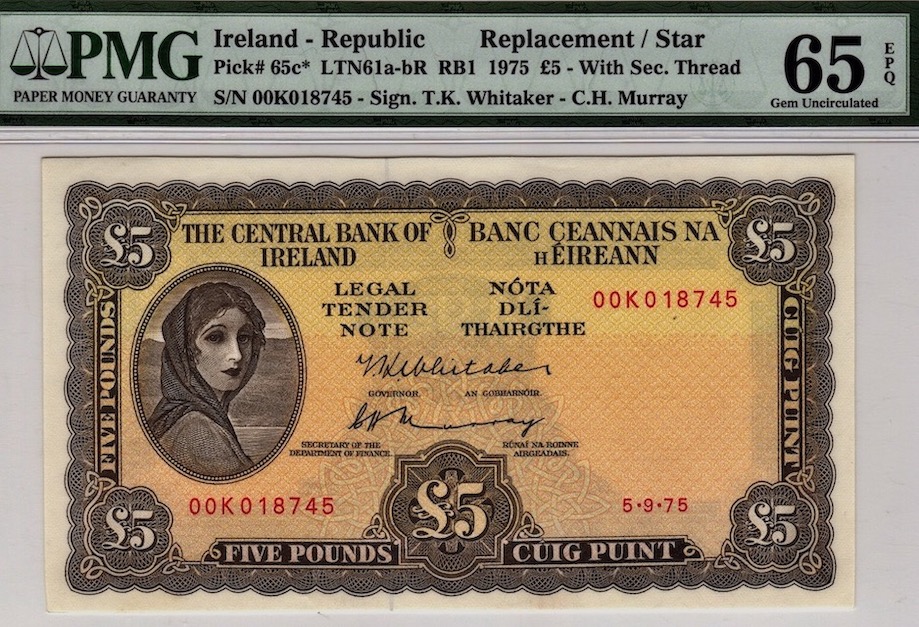 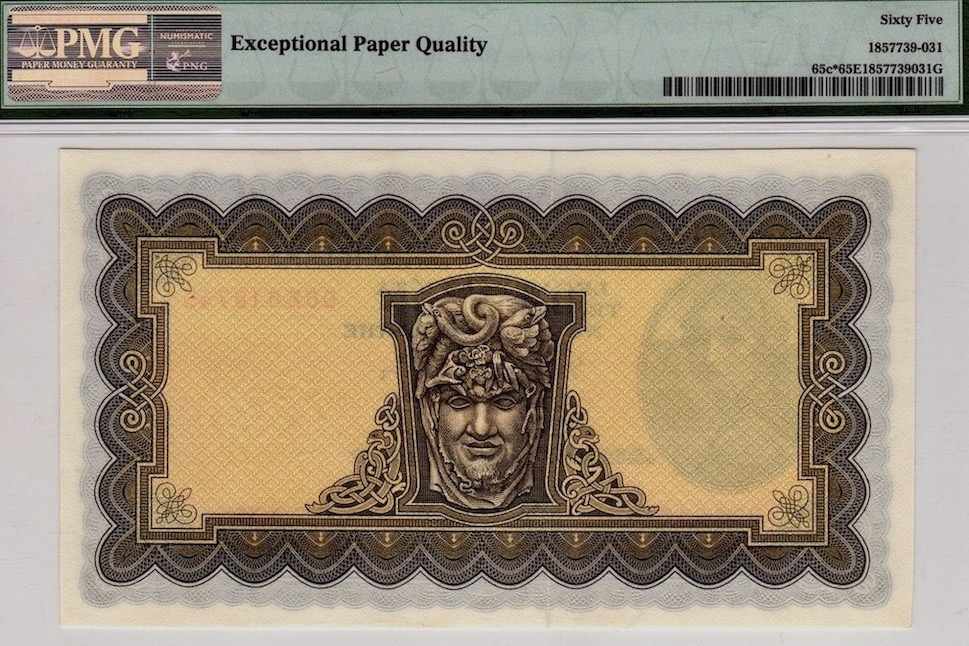 I believe it has a replacement prefix. I am a big fan of the reverse "river god" designs too & my family emigrated from Ireland 2 centuries ago before settling in Canada. |
|
Valued Member
United Kingdom
150 Posts |
That's a nice 00K you have. There are a few very small runs of those in UNC, that I know of. I have seen about 10 examples in all. Replacement prefixes for the Lavery notes are as follows: £1 S, 00A; £5, R, 00K; £10, T; £20, V. The £20 is rare in any grade, and four UNC examples are known to me. The R £5 note is also quite a rare note. The highest number I have seen recorded is R 147943, which is higher than the highest 00K, at 060247. Perhaps people missed the R when it came out, though it was reported ion Irish Numismatics at the time. Irish replacement note number info here: https://www.irishpapermoney.com/iri...t-notes.html It is also in various books, not sure if SCWPM includes it. Anyway, staying on topic, today's Lady on an Irish note is, um, Queen Victoria! 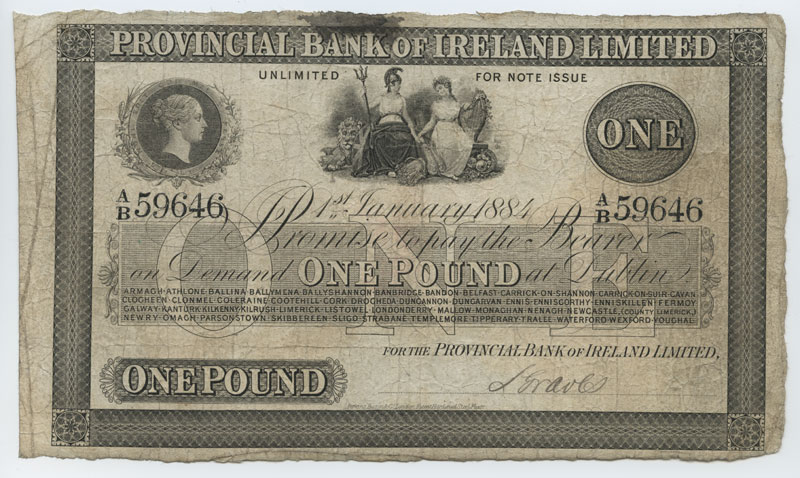 |
|
Moderator
United States
198004 Posts |
Quote:
Anyway, staying on topic, today's Lady on an Irish note is, um, Queen Victoria! Nice example! |
|
Valued Member
United Kingdom
150 Posts |
Actually, this note has three women on it! Queen Vic on the left, and Britannia & Hibernia in the centre.
|
|
Moderator
United States
198004 Posts |
I missed that myself.  |
| |
Replies: 1,087 / Views: 96,107 |




 First Page
 Previous Page


 Posted 11/08/2021 12:15 pm





