| Author |
 Replies: 23 / Views: 8,114 Replies: 23 / Views: 8,114 |
Page 2 of 2
|
|
|
|
Pillar of the Community
743 Posts |
I vote partial missing clad layer. I highly doubt it is PMD because it would be very hard to separate the clad layer. |
|
Pillar of the Community
Canada
2632 Posts |
I cant look at this and not think its PMD. Looks like it got jammed in a machine. IMO 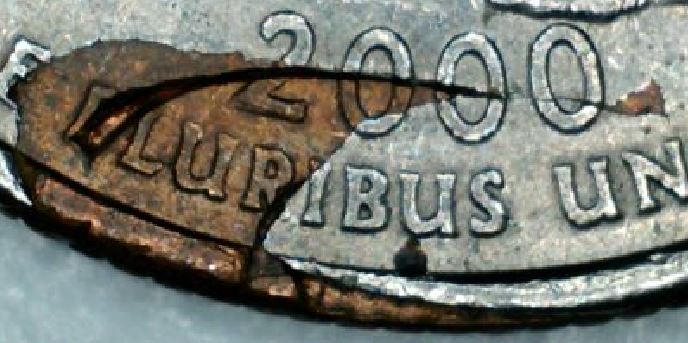 Edited by Alexer
03/28/2014 02:46 am
|
|
Bedrock of the Community
United States
12437 Posts |
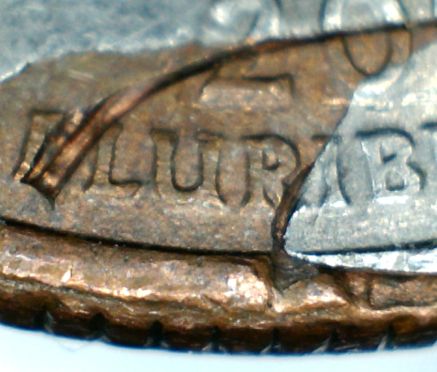
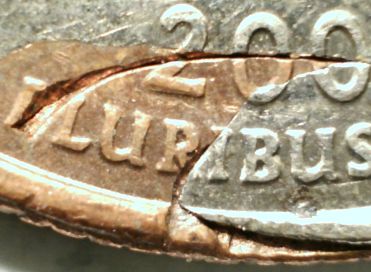
A machine jam will not typically break off a thick clad layer, this is not a thin layer of plating. Even if it did somehow manage to break off, you would see rough upturned edges on the cladding where it was sheared. The devices would also be mushy and indistinct if the cladding was separated post-strike. The appearance is entirely consistent with a pre-strike event. Look at coop's image and take note of the distinct difference in appearance between pre- and post-strike separation: 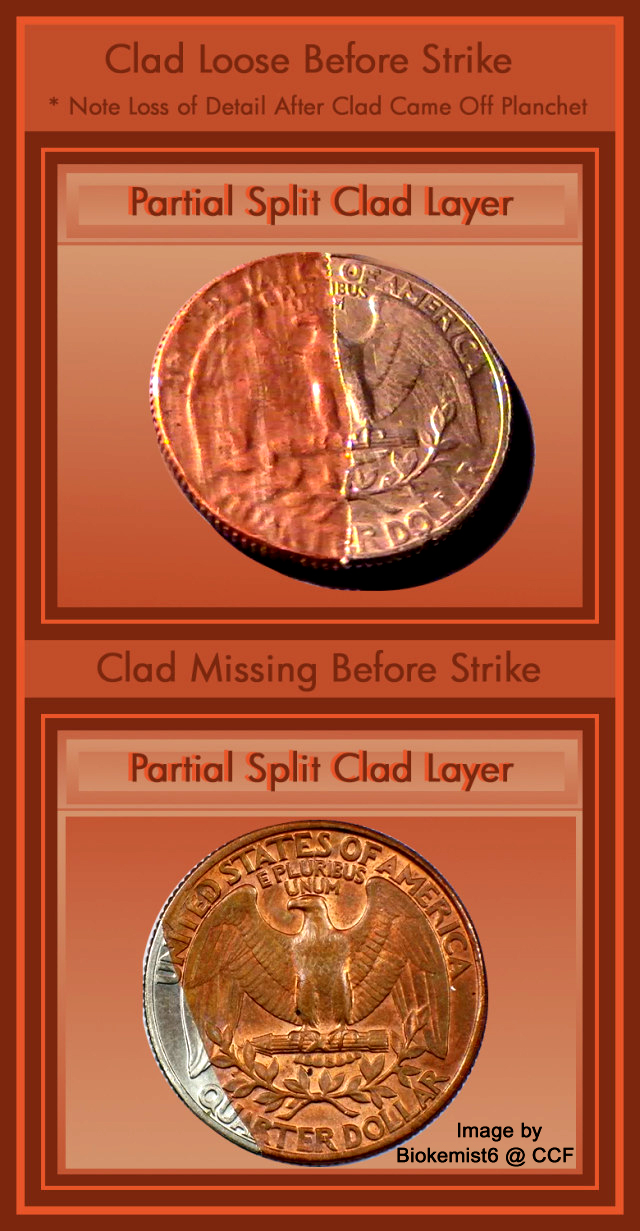 Edited by biokemist6
03/28/2014 11:57 am
|
|
Bedrock of the Community
United States
62064 Posts |
I agree. The clincher for me was the strength of the devices on the clad missing area. Good job everyone.
|
|
Pillar of the Community
 United States
1031 Posts |
|
|
Bedrock of the Community
United States
12437 Posts |
I think it is a nifty little error, not a huge premium but it certainly has value  |
|
Pillar of the Community
Canada
2632 Posts |
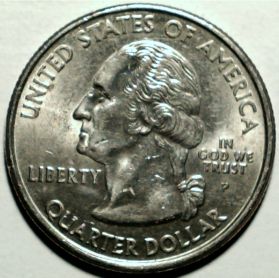
I totally respect everyone's opinions here that's what makes this a great forum. But now that I've seen the obverse I'm still not convinced its an error. I have several good questions as to why..how? But I must be the only one, sorry bout that.  |
|
Pillar of the Community
743 Posts |
Pennyman007, explain to us how the devices were not wiped out by the machine jam as you call it. That is the determining factor as Coop said.
Kris
Edited by 7TF
03/29/2014 02:45 am
|
|
Bedrock of the Community
United States
62064 Posts |
If it were PSD, the obverse would be disturbed. It would be pushed out where the opposite side was cut deep into the planchet. We see nothing like that on that side. So it had to happen before it was struck. |
|
Pillar of the Community
United States
2752 Posts |
A bristle from a rotating descaling brush was rolled into the coin metal strip. It may have been rolled in after the strip left the bonding mill, or it might have been trapped between the core strip and one clad strip as the two entered the bonding mill. In any case, the piece of "wire" split the clad layer. The wire fell out before rolling of the composite strip was completed, and so the groove was partially closed up.
Error coin writer and researcher.
Edited by mikediamond
03/29/2014 09:00 am
|
|
Bedrock of the Community
United States
62064 Posts |
Thanks Mike for the reason for the mark. Always nice to add to our information.
|
|
Pillar of the Community
Canada
2632 Posts |
Thats fantastic now I understand how it could happen. Knowing its an error is one thing but explaining how it happened puts things in prospective for all of us. Thanks mikediamond for your explanation. Its pretty hard to learn if you dont know how it could have happened. End of story Thanks everyone.
|
|
Pillar of the Community
United States
1804 Posts |
Lincolnguy....... Quote:So it is only part PMD? What do you mean? IMHO it is an error coin. After it left the mint ... more " might" have happen to it. If I had to make a life or death choice it is an error coin. IMHO it is worthy of an ERROR collectors Quarter collection. Errors are the opposite of MS101. I LOVE IKES ... I LOVE ERRORS |
|
Pillar of the Community
United States
1031 Posts |
Thank you mikediamond for the detailed explanation of the process and how this happened. I will note a bristle from a descaling brush on the 2x2 for future reference.
|
|
Pillar of the Community
Canada
2632 Posts |
docfishn - thanks for posting this unique and scarce error. I'm glad I pushed it to the point where Mike had enough of my bull headedness and provided us with an answer. 
|
|
Page 2 of 2
|
Replies: 23 / Views: 8,114 |
Page 2 of 2
|






 First Page


 Posted 03/28/2014 02:45 am