| Author |
 Replies: 25 / Views: 4,128 Replies: 25 / Views: 4,128 |
Page 2 of 2
|
|
|
|
Pillar of the Community
613 Posts |
Ok,I think I see the big differences.
1.Does the Field/Image look Blurred
2.Does the Field pitch up to the Rim&Rounded Rim
If so Struck Though Die Cap.
2 more too a lot more Questions?
1.Is there a Error that is likely/close looking to other then:
*Struck Through Die Cap
*Struck Through Grease
*?_____________________?
And
2.Is the Die Cap a Cap?
3.What does the Die Cap Look like?
4.How thick is the Die Cap?
5.Are they tore up after the first strike?
6.How many times can the Run of Coinage be Struck Through the same Die Cap before it get taken off the Die/Removed?
7.How do they remove the Die Caps?
8.What year/years have been zero down to produce most/likely Struck Through Die Cap?(Cent/Nickels/Etc)
I think that is it as far as the questions I can think of,that I am now wondering about.
Anything I am not wondering about that is some more info about STDC,let me know.
O,by the way I do not like them,sorry never been interested in them other then I know they are pretty rare. That I do like but not the coins themselves this is part of why I know very little about them.
Thanks for the above info/links:Pyrbob&SsuperDdave
|
|
Pillar of the Community
613 Posts |
I have some Art Work I have to do,for a few hours. I will come back in a few hours to check on any replies,Thanks.
|
|
Bedrock of the Community
United States
62064 Posts |
With the die capped, the edges of the die are not strong. They kind of round toward the edge. Noe on this coin: 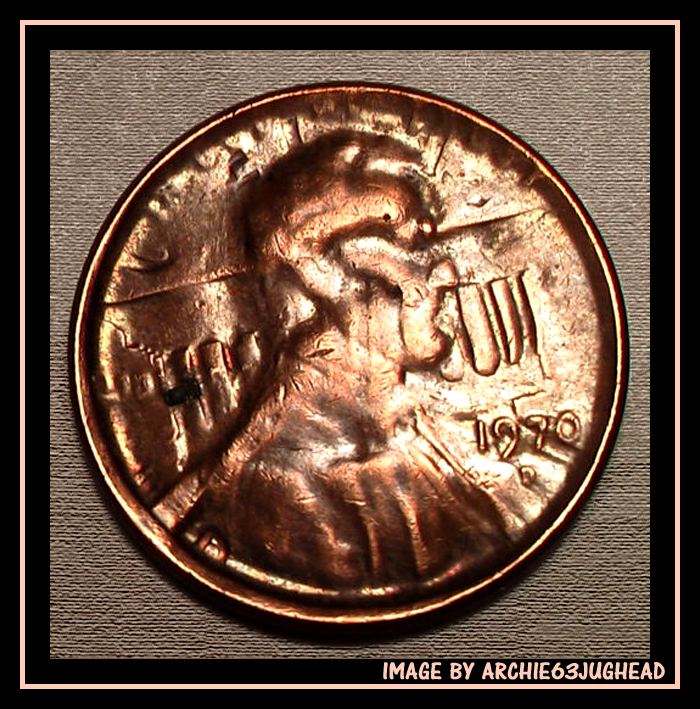 |
|
Pillar of the Community
613 Posts |
Ok,yes the more I see the Struck Through Die Cap coins the better for sure.
|
|
Pillar of the Community
United States
4932 Posts |
1st is definitely struck through capped die. I found one myself (2000 D) and they have a decent premium. $50-100.
|
|
Pillar of the Community
613 Posts |
Can anyone help me with my Questions. If not I understand no biggy. I am interested in the ? I have asked about.
Edited by Silverworld11
03/17/2015 1:35 pm
|
|
Pillar of the Community
United States
1699 Posts |
Quote:
1.Is there a Error that is likely/close looking to other then:
*Struck Through Die Cap
*Struck Through Grease
*?_____________________?
And
2.Is the Die Cap a Cap?
3.What does the Die Cap Look like?
4.How thick is the Die Cap?
5.Are they tore up after the first strike?
6.How many times can the Run of Coinage be Struck Through the same Die Cap before it get taken off the Die/Removed?
7.How do they remove the Die Caps?
8.What year/years have been zero down to produce most/likely Struck Through Die Cap?(Cent/Nickels/Etc)
I'll try to tackle some of these questions. 1. There are a few other errors that cause similar weakness/blurred details on one side of a coin. I believe these would be limited to coins struck through things other than grease (split planchets, cloth, plastic, other coins or planchets, clad layers, etc.) 2. Not exactly sure what you mean here. It's a cap in the sense that it covers the striking surface of the die. It's comparable to a bottle cap on a glass bottle. 3. Die caps vary in the shape that they acquire. Some form large walls where the planchet morphed around the die neck. Others only form mild cupping. 4. Die caps tend to thin out as they strike more coins. They can be very close to the thickness of a normal coin and can wear out to a point that they're so thin that they tear apart. 5./6. Die caps, by their definition, strike at least one coin after being attached to the die. It is possible that a die cap strikes only 1 coin, but I believe they could strike 100 or more. I have a run of about 10 struck through die cap cents (like yours) that came from a collection of about 60 that were produced from the same die cap. 7. I'm not sure how they are removed. In many cases, they fall off or tear apart after striking. I'm sure in some cases, caps were manually removed by press operators. 8. I've not paid much attention to the specific dates/mints/denominations that are found with die caps and struck through die cap errors. I know struck through die cap errors are really common from the late 1960s to late 1990s on cents and nickels. Dimes are a little less common. Quarters, halves, and dollars are probably the rarest. I'm sure others will have more accurate information as to the relative rarity of these errors between dates, mints, and denominations. |
|
Pillar of the Community
613 Posts |
Cool ErrorCoins222,that is great. Now I have a better understanding of Die Caps and much more.Thanks for time with this.
|
|
Moderator
 United States
23522 Posts |
Quote:
Can anyone help me with my Questions. If not I understand no biggy. I interested in the ? I have asked about.
I usually post from my phone here. There is no way I was taking this on from my phone.  Quote:
Ok,I think I see the big differences.
1.Does the Field/Image look Blurred
2.Does the Field pitch up to the Rim&Rounded Rim
If so Struck Though Die Cap. Good start. Keep in mind, there's a coin stuck to the other die and it's repeatedly slamming the new planchet in the chamber. There are many ways that strike can move details, from details on the capped coin itself being transferred to details of the die under the stuck coin seeping through and directly striking the planchet. The nature of the strike process means metal flows from the center outward - to the extent that dies can be "basined" (given a concave cross-section) so that the periphery finishes well. That still happens under a cap, but there are no sharp details to neatly force the metal against the collar. So, unlike grease, it radiuses. It's actually "splashing" at that point against the limits of its' travel. Quote:
1.Is there a Error that is likely/close looking to other then:
*Struck Through Die Cap
*Struck Through Grease
*?_____________________? Superficially the heaviest greasers are easily mistaken for capped-die lower coins (the one getting hammered by the stuck coin). The difference is, grease is a liquid which follows the laws of physics governing liquids. Even under the intense speed and pressure of 150 strikes per minute plus at 150 tons of pressure, it will still seek the lowest area. It'll flatten and fill devices before spilling out into fields, and once in fields it will impact a large flat area in shallow fashion before it will create any deep impression in a field. You can see a much more geometric regularity to greasers. There are rare exceptions, understanding that a coin strike is a weird area of physics because even the metal is behaving like a liquid at this point. Quote:
2.Is the Die Cap a Cap?
3.What does the Die Cap Look like?
4.How thick is the Die Cap?
5.Are they tore up after the first strike?
6.How many times can the Run of Coinage be Struck Through the same Die Cap before it get taken off the Die/Removed?
7.How do they remove the Die Caps?
8.What year/years have been zero down to produce most/likely Struck Through Die Cap?(Cent/Nickels/Etc)
Two coins (usually) are involved, the one that gets stuck - the Die Cap - and the one it's being struck onto (the Brockage). A brockage actually has the reversed image of the stuck coin on it. One cap can strike a few brockages, but quickly it wears into something that's just hammering basic nothingness onto the lower coin. At that point the lower coin is called a Capped Die Strike. As you visualize the process, understanding that the Capped Die can last more or less long - yeah, they usually get caught but some slip through and some get released deliberately - you can see how what the lower coin and what the Cap look like can vary tremendously. The Capped Die thins as it's repeatedly struck, and those things can start looking like thimbles. They're spectacular. That's a start, anyway, and hopefully others will chime in. |
|
Valued Member
United States
450 Posts |
Interesting coins. You might check the 1943 P and make sure it's a 1943/2 nickel. I can't see enough of the date to tell.
I am always trying to find one of those.
|
|
Pillar of the Community
613 Posts |
Ok,cool more info. Thanks for the reply,SsuperDdave. I will keep a eye out for more reply's on this thread,
@bryttnishae,hope you are ok with the over taking of Die Cap info being posted in this thread of yours,it is helping me and I hope others here.
|
|
New Member
 United States
32 Posts |
I'm absolutely ok, very new to the coin scene, however addicted already haha. Waxemm I will take another photo of the year for you on the 43 p nickle
thanks for everyone's feedback . So the nickle I found the error coin it's worth 50-100$ ?
|
|
Pillar of the Community
United States
1699 Posts |
You would be lucky to get even close to $50 for this error. I would say it is closer to the $20 - 30 level.
|
|
Valued Member
United States
449 Posts |
Am I losing it or do I see a 1943/2 on the silver War Nickel. bryttnishae could you try to post a really close up image of the date on the 1943 silver nickel? |
|
New Member
United States
32 Posts |
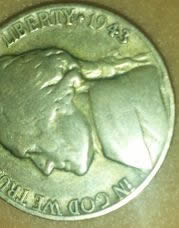 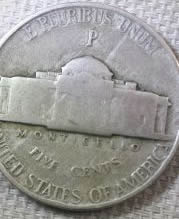 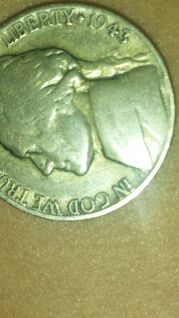 Waxemm here's the photos Anyone know what the line on the back is? |
|
Page 2 of 2
|
Replies: 25 / Views: 4,128 |
Page 2 of 2
|




 First Page

 Posted 03/16/2015 5:24 pm





