| Author |
 Replies: 52 / Views: 5,836 Replies: 52 / Views: 5,836 |
|
|
|
|
Bedrock of the Community
United States
12057 Posts |
I'm like my Dad, if I'm not reading at least 3 or 4 books a week, check me for a pulse. Always gotta be learning. :)
Member ANA - EAC - TNA - SSDC - CCT #890 "Most of the things worth doing in the world had been declared impossible before they were done." -- Louis D. Brandeis |
|
Moderator
 United States
197031 Posts |
|
|
Pillar of the Community
United States
2077 Posts |
Quote:
Your expertise on clocks or your expertise on gears in general..and their various uses?
I don't have experience in gears for various applications..do you?
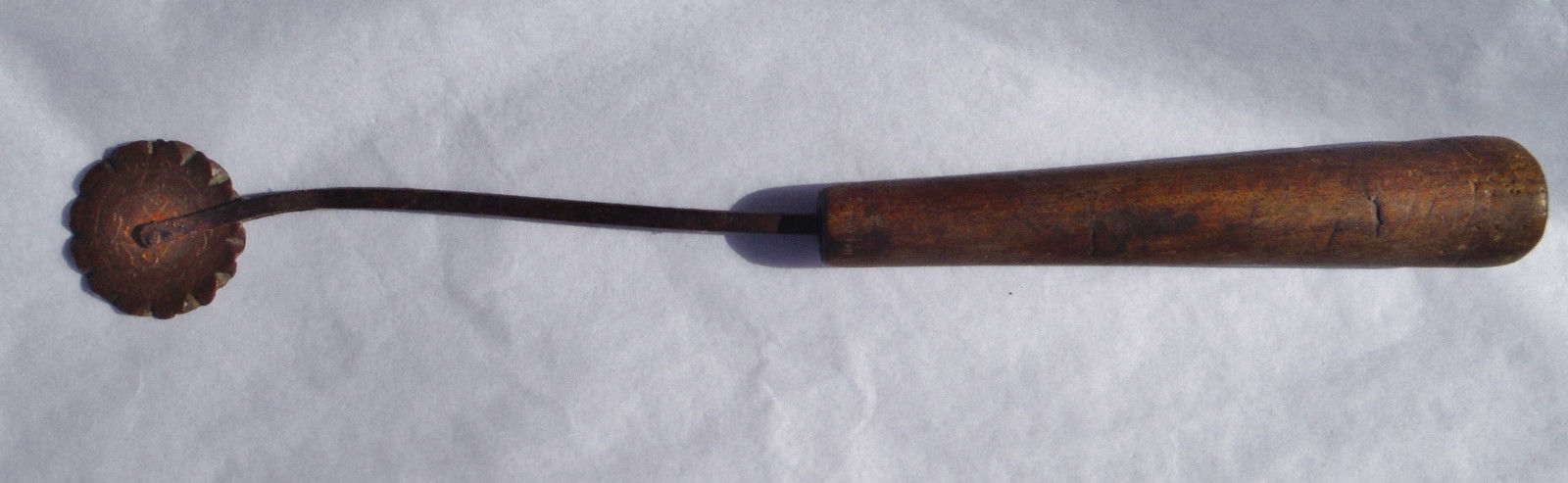
That's what I'm trying to establish. Then, what are these and why were they made in your opinion? I had training in gear design way back in my ME classes, but most of my practical experience is with clocks. There are three things that tell me it was not a clock gear, nor were any of the others in the link (besides the ratchet wheel). A gear needs to make contact with the mating pinion with multiple teeth on order to carry load without breaking. This requires a fairly deep root, which none of these have. A gear also needs extremely precise spacing on the teeth to operate with constant inertia and minimal backlash. Again, these do not exhibit that. Dividing wheels have been around for over 300 years and can be used to create gears precise to fractions of a degree. Lastly, the hole in the center isn't large enough. Clock gears aren't fitted directly to shafts. They are fitted to a larger shoulder and staked into place. Given the thickness of the cent and diameter of the hole, an adequate (non slipping) fit would be impossible. Also, in early movements, the only wheel that even comes close to the diameter of an LC is the escape wheel. This is the one that engages with the pallets and must be light, precise, and have extremely deep roots. Here's a picture to show how far off these are from an escape wheel. 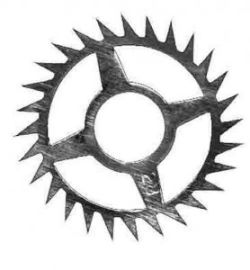 These coins all share enough similarity to show that they served some regular purpose in early American life. Strange that none exist attached to whatever mechanism with which they were used. I have never heard of anyone pulling back a clock dial and seeing a large cent as part of the movement, although I did see one with a Wheat cent soldered to the plate to fix a worn bushing. I'm going with pie crimper. I like pie. Edited by OldSkoolMadSkilz
08/25/2015 12:58 am
|
|
Pillar of the Community
United States
2077 Posts |
Pie Crimper 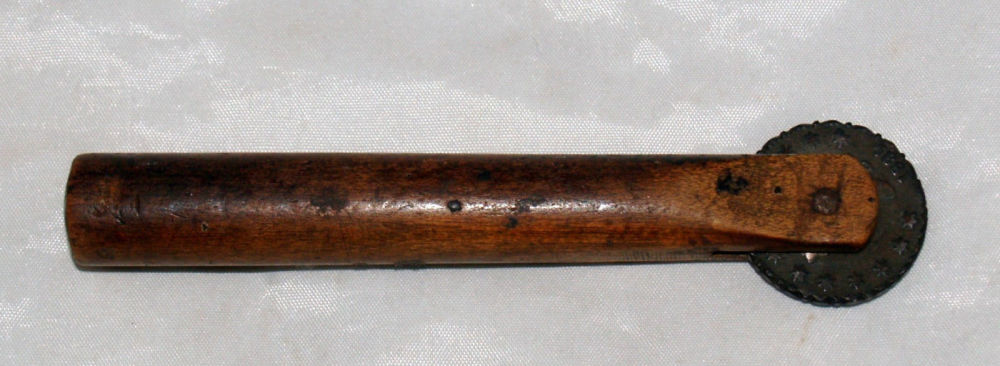 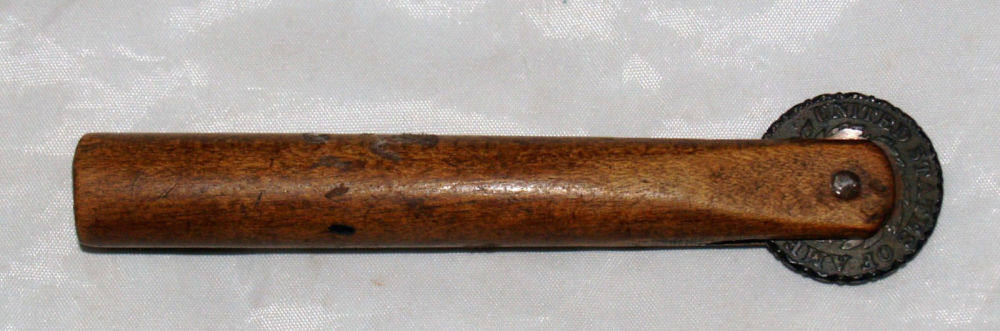 |
|
Pillar of the Community
United States
8537 Posts |
Oregon coin geek.....*** GO BEAVS ! ! ! ***
|
|
Moderator
United States
197031 Posts |
Quote:
I'm going with pie crimper. I like pie. Love pie. Apple the most.  I enjoyed reading your first post and view the photos in the second. Well done.  |
|
Moderator
 United States
16709 Posts |
Pumpkin for me  swcoin.ecrater.com
|
|
Pillar of the Community
United States
3253 Posts |
All you apple and pumpkin pie fans may be wondering why one would need a tool like this to edge a pie. I'm convinced crimpers (or pastry jiggers, as they're called in Britain; here's a great collection: http://www.michaelfinlay.com/MF_WEB...GGERS_1.html ) were primarily for the heavy "hot-water" crust of the savoury meat pies that are still favorites in the English North and Midlands, and once were staples in colonial America and the early US. The medieval origins of the hot-water crust required enough strength for a pie to be carried away from the bakehouses, often for days over rough roads. Dave, if your up for it, I propose that you send your jigger to whichever of our members is mechanically-inclined enough to put it in a handle reproducing 52Raymo's device. They can send it on to me, and I can access some British pastry-making sources, and create, on video, some of the first large-cent-crimped pork pies to be made in Philadelphia for the last 200 years! Or we can skip the handle and free-wheel it; did you see the copper posted on the Metal Detecting Forum, with scalloped edge, but no hole? Edited by philadelphian
08/25/2015 2:06 pm
|
|
Moderator
United States
197031 Posts |
Quote:
They can send it on to me, and I can access some British pastry-making sources, and create, on video, some of the first large-cent-crimped pork pies to be made in Philadelphia for the last 200 years! I would love to see that.  |
|
Moderator
United States
16709 Posts |
An educational video with period clothing and setting would be very cool.
We'd have to bake in the old way for it to be historically accurate.
An interesting idea indeed!
My coin would say, "I remember this!".
I believe I did see that detecting find but I'll check it out again :)
swcoin.ecrater.com
|
|
Moderator
United States
197031 Posts |
Quote:
My coin would say, "I remember this!". The least you could do for the lady.  |
|
Moderator
United States
16709 Posts |
Just a thought. Hmm? I've been told this may have been a spur? Thoughts.  swcoin.ecrater.com
|
|
Moderator
United States
197031 Posts |
Why not. We have speculated stranger things about other coins in the past. |
|
Moderator
United States
16709 Posts |
Ha!
Thanks brother :-)
Charmie..the penny lady..suggested it from a fellow collector.
I just don't know and it is what it is to the person who made it.
I'm done :p
swcoin.ecrater.com
|
|
Moderator
United States
197031 Posts |
Quote:
...it is what it is to the person who made it. Truth. |
|
|
Replies: 52 / Views: 5,836 |
|




 First Page
 Previous Page


 Posted 08/24/2015 5:56 pm